
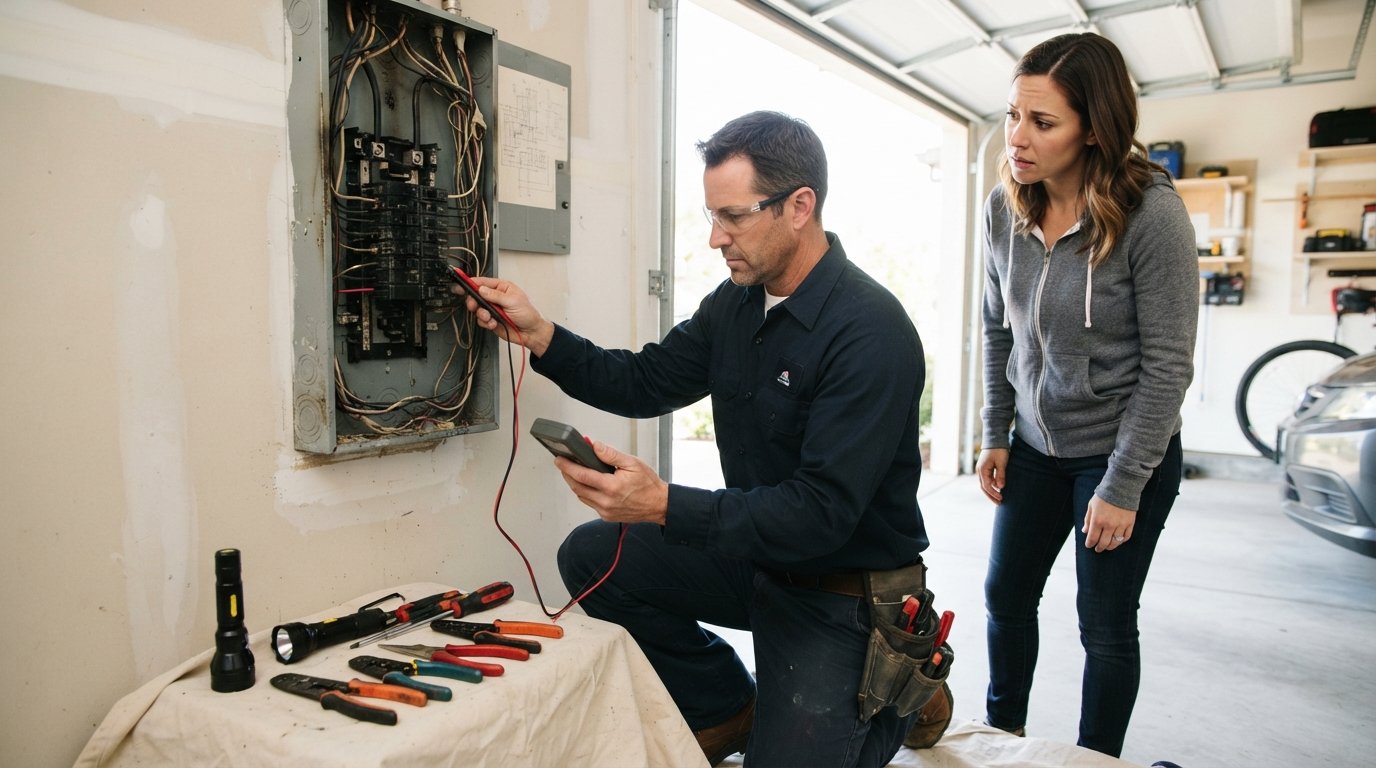
Common Electrical Problems and When to Call an Electrician
Spot warning signs of common electrical problems and when to call an electrician. Get pre-vetted pros and free quotes at (833)-700-4293.

By Wendy Turner
Learn more about Electrical and Wiring Repair for guides, costs, and what to expect.
Compare Electrical and Wiring Repair Pros Near You

Enter your ZIP code to compare top-rated local professionals and request free quotes.
Your home's electrical system is designed to be invisible, reliable, and safe. When something goes wrong, the signs often start small: a light that flickers when the air conditioner kicks on, an outlet that feels slightly warm, or a breaker that trips every few weeks. These small annoyances are easy to ignore, but they are also your home's way of telling you that something in the wiring, panel, or connected devices is under stress. Ignoring those signals is how small problems become expensive repairs, or worse, fire hazards. Understanding the most common electrical problems, and knowing when to call an electrician, is one of the most practical safety skills a homeowner can develop.
This guide walks through the issues electricians see most often, explains which ones you can safely monitor on your own, and clarifies the point at which DIY troubleshooting becomes genuinely dangerous. It also covers what a licensed electrician actually inspects, what typical repairs cost, and how to vet a professional before you commit, especially for larger jobs like a panel upgrade. If you are planning a repair or remodel, resources like Homes.Contractors can help you compare pre-vetted local professionals so you are not choosing blindly from a search results page.
Why Electrical Problems Deserve Serious Attention
Electrical failures cause tens of thousands of home fires in the United States each year, and the majority of those incidents trace back to wiring that was outdated, overloaded, or improperly installed. Unlike a leaky faucet, an electrical problem rarely gives you a slow, visible warning. The damage often happens behind drywall, inside junction boxes, or at the connection points you never see. By the time a burning smell or scorch mark appears, the underlying issue has usually been developing for months or years.
That is why the threshold for calling a professional is lower than many homeowners assume. A single flickering bulb is not an emergency, but recurring flickering across multiple rooms is a symptom worth investigating. A breaker that trips once during a heat wave is doing its job; a breaker that trips monthly is telling you the circuit is overloaded or failing. The skill is learning to distinguish normal, occasional behavior from patterns that point to a real defect.
There is also a financial reason to act early. Small electrical fixes, like replacing a worn outlet or tightening a loose neutral connection, are inexpensive when caught early. The same defect left alone can damage appliances, melt wiring insulation, or require a partial rewiring that costs thousands of dollars. Early intervention is almost always the cheaper path.
The Most Common Electrical Problems Homeowners Face
Most residential electrical calls fall into a handful of categories. Recognizing them helps you describe the problem accurately when you contact a professional and helps you judge whether the issue is urgent.
Flickering or Dimming Lights
Flickering lights are the most reported electrical complaint, and the cause ranges from harmless to serious. If a single lamp flickers, the bulb or fixture is usually the culprit. If lights dim briefly when a large appliance starts, such as a refrigerator or HVAC compressor, that is often a normal voltage drop on a shared circuit. But when lights flicker across multiple rooms, pulse rhythmically, or dim for extended periods, the cause may be a loose service connection, a failing breaker, or an overloaded panel.
Flickering that appears alongside buzzing sounds or a warm switch plate deserves prompt attention. In older homes with aluminum wiring, flickering can indicate a connection that is heating up at the terminal, which is a recognized fire risk. An electrician can test the circuit and the service entrance to isolate whether the problem is inside the home or on the utility side.
Warm or Discolored Outlets and Switches
Outlets and switches should be cool to the touch during normal use. Warmth, discoloration, scorch marks, or a faint burning smell are red flags for loose wiring, overloaded circuits, or a failing device. Loose connections create resistance, resistance creates heat, and heat eventually damages insulation or ignites surrounding material. This is one of the clearest cases where you should stop using the outlet and call an electrician rather than continue plugging devices into it.
A related issue is the outlet that no longer grips plugs firmly. A loose receptacle allows prongs to arc, which produces tiny sparks and heat. Replacing a worn outlet is a modest repair, but it should be done by someone who understands circuit testing and proper torque on the terminals. If several outlets in the same area are loose or warm, the problem may be the wiring feeding them rather than the devices themselves.
Breakers That Trip Repeatedly
A circuit breaker is a safety device. It trips to interrupt current when a circuit is overloaded or shorted, so a breaker that trips occasionally under heavy load is doing exactly what it was designed to do. The concern begins when a breaker trips repeatedly with normal usage, will not reset, or trips immediately after being reset. That pattern suggests a short circuit, a ground fault, a failing breaker, or wiring damage inside the wall.
Homeowners sometimes respond to nuisance tripping by installing a larger breaker, which is dangerous and violates electrical code. The breaker is sized to protect the wire, not the appliance. Upsizing it allows the wire to overheat before the breaker responds. If a circuit trips more than a few times in a month, have an electrician evaluate the load and the wiring before doing anything else.
Dead Outlets and Partial Power Loss
An outlet that suddenly stops working may have a tripped GFCI upstream, a loose connection, or a failed device. Before calling anyone, check whether the outlet is controlled by a wall switch and whether a nearby GFCI receptacle needs resetting. If those steps do not restore power, the issue is likely in the wiring or the breaker, and it should be diagnosed by a professional. Partial power loss, where half a room or one side of the house goes dark while other circuits remain live, often points to a loose neutral or a failing connection at the panel, which is a priority repair.
Outlets Without Grounding or With Reverse Polarity
Many older homes still contain two-prong outlets with no equipment ground. Plugging modern electronics and appliances into ungrounded outlets removes a critical safety layer. Reverse polarity, where the hot and neutral wires are swapped, is another common defect that can energize surfaces that should be safe. Both conditions are invisible without a tester, which is why an electrical inspection is worthwhile before buying an older home or after a major renovation.
Which Electrical Tasks Are Unsafe for DIY Work
Some electrical work is genuinely within reach for a careful homeowner: replacing a light fixture with the power off, swapping a switch plate, or resetting a GFCI. Other tasks cross the line into work that requires a licensed electrician, both for safety and for code compliance. The following tasks should not be attempted as DIY projects:
- Opening the main electrical panel or replacing a breaker, which exposes live service conductors even with the main switch off.
- Adding new circuits, outlets, or dedicated lines for appliances such as dryers, ranges, or EV chargers.
- Rewiring any portion of the home, including repairs to knob-and-tube or aluminum wiring.
- Working on the service entrance, meter base, or anything on the utility side of the meter.
- Troubleshooting repeated breaker trips or warm outlets, which requires diagnostic tools and code knowledge.
The common thread is exposure to live conductors, work that requires a permit and inspection, and diagnosis that depends on specialized testing equipment. Even experienced DIYers should respect these boundaries. A mistake at the panel can be fatal, and unpermitted work can complicate a future home sale or insurance claim.
What a Licensed Electrician Will Inspect
When you call an electrician for a specific problem, the visit usually begins with a focused diagnosis and expands into a broader safety check. For a tripping breaker, the electrician will measure the load on the circuit, inspect the wiring at each device, and test the breaker itself. For warm outlets, the technician will check terminal torque, look for signs of arcing, and verify that the circuit is properly grounded and sized.
During a full electrical inspection, which is common before a home purchase or after a remodel, the electrician typically reviews the service panel, the grounding and bonding system, GFCI and AFCI protection, outlet and switch condition, and any visible wiring in accessible areas. The panel review is especially important in older homes, where the existing service may be undersized for modern loads or may contain a brand of breaker with known failure issues.
If the inspection turns up problems, ask the electrician to separate urgent safety items from recommended upgrades. A clear written report with photos makes it easier to compare quotes and to prioritize repairs over time. Homeowners who want to compare multiple licensed professionals can use PlanRemodel's educational blog and contractor directory to request free estimates from pre-vetted local electricians.
Typical Repair Costs and When to Call an Electrician
Electrical repair costs vary widely by region and by the scope of the problem, but homeowners benefit from rough expectations so they can budget and spot unusually high or low quotes. The following ranges reflect common residential work in the United States and are intended as general guidance rather than a firm price list.
- Diagnostic service call: typically $75 to $150, sometimes waived if you proceed with the repair.
- Replacing a standard outlet or switch: roughly $100 to $250 per device, including labor.
- Replacing a circuit breaker: approximately $150 to $350 depending on the panel type.
- Adding a new dedicated circuit: commonly $300 to $800, more for long runs or difficult access.
- GFCI or AFCI protection upgrades: about $150 to $300 per location.
- Panel upgrade to 200 amps: generally $1,500 to $4,000, with higher costs for service entrance changes or permit requirements.
These figures help you evaluate a quote, but the more important question is when to call at all. The following situations warrant a call to a licensed electrician promptly, and some warrant shutting off power to the affected area first:
- Any burning smell, scorch mark, or visible sparking at an outlet, switch, or panel.
- Outlets or switches that are warm to the touch or discolored.
- A breaker that will not reset or trips immediately after resetting.
- Flickering lights across multiple rooms, especially with buzzing or dimming.
- Partial power loss or a service panel that hums, clicks, or feels hot.
If you smell burning or see smoke, leave the area and call 911 before calling an electrician. For non-emergency issues, schedule service during business hours and avoid using the affected circuit until it has been inspected.
Questions to Ask When Vetting an Electrician for a Panel Upgrade
A panel upgrade is one of the larger electrical projects a homeowner will undertake, and the quality of the installation matters for decades. Before hiring, confirm that the electrician is licensed in your state, carries general liability insurance and workers compensation coverage, and will pull the required permit. Ask whether the quote includes the permit fee, the utility coordination, and any required inspection, because these items are sometimes excluded and appear later as change orders.
For panel work specifically, ask about the brand and model of the panel being installed, the amperage rating, and whether the upgrade includes new grounding and bonding. A reputable electrician will explain why a particular panel suits your home's load and will note whether the service entrance wiring also needs replacement. It is also reasonable to ask for references from similar panel jobs completed in the past year and to confirm the warranty terms on both labor and materials.
Finally, get at least three written quotes and compare scope, not just price. A low bid that omits the permit or reuses aging service conductors is not a bargain. Taking the time to vet properly protects your investment and ensures the work passes inspection the first time.
Electrical problems rarely fix themselves, and the cost of waiting is usually measured in safety rather than convenience. Learn the warning signs, respect the limits of DIY work, and build a short list of licensed electricians before you need one. A few minutes of preparation today can prevent a much larger repair, or a much more serious accident, tomorrow.