
How to Lower Energy Bills with Smart Home Upgrades
Lower energy bills with home upgrades like insulation and smart thermostats. Call 8337004293 to find pre-vetted contractors today.

By Elena Carter
Learn more about Central Air Conditioning Repair or Maintenance for guides, costs, and what to expect.
Compare Central Air Conditioning Repair or Maintenance Pros Near You

Enter your ZIP code to compare top-rated local professionals and request free quotes.
Your monthly energy bill is not just a number on a statement: it is a reflection of how your home performs under pressure. Every drafty window, outdated appliance, and poorly sealed duct quietly drains your budget while reducing comfort. The good news is that you do not need a full-scale renovation to see meaningful savings. Strategic home upgrades, from attic insulation to smart thermostats, can cut your energy costs by hundreds of dollars each year and increase the value of your property at the same time. This guide walks you through the most effective improvements, explains why they work, and shows you how to plan each project with confidence.
Why Energy Bills Creep Up and What You Can Do
Energy costs rise for two main reasons: the price of power increases, and your home loses conditioned air through weak points in its thermal envelope. The thermal envelope includes your walls, roof, windows, doors, and foundation. When any of these elements underperform, your heating and cooling system works harder and longer, consuming more electricity or gas to maintain a comfortable indoor temperature.
Many homeowners assume that replacing an old furnace is the only path to savings. In reality, a holistic approach delivers better results: sealing air leaks, adding insulation, upgrading to efficient equipment, and using smart controls. Each improvement compounds the benefits of the others, so the total savings often exceed what any single upgrade could achieve alone.
Before you start any project, take time to understand where your home wastes the most energy. A professional energy audit typically costs a few hundred dollars and provides a room-by-room report with prioritized recommendations. Many utility companies offer free or discounted audits, so check with your provider first. Once you have that data, you can target investments where they will pay off fastest.
Top Home Upgrades That Cut Energy Costs
The upgrades below consistently deliver strong returns. You do not need to tackle all of them at once; even one or two will make a noticeable difference on your next bill. Prioritize based on your audit results and your budget.
- Attic and wall insulation: Adding or upgrading insulation reduces heat transfer and can save up to 15 percent on heating and cooling costs.
- Air sealing: Caulking gaps around windows, doors, and utility penetrations stops drafts and keeps conditioned air inside.
- High-efficiency HVAC systems: Modern heat pumps and furnaces use far less energy than units installed 15 or more years ago.
- Smart thermostats: Programmable and learning thermostats optimize temperatures automatically, saving 8 to 12 percent on heating and cooling.
- Energy-efficient windows and doors: Double or triple glazing with low-E coatings reduces heat gain in summer and heat loss in winter.
Each of these upgrades also improves indoor comfort, reduces noise, and can increase your home resale value. For example, a well-insulated attic keeps upper floors cooler in summer and warmer in winter, while new windows eliminate drafts and block outside noise. When you combine several upgrades, the cumulative effect transforms how your home feels and performs.
If you are unsure which upgrades suit your climate and home style, consult a qualified contractor. Professionals can assess your current systems and recommend the most cost-effective improvements for your specific situation.
Seal and Insulate: The Foundation of Energy Savings
Air sealing and insulation are the most cost-effective energy upgrades you can make. According to the U.S. Department of Energy, heating and cooling account for roughly half of a typical home's energy use. Much of that energy escapes through unsealed gaps and under-insulated areas.
Start by identifying common leak points: around electrical outlets, recessed lighting, attic hatches, plumbing penetrations, and where walls meet the foundation. Use caulk, spray foam, and weatherstripping to close these gaps. Then evaluate your insulation levels. Attics should have at least R-30 to R-60 insulation depending on your climate zone, while walls typically need R-13 to R-21.
Hiring a professional for insulation and air sealing ensures the job is done correctly. Improper installation can trap moisture, create mold, or leave gaps that undermine performance. A pre-vetted contractor from a trusted directory can assess your home and recommend the right materials and techniques. You can also explore local contractor resources to find specialists in your area who handle insulation and air sealing projects.
Upgrade Your Heating and Cooling Systems
If your HVAC system is more than 10 to 15 years old, replacing it with a high-efficiency model can dramatically reduce your energy consumption. Modern heat pumps, for instance, can deliver up to three times the efficiency of older electric resistance heating. Furnaces with AFUE ratings above 95 percent waste very little fuel compared to standard models.
When shopping for a new system, look for the ENERGY STAR label and compare SEER2 ratings for air conditioners and HSPF2 ratings for heat pumps. Higher ratings mean greater efficiency and lower operating costs. Also consider the size of the unit: an oversized system cycles on and off frequently, wasting energy and wearing out faster, while an undersized unit struggles to keep up.
Proper installation matters as much as the equipment itself. A skilled HVAC contractor will perform a load calculation, seal ducts, and calibrate the system for optimal performance. Poor installation can reduce efficiency by 20 percent or more, negating the benefits of your investment. Always request multiple quotes and verify that the contractor is licensed and insured.
Smart Thermostats and Home Automation
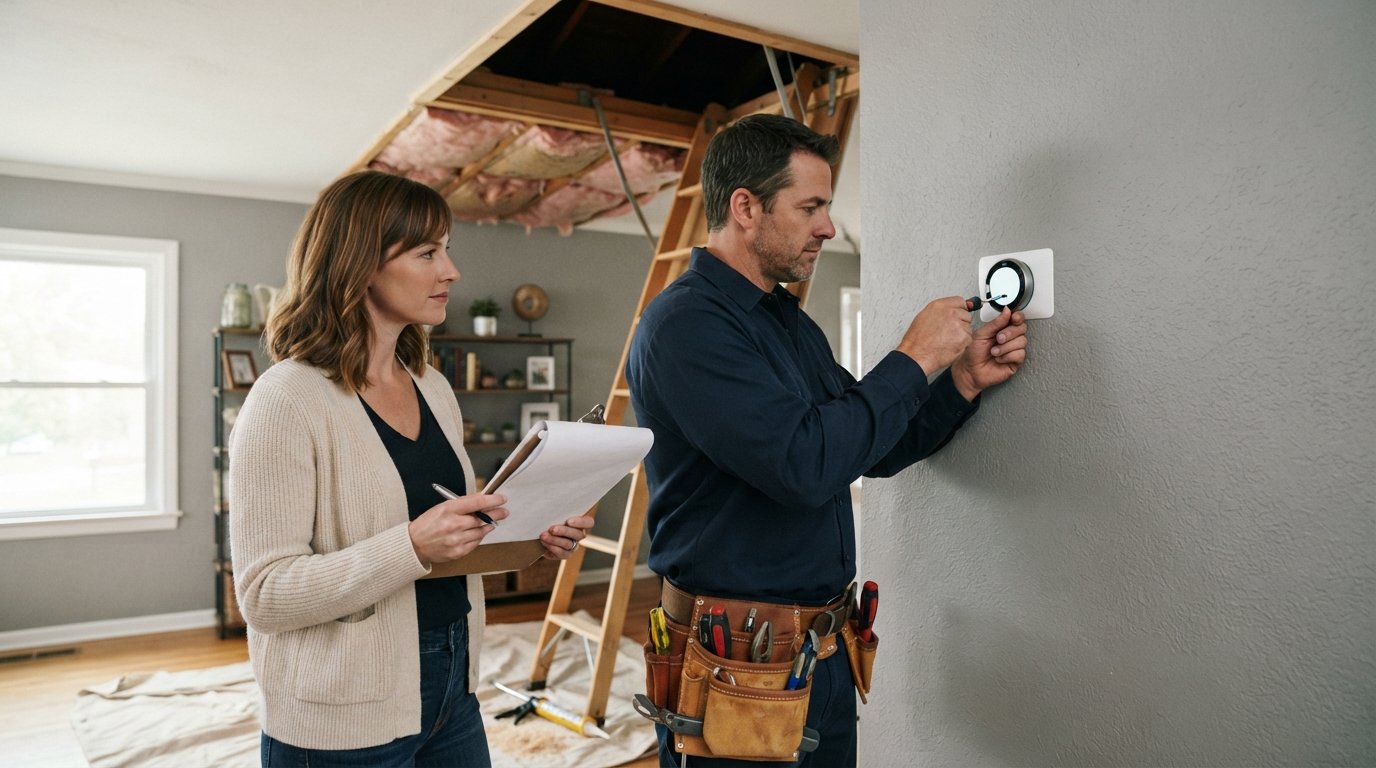
Smart thermostats learn your schedule and adjust temperatures automatically, so you are not heating or cooling an empty house. Many models also offer remote access through a smartphone app, allowing you to tweak settings while away. Over time, these small adjustments add up to significant savings.
Beyond thermostats, home automation can optimize other energy users. Smart lighting systems turn off lights when rooms are empty, smart power strips cut phantom loads from electronics, and smart water heaters adjust to your usage patterns. These devices are affordable and easy to install, making them a great starting point for any homeowner.
Pair your smart thermostat with a well-sealed and insulated home for maximum benefit. If your home leaks air, the thermostat will struggle to maintain temperatures no matter how smart it is. Address the envelope first, then add smart controls to fine-tune comfort and efficiency.
Windows, Doors, and Roofing: Long-Term Investments
Windows and doors are common weak points in a home's thermal envelope. Single-pane windows lose heat rapidly in winter and allow solar heat to enter in summer. Upgrading to double or triple-pane windows with low-E coatings and argon gas fills reduces heat transfer and blocks UV rays that fade furniture and flooring.
Doors should fit tightly and feature insulated cores. Storm doors add an extra layer of protection and can improve energy performance. If your roof is old or damaged, consider upgrading to a cool roof or adding reflective coatings. Cool roofs reflect sunlight and reduce attic temperatures, lowering cooling demands in hot climates.
These projects are larger investments, but they deliver long-term savings and improve curb appeal. They also protect your home from moisture damage and extend the life of your HVAC system by reducing its workload. When planning these upgrades, work with experienced contractors who can ensure proper installation and maximize energy performance.
Financing and Incentives for Energy Upgrades
Many homeowners hesitate to invest in energy upgrades because of upfront costs. Fortunately, a variety of financing options and incentives can ease the burden. Federal tax credits, state rebates, and utility programs often cover a portion of the expense for qualifying improvements such as insulation, windows, and HVAC systems.
Low-interest loans and green mortgages are also available for energy-efficient upgrades. Some contractors offer financing directly, allowing you to spread payments over time. Be sure to ask about available incentives when requesting quotes, as these can significantly reduce your net cost.
Planning your upgrades in phases can also make them more affordable. Start with low-cost improvements like air sealing and smart thermostats, then tackle larger projects as your budget allows. Each phase builds on the previous one, steadily reducing your energy bills.
Finding Qualified Contractors for Your Upgrades
Choosing the right contractor is critical to the success of any energy upgrade. Poor workmanship can leave gaps, create safety hazards, and void warranties. Start by gathering multiple quotes from licensed, insured professionals who specialize in the type of work you need.
Ask for references and examples of similar projects. Verify licenses and insurance coverage, and check reviews on trusted platforms. A comprehensive directory like Homes.Contractors can connect you with pre-vetted professionals in your area, saving time and reducing risk. Request at least three quotes and compare not just price but also scope, materials, and timelines.
Once you hire a contractor, maintain open communication throughout the project. Confirm the schedule, discuss any changes in writing, and inspect the work before making final payments. A smooth collaboration ensures your upgrades perform as intended and deliver the savings you expect.
Maintenance Habits That Protect Your Savings
Even the best upgrades need regular maintenance to perform at their peak. Change HVAC filters monthly or as recommended, clean ducts and vents, and schedule annual tune-ups for heating and cooling systems. Seal any new gaps that appear around windows and doors, and check insulation for signs of moisture or damage.
Simple habits also help: run dishwashers and washing machines with full loads, use ceiling fans to circulate air, and adjust blinds to block summer sun. These actions cost nothing and complement your upgrade investments.
Track your energy usage over time to spot trends and verify savings. Many utility companies provide online dashboards that show daily or monthly consumption. If you notice unexpected spikes, investigate promptly; early detection can prevent small issues from becoming costly problems.
Lowering your energy bills with home upgrades is a smart, achievable goal. By sealing air leaks, adding insulation, upgrading HVAC systems, and embracing smart technology, you can cut costs, improve comfort, and increase your home's value. Start with an energy audit, prioritize high-impact improvements, and work with qualified contractors to ensure quality results. Your budget and your home will both benefit.