
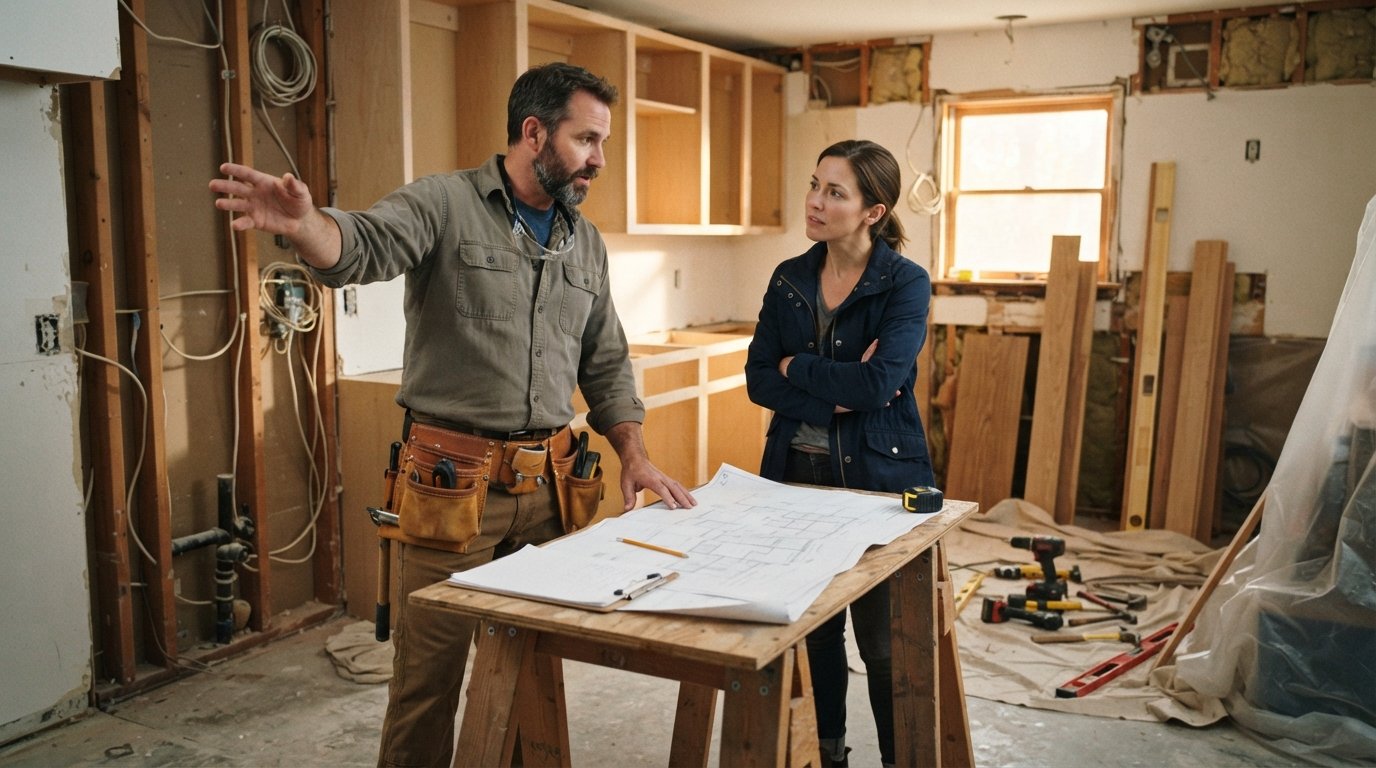
Questions to Ask Before Hiring a General Contractor
Ask the right questions to ask before hiring a general contractor for remodeling and avoid costly surprises. Call (833)-700-4293 for trusted local pros.

By Julia Hayes
Learn more about General Contracting for guides, costs, and what to expect.
Compare General Contracting Pros Near You

Enter your ZIP code to compare top-rated local professionals and request free quotes.
You have the vision: a brighter kitchen, a more functional bathroom, or a finished basement that finally feels like part of the house. The excitement is real, but so is the risk. A remodeling project can be one of the largest investments you make in your home, and the contractor you choose will determine whether the experience is smooth or stressful. Asking the right questions before you sign anything is the single most effective way to protect your budget, your timeline, and your peace of mind.
Most homeowners know to check for a license and insurance, but that is just the starting line. The questions that truly separate a reliable general contractor from a risky one dig into how they run their crews, manage money, and communicate when problems arise. This guide walks you through the exact questions to ask before hiring a general contractor for remodeling, with context on why each one matters and what a good answer sounds like.
Who Will Actually Be on the Job Site Every Day?
One of the most common surprises in remodeling is discovering that the person who sold you the project will not be the person managing it. Many general contractors run multiple jobs at once and rely on lead carpenters, project managers, or subcontractors to handle day-to-day work. That is not inherently bad, but you need to know who is accountable and how communication will flow.
Ask directly: "Who will be my main point of contact, and will that person be on site daily?" A professional contractor will give you a clear name, explain that person's role, and describe how often they visit the job. If the answer is vague or shifts to "we will be around," press for specifics. You are not being difficult; you are establishing expectations that prevent misunderstandings later.
Follow up with questions about subcontractor crews. Most remodeling projects involve specialists: electricians, plumbers, drywallers, tile setters. Ask whether the contractor uses in-house employees or subcontractors, and how long they have worked with those subs. A contractor with long-standing relationships can often guarantee quality and scheduling better than one who bids out every trade to the lowest bidder. In our guide on questions to ask a contractor before signing a contract, we cover how to lock these commitments into writing so there is no ambiguity once work begins.
What Does a Good Answer Sound Like?
A strong response includes a specific name, a clear role description, and a realistic schedule for site visits. The contractor might say, "My lead carpenter, Mike, will be here every day from 7 to 3, and I stop by every morning and as needed for inspections." That level of detail signals that the contractor has a system, not just a sales pitch.
How Do You Handle Scheduling, Deposits, and Payment Milestones?
Money and time are the two areas where remodeling projects most often go off track. Asking about payment structure early does two things: it protects you from front-loading too much cash, and it reveals whether the contractor operates with professional financial habits.
Start with deposits. In many states, contractors can legally ask for a deposit, but a reasonable deposit is typically 10 to 20 percent of the project cost. If a contractor demands 50 percent upfront, that is a red flag. Ask: "What is your deposit, and what does it cover?" Then ask about payment milestones. A fair schedule ties payments to completed work: framing complete, rough-in inspections passed, cabinets installed. Never pay the full balance before the job is finished and you have walked through the punch list.
Scheduling deserves equal scrutiny. Ask how many projects the contractor runs simultaneously and how they handle delays from weather, material shortages, or permit inspections. A contractor who promises an unrealistic timeline to win the bid will often disappear when the schedule slips. Instead, look for someone who explains dependencies (for example, "We cannot start tile until the plumber finishes rough-in and the inspection passes") and builds buffer into the plan.
Here are the key payment and scheduling questions to ask before hiring a general contractor for remodeling:
- What is your deposit, and what does it cover?
- How are payments tied to project milestones?
- How many active jobs will you be running at the same time as mine?
- How do you communicate schedule changes or delays?
- What is your policy on change orders and their impact on the timeline?
Write down the answers and compare them across the contractors you interview. A contractor who hesitates or gives inconsistent answers about money is telling you something important. For a deeper dive into budgeting and financing strategies, PlanRemodel's resources can help you plan for the full cost of your project before you commit.
Can You Show Me Proof of Insurance, Bonding, and Recent Project Photos?
Licensing is the minimum requirement, but insurance and bonding are what protect you if something goes wrong. Ask for a certificate of insurance that names you as an additional insured on the general liability policy. This means if a worker damages your home or a third party is injured, you are covered. Also ask about workers' compensation insurance; if a worker is hurt on your property and the contractor does not carry workers' comp, you could be exposed to liability.
Bonding is another layer of protection. A surety bond ensures you have recourse if the contractor fails to complete the job or violates the contract. Not all states require bonds, but a reputable contractor should be able to explain their bonding status clearly. Do not accept verbal assurances; ask for documentation and verify it with the insurance company or bonding agency if needed.
Recent project photos are equally telling. Ask to see photos of projects similar to yours, ideally within the last year. A contractor who cannot produce recent, relevant photos may be new to the work or unwilling to share details. Better yet, ask for references from two or three recent clients and call them. Ask those references: Did the contractor stay on budget? Was the site clean? How did they handle unexpected issues? You can also use a directory like Homes.Contractors to find pre-vetted professionals in your area and compare their credentials before you ever pick up the phone.
How Do You Handle Permits, Inspections, and Code Compliance?
Remodeling projects often require permits, and the contractor should handle pulling them. Ask directly: "Will you pull the permits, and are they included in your bid?" A contractor who asks you to pull the permit as the homeowner is shifting risk onto you. Permits ensure the work is inspected by a local code official, which protects your home's value and safety.
Also ask how the contractor handles inspections and what happens if an inspector flags an issue. A professional will have a process for corrections and will not pass unexpected costs onto you without discussion. Code compliance is not optional, and a contractor who treats it casually is not someone you want managing your project.
What Is Your Communication Style and Problem-Solving Process?
Even the best-planned remodeling project will hit a snag. The question is how the contractor handles it. Ask: "How do you communicate with homeowners during the project?" Look for specifics: daily texts, weekly email updates, a shared project management app, or regular site meetings. A contractor who says "I will call you if there is a problem" is not giving you a communication plan; they are giving you a recipe for anxiety.
Then ask about problem-solving. "Can you walk me through a time a project went off track and how you fixed it?" The answer reveals character. A good contractor will describe the issue honestly, explain the solution, and note what they learned. A poor one will blame the homeowner, the weather, or the supplier without taking responsibility. You want a partner who communicates proactively and solves problems without drama.
How Do I Compare Answers Across Multiple Contractor Quotes?
The best way to evaluate a contractor is to compare. Get at least three quotes, and ask the same questions to each contractor. Create a simple scorecard: for each question, note whether the answer was clear, detailed, and documented. Pay attention to how quickly they respond, how prepared they seem, and whether they ask you good questions in return. A contractor who listens carefully and asks about your priorities is more likely to deliver what you want.
Do not choose solely on price. The lowest bid often omits important steps, uses cheaper materials, or cuts corners on permits and insurance. Instead, compare the scope of work, the payment schedule, the timeline, and the communication plan. A slightly higher bid from a contractor who is organized, insured, and communicative is almost always the better investment.
Before you sign anything, revisit the list of questions to ask before hiring a general contractor for remodeling and make sure every answer is in writing. A contract should reflect the deposit amount, payment milestones, timeline, scope of work, and change-order process. If a contractor resists putting details in writing, that is your answer: walk away.
Hiring a general contractor does not have to be a gamble. By asking focused questions about crews, money, insurance, permits, and communication, you turn a stressful decision into a structured evaluation. Take your time, compare thoroughly, and trust the contractor who gives you clear, documented answers. Your home, and your budget, will thank you.