
Roof Repair or Replace: The Homeowners Decision Rule
Use this roof repair or replace decision rule for homeowners to avoid overspending. Call 8337004293 for vetted local roofing pros.

By Wendy Turner
Learn more about Roof Repair or Maintenance for guides, costs, and what to expect.
Compare Roof Repair or Maintenance Pros Near You

Enter your ZIP code to compare top-rated local professionals and request free quotes.
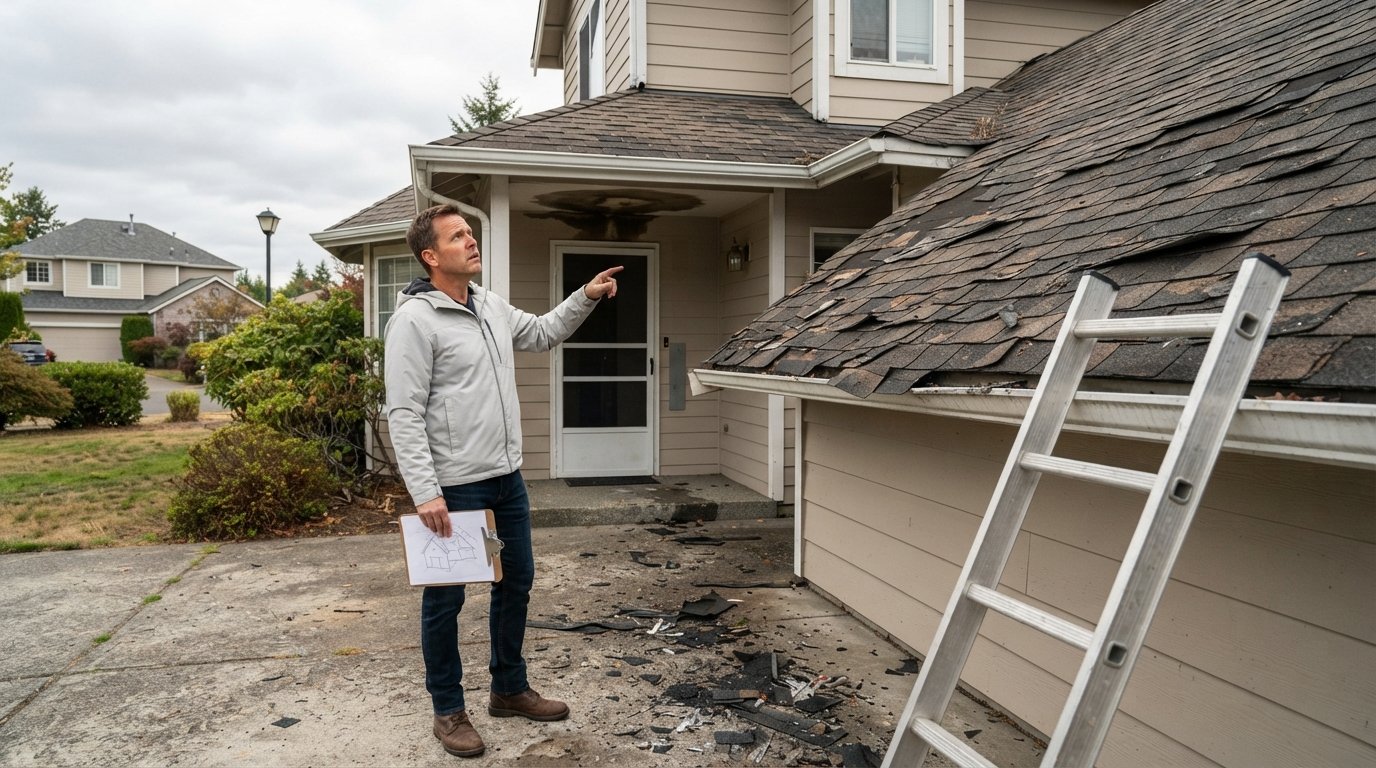
Your ceiling has a brown stain that seems to grow every time it rains. Or maybe your shingles are curling at the edges, and you have started noticing granules collecting in your gutters. The question that follows is almost always the same: can this be patched, or is it time to start over? Getting this decision wrong is expensive in both directions. Repairing a roof that is already past its service life means you will pay twice within a few years. Replacing a roof that had a decade of life left means you spent thousands you did not need to spend. This guide gives you a practical roof repair or replace decision rule for homeowners, a repeatable way to evaluate age, damage, cost, and timing so you can make the call with confidence instead of guesswork.
Why the Repair Versus Replace Question Is Harder Than It Looks
Roofing decisions feel urgent because water damage compounds quickly. A small leak can rot decking, soak insulation, and stain drywall within a single season. That urgency pushes many homeowners toward the fastest fix, which is often a patch. But a patch is only a good investment when the rest of the roof still has meaningful life left. If your shingles are already brittle and near the end of their rated lifespan, a repair buys you months, not years, and the next leak is likely already forming a few feet away.
The opposite mistake is just as common. Homeowners sometimes assume any leak means a full replacement, and they authorize a five-figure project when a targeted repair at a flashing or vent would have solved the problem for a fraction of the cost. The key is separating isolated damage from systemic failure. Isolated damage happens at a specific weak point: a cracked pipe boot, a failed chimney flashing, a single blown-off section after a storm. Systemic failure shows up everywhere: widespread granule loss, multiple leaks in different areas, sagging, or shingles that crumble when touched. Your decision rule should always start with that distinction.
There is also a financial dimension most homeowners underestimate. Roofing is one of the few home improvements where the return on investment at resale is consistently strong, often recouping a majority of the cost depending on your region and material. A repair that keeps a failing roof alive through a home sale can become a negotiation problem, because buyers and inspectors will flag it. In that situation, replacement is not just maintenance, it is protecting your asking price.
The Core Decision Rule: Four Factors That Point to an Answer
Instead of guessing, score your roof against four factors: age, extent of damage, cost ratio, and timing. Each factor pushes you toward repair or replacement, and when three or more point the same direction, that is your answer. This framework works for asphalt shingles, metal, tile, and flat membrane roofs, though the specific numbers shift by material.
Factor 1: Age relative to lifespan. Asphalt shingle roofs typically last 15 to 25 years depending on quality and climate. Metal roofs can last 40 to 70 years, tile can exceed 50, and flat membrane roofs often run 15 to 25. If your roof is under 50 percent of its expected lifespan, lean repair. Between 50 and 75 percent, the decision depends on the other factors. Past 75 percent, lean replace, because every repair is money spent on a roof that is nearly finished anyway.
Factor 2: Extent and pattern of damage. One leak, one damaged area, or damage confined to a single slope or section points to repair. Leaks in three or more separate locations, damage across multiple slopes, or any sagging in the roof deck points to replacement. Sagging is especially serious because it usually means structural moisture damage underneath, which no shingle-level repair can fix.
Factor 3: The cost ratio. This is the most useful single number in the entire decision. Take the repair estimate and divide it by the cost of a full replacement. If the repair costs less than 30 percent of replacement, repair is usually the smart move. If it costs more than 50 percent, replacement is usually better value. Between 30 and 50 percent, weigh age and timing heavily.
Factor 4: Timing and plans. Are you selling within two years? Are you planning solar panels, a skylight, or an attic conversion? Do you live in a region with severe hail or hurricane seasons? A roof that needs replacement within a few years makes solar installation or a sale more complicated, and in storm-prone states, insurers increasingly push for replacement on aged roofs rather than paying for repeated patches.
Here is the rule in quick-reference form:
- Repair if: the roof is under 50 percent of its lifespan, damage is isolated to one area, the repair costs under 30 percent of replacement, and you are not selling or installing solar soon.
- Replace if: the roof is past 75 percent of its lifespan, leaks appear in multiple places, the repair exceeds 50 percent of replacement cost, or the deck is sagging.
- Get two estimates and decide if: you land in the middle on two or more factors, which is the most common real-world scenario.
Notice that the rule never asks you to eyeball the roof yourself. You gather facts from professionals, then apply the framework. That is what keeps the decision objective when a contractor is standing in your driveway with an opinion.
When Roof Repair Is Clearly the Right Call
Repair wins when the problem has a specific, identifiable cause that is not a symptom of the whole roof failing. The classic examples are flashing failures around chimneys and skylights, cracked or dried-out pipe boots around plumbing vents, nail pops that have backed out and torn the shingle above them, and wind damage confined to a ridge or a single slope. These are localized failures, and fixing them properly can add years of service at a modest cost.
Repair also makes sense when the underlying structure is sound. If a roofer walks the deck and finds firm, dry sheathing under the damaged area, you are dealing with a surface problem. Typical repair costs in the United States range from roughly 150 dollars for a simple shingle patch to 1,500 dollars or more for complex flashing work or small section replacement, still far below the 8,000 to 20,000 dollar range common for full replacements depending on size, pitch, and material.
One caution: repair only works as a strategy if you commit to maintenance. A repaired roof still needs annual inspections, prompt attention to new damage, and clean gutters. Homeowners who repair and then ignore the roof for five years often end up replacing it anyway, having spent the repair money for nothing. If you know you are not a maintenance-minded owner, factor that honestly into the decision.
When Replacement Is the Better Investment
Replacement stops being optional when the roof has crossed into systemic failure. The clearest signals are widespread granule loss (check your gutters and the ground near downspouts), shingles that crack or disintegrate when bent, multiple active leaks, and dark staining or soft spots that suggest moisture has reached the decking. Any sagging between rafters is a structural warning that should push you straight to replacement and a deck inspection.
Age interacts with all of these. A 22-year-old asphalt roof with one leak is usually still a replacement candidate, because the material itself is at the end of its life and repairs will not hold. The same leak on a 9-year-old roof is almost always a repair. This is why the age factor carries so much weight when damage is ambiguous.
There is also a hidden-cost argument for replacement. Repeated repairs on an aging roof create a pattern of spending that is easy to miss: 400 dollars this spring, 900 dollars after a storm, 600 dollars next year. Over three years you may spend more than the difference between repair and replacement while still owning an old roof. Replacement resets the clock, typically comes with a manufacturer warranty of 25 to 50 years on materials and a workmanship warranty from the installer, and eliminates the recurring leak anxiety that comes with patching a dying roof.
How to Get Objective Estimates Before You Decide
The decision rule only works with real numbers, and real numbers come from inspections. Before you choose repair or replacement, arrange at least two professional assessments. A good inspection includes an attic check for moisture, staining, and daylight, a deck check for soft spots, and a written scope that separates immediate needs from future ones. Ask each contractor to tell you, in writing, how many years of service they expect the roof to deliver if you repair it. That single question forces specificity and gives you a concrete basis for comparison.
When you request quotes, make sure you are comparing the same scope: same shingle or material grade, same underlayment, same flashing work, same warranty terms. A low bid that quietly excludes flashing replacement or drip edge is not a real comparison. If you want to streamline this process, you can use a directory that connects homeowners with pre-vetted local roofing professionals, request multiple free estimates in one place, and compare written scopes side by side instead of chasing individual contractors. That kind of platform exists specifically to remove the guesswork from contractor selection, and it is worth using before you commit to either path.
Watch for these red flags during the estimate process:
- Pressure to sign the same day, especially after a storm.
- No written scope, no license number, or no proof of insurance.
- A repair quote that does not identify the specific cause of the leak.
- A replacement quote that skips deck inspection or underlayment details.
- Requests for large cash deposits upfront.
Legitimate contractors will welcome comparison shopping because they know a well-informed homeowner makes a better client. If a roofer resists your request for a written scope or a second opinion, that resistance is itself information.
Special Situations That Change the Math
Some scenarios override the standard framework. If you are selling your home within two years, replacement is often the stronger choice even on a mid-life roof, because a roof flagged in the inspection report becomes a negotiation chip that can cost you more than the replacement itself. If you are installing solar panels, replace first. Mounting panels on a roof that will need replacement in five years means paying to remove and reinstall the entire array, a cost that can rival the roof itself.
Insurance and storm damage create their own rules. After hail or wind damage, your insurer may cover full replacement rather than piecemeal repairs, but only if the damage meets their threshold and you file within the policy window. In that case, get a professional damage assessment before you accept any settlement. On the other hand, if your roof is simply old and worn, insurers will not cover wear-and-tear, and some carriers in storm-prone states now refuse to renew policies on roofs past a certain age. That renewal risk alone can make replacement the practical choice.
Finally, consider material upgrades if you are replacing anyway. Moving from standard asphalt to architectural shingles, standing-seam metal, or impact-rated shingles can extend lifespan, lower energy costs through better reflectivity, and in some states reduce insurance premiums. If the replacement decision is already made, the marginal cost of upgrading material is often the best money you will spend on the project.
Putting the Decision Rule to Work
The roof repair or replace decision rule for homeowners boils down to a short sequence. Inspect and document the damage with at least two professionals. Score your roof on age, damage extent, cost ratio, and timing. If three or more factors point to replacement, replace. If three or more point to repair, repair and commit to maintenance. If you land in the middle, let the cost ratio and your five-year plans break the tie. Then get written, apples-to-apples quotes before signing anything.
Whatever you choose, act before the next rainy season. A roof problem that is manageable today becomes a decking, insulation, and drywall problem six months from now, and those costs dwarf the difference between a repair and a replacement. Gather your estimates, run the framework, and make the call with numbers instead of nerves. Your roof will outlast the decision either way, as long as the decision is the right one. Homes.Contractors