
Fall Home Maintenance Checklist Before Winter Arrives
Use this fall home maintenance checklist before winter to prevent costly repairs. Need help fast? Call (833)-700-4293 to reach vetted local pros.

By Wendy Turner
Learn more about Home Inspection for guides, costs, and what to expect.
Compare Home Inspection Pros Near You

Enter your ZIP code to compare top-rated local professionals and request free quotes.
The first hard freeze rarely announces itself. It arrives overnight, turning a forgotten garden hose into a cracked pipe and a skipped gutter cleaning into an ice dam that stains your ceiling by January. Homeowners who spend one focused weekend on fall maintenance routinely avoid the four-figure emergency repairs that catch everyone else off guard. This fall home maintenance checklist before winter walks through every system in your house, from the roof down to the basement floor drain, and shows you exactly what to inspect, what to repair, and when to call a professional.
Why Fall Maintenance Pays for Itself
Winter is the most punishing season for a house. Freeze-thaw cycles expand water inside tiny cracks, snow load stresses roofs that were already marginal, and heating systems run at full capacity for months. Every one of those stresses is cheaper to prevent in October than to repair in February.
The math is simple. A gutter cleaning costs far less than repairing rotted fascia and a flooded basement. A furnace tune-up costs a fraction of an emergency replacement during a cold snap, when HVAC contractors charge premium rates and parts are backordered. Insulation and weatherstripping upgrades cut heating bills immediately and keep paying you back every month.
There is also a safety dimension. A cracked heat exchanger can leak carbon monoxide. A clogged dryer vent can start a fire. Loose chimney mortar can drop embers onto a roof. Fall maintenance is not just about protecting your wallet; it is about protecting the people inside the house. If you would rather delegate the heavy lifting, connecting with pre-vetted local contractors through a trusted directory can take the guesswork out of hiring help.
Start at the Top: Roof, Gutters, and Attic
Water is the enemy, and almost all winter water damage starts above your head. Before the first storm, walk your property and look at the roof from the ground with binoculars. You are checking for curled, missing, or lifted shingles, rusted flashing around chimneys and vents, and granule buildup in the gutters below, which signals a roof nearing the end of its service life.
If you can safely access the roof or hire a professional to inspect it, pay close attention to valleys, penetrations, and the areas around skylights. These are the first places ice dams form. Ice dams happen when warm attic air melts snow on the upper roof, the water refreezes at the cold eaves, and subsequent meltwater backs up under the shingles. The fix is twofold: keep the roof cold and keep water moving off it.
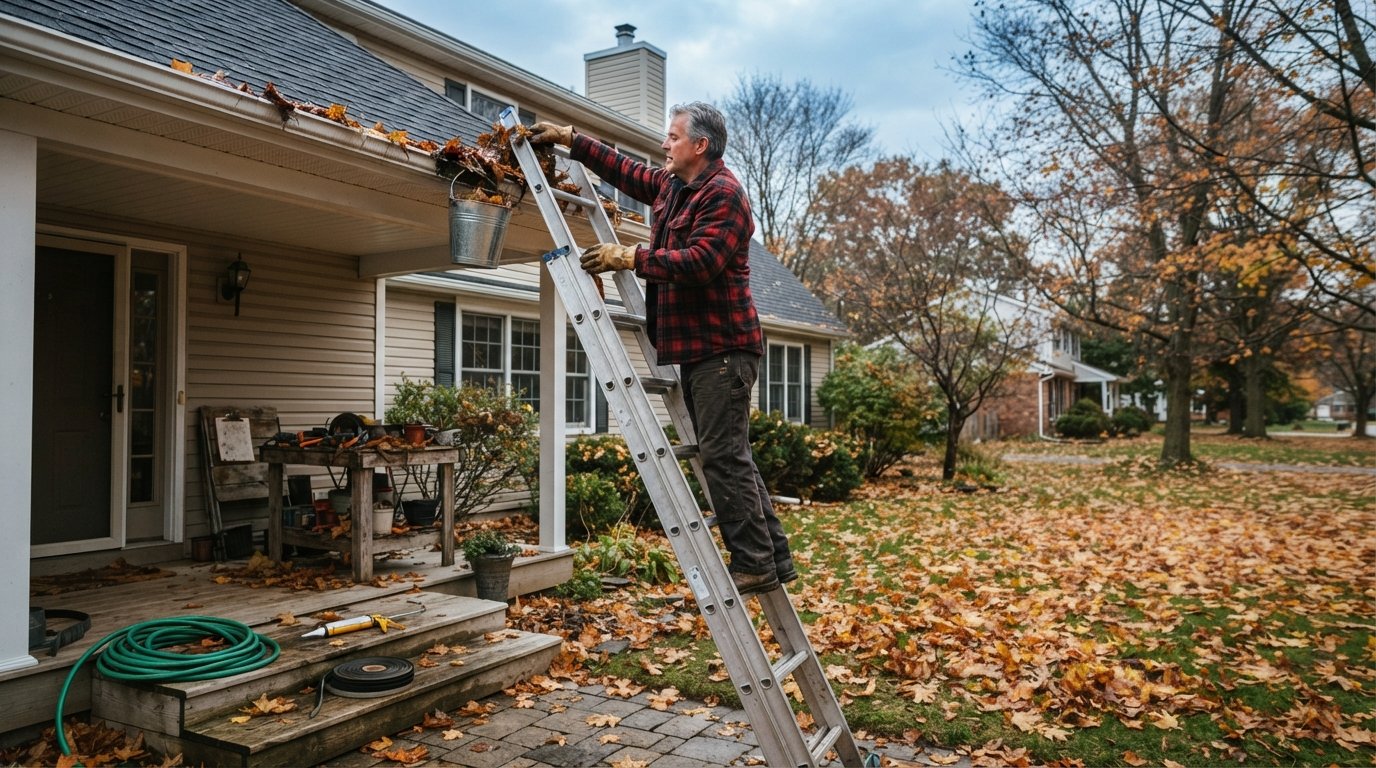
Gutters and downspouts deserve their own pass. Clear leaves, twigs, and shingle grit by hand or with a scoop, then flush the system with a hose. Make sure downspouts discharge at least four to six feet away from the foundation and that extensions are still attached. A downspout that dumps water next to the basement wall is a flooded basement waiting to happen.
Inside the attic, look for dark stains on the roof deck, damp insulation, or daylight showing through gaps. Seal air leaks around chimneys, vent stacks, and recessed lights with fire-rated caulk or foam, and verify that soffit and ridge vents are unobstructed. Proper attic ventilation is what keeps ice dams from forming in the first place.
Seal the Envelope: Windows, Doors, and Insulation
Air leaks are silent money thieves. On a windy day, hold a lit incense stick near window frames, door thresholds, electrical outlets on exterior walls, and the rim joist in your basement. If the smoke wavers, you have found a leak worth sealing.
Weatherstripping and caulk are inexpensive and easy to apply. Replace worn door sweeps, add foam gaskets behind outlet covers, and seal gaps around pipes and cables where they enter the house. For older windows, removable shrink film kits add a surprising amount of comfort for a few dollars per window.
Insulation matters just as much. The U.S. Department of Energy recommends attic insulation levels that many older homes fall far short of. Adding a few inches of blown-in insulation is one of the highest-return upgrades a homeowner can make, and it often qualifies for federal tax credits or utility rebates. While you are in the attic, check that the hatch or pull-down stairs are insulated and sealed too; that flimsy plywood panel is a major heat leak in many houses.
If your inspection turns up problems beyond simple sealing, such as failing windows, insufficient insulation, or drafty rooms that never feel warm, it may be time to plan a larger upgrade. You can review a seasonal home maintenance checklist to see how fall and spring tasks complement each other, then decide whether a repair or replacement makes more sense.
Heating System Tune-Up Before the First Cold Snap
Your furnace or heat pump has been idle for months. The first time it runs under load is not the moment to discover a problem. Schedule a professional tune-up in early fall, before HVAC companies fill their calendars with emergency calls.
A proper tune-up includes cleaning the burners, checking the heat exchanger for cracks, testing the ignition system, measuring airflow, and verifying refrigerant charge on heat pumps. Technicians also replace the filter, which you should continue changing every one to three months through winter. A dirty filter restricts airflow, raises energy bills, and shortens equipment life.
Do not forget the supporting cast:
- Test every smoke and carbon monoxide detector and replace the batteries.
- Have the chimney swept and inspected if you burn wood.
- Stock up on furnace filters sized for your unit.
- Clear the area around the furnace and water heater of stored items.
- Test the sump pump by pouring water into the pit.
If your system is more than 15 years old or has needed repeated repairs, fall is the smartest time to get replacement quotes. You are not under emergency pressure, contractors have more availability, and you can compare multiple estimates before committing.
Plumbing Protection: The Most Expensive Oversight
Burst pipes are the single most costly winter failure in American homes, and almost every one of them is preventable. The checklist here is short but critical.
First, disconnect garden hoses and shut off outdoor spigots from inside the house. If your hose bibs are not frost-proof, install an insulated cover. Second, locate your main water shutoff valve and make sure everyone in the household knows how to use it. Third, insulate exposed pipes in unheated spaces like crawlspaces, garages, and attics.
If you leave town during winter, set the thermostat no lower than 55 degrees Fahrenheit and consider shutting off the water entirely and draining the lines. A $200 plumber visit to fix a burst pipe is a fantasy; real-world repairs often run into the thousands once water damage, drywall, and flooring are factored in.
Water heaters deserve a fall check too. Flush the tank to remove sediment, test the pressure relief valve, and confirm the anode rod still has life left. Sediment buildup forces the burner to work harder and shortens the tank's lifespan by years.
Exterior Surfaces, Drainage, and Winter Gear
Walk the perimeter of your home and look at how water moves when it rains. The ground should slope away from the foundation at roughly six inches over the first ten feet. If it does not, add soil or regrade the area. Clean leaves out of window wells, and make sure their covers are intact.
Inspect the driveway, walkways, and steps for cracks that will worsen with freeze-thaw cycles. Seal asphalt and repair concrete now, when the materials cure properly. Check handrails and outdoor lighting, since you will rely on both more heavily once the days get short and the surfaces get icy.
Finally, prepare your winter equipment. Service the snowblower, sharpen the shovel edges, and stock ice melt before the first storm empties store shelves. Store patio furniture, drain and coil hoses, and shut off and blow out irrigation systems. These small tasks take an afternoon and prevent spring surprises.
When to Call a Professional
Some fall tasks are safe and simple for any homeowner: changing filters, sealing drafts, cleaning gutters on a single-story home. Others involve real risk or specialized knowledge, including roof work above one story, electrical repairs, gas appliance service, and chimney inspections.
Knowing when to hire out is not a failure; it is good judgment. A licensed contractor carries insurance, pulls permits where required, and warranties the work. If a fall inspection turns up roof damage, a failing furnace, or plumbing that needs replacement, gather at least three written estimates and compare scope, not just price. Ask for references, verify licenses, and get the schedule in writing.
Homeowners who plan ahead also tend to get better pricing. Off-season scheduling gives contractors flexibility, and many are willing to lock in rates before the winter rush. That is the quiet advantage of a fall maintenance routine: you are not just preventing damage, you are negotiating from a position of calm instead of panic.
Work through this fall home maintenance checklist before winter one section at a time, and you will head into the cold months with a drier basement, a warmer house, and a far smaller chance of a midnight emergency call. A single weekend of preparation now can save you thousands later and keep your home comfortable all season long.