
Spring Home Maintenance Checklist for Homeowners
Use this spring home maintenance checklist for homeowners to prevent costly repairs. Call (833)-700-4293 for vetted contractor referrals.

By Victor Lawson
Learn more about Home Inspection for guides, costs, and what to expect.
Compare Home Inspection Pros Near You

Enter your ZIP code to compare top-rated local professionals and request free quotes.
The first warm weekend of spring feels like an invitation to open the windows and forget winter ever happened. But while you are enjoying the longer days, your house is quietly showing the effects of months of freezing temperatures, ice, snow, and heavy use. Small problems that developed in January and February, like a cracked caulk line, a clogged gutter, or a worn roof flashing, tend to announce themselves loudly once spring rain arrives. A focused spring home maintenance checklist for homeowners helps you catch those issues while they are still cheap and simple to fix.
This guide walks you through the most important spring tasks in a logical order, from the roof down to the foundation. Along the way, you will learn which jobs you can safely handle yourself, which ones demand a licensed professional, and how to budget for the work without overspending. If you own a home in the United States, this is the season to protect your biggest investment before summer heat and storm season put it to the test.
Start at the Top: Roof, Gutters, and Attic
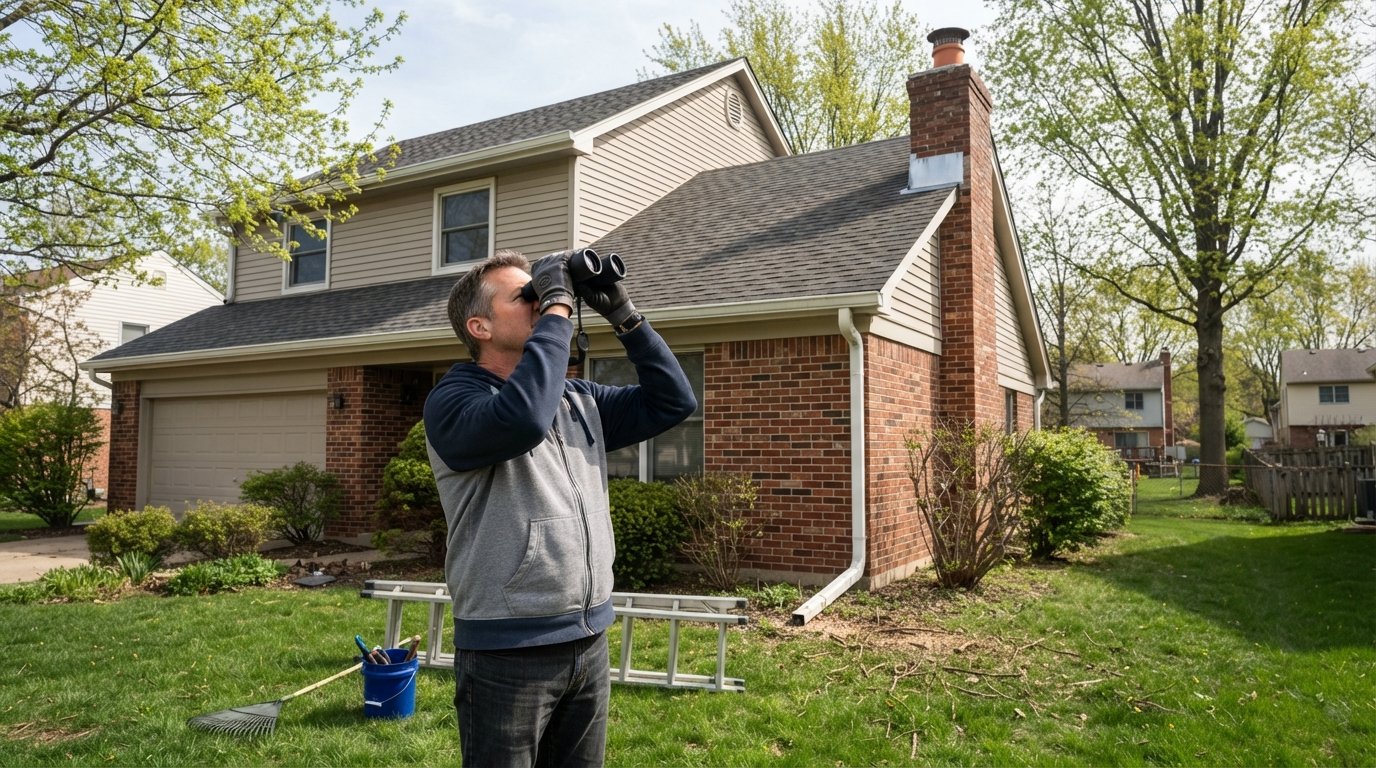
Winter is brutal on roofing materials. Freeze-thaw cycles pry at shingles and flashing, ice dams can force water under the surface, and wind storms loosen fasteners. Before the spring rain arrives in full force, walk your property and inspect the roof from the ground with binoculars. Look for missing, curling, or cracked shingles, rusted or bent flashing around chimneys and vents, and granules collecting in gutters or at the base of downspouts. If you spot significant damage or the roof is more than 15 to 20 years old, it may be time to weigh your options. Our guide on roof repair or replacement explains how to decide whether a targeted fix or a full replacement makes more financial sense.
Next, clear your gutters and downspouts of leaves, twigs, and grit. Clogged gutters are one of the leading causes of basement flooding and fascia rot because water backs up under the roofline and runs down the walls. While you are up there, check that downspouts direct water at least 4 to 6 feet away from the foundation. If they dump right next to the house, add extensions or splash blocks.
Finally, step into the attic with a flashlight. Look for dark stains on the roof deck, damp insulation, or daylight showing through gaps. These are signs of leaks or poor ventilation that will only get worse. Good attic airflow keeps the roof cooler in summer and reduces the chance of ice dams next winter.
Inspect the Exterior: Siding, Paint, and Foundation
Walk the perimeter of your home and examine the siding, trim, and paint. Winter moisture and temperature swings cause wood to swell, crack, and peel. Run your hand along window sills, door frames, and corner boards; if the wood feels soft or crumbles, you have rot that needs attention before it spreads. Caulk any gaps around windows, doors, and utility penetrations with exterior-grade sealant. This simple step keeps water out and improves energy efficiency.
Then look at the foundation. Small hairline cracks in concrete are usually cosmetic, but horizontal cracks, wide gaps, or cracks that let in water are warning signs. Clear any soil, mulch, or debris that is piled against the foundation, and make sure the ground slopes away from the house at a rate of about 6 inches over the first 10 feet. Poor drainage is the number one cause of wet basements and crawl spaces.
Spring is also the right time to inspect exterior paint and stain. Paint protects siding, decks, and fences from ultraviolet damage and moisture. If you see bare wood or peeling areas larger than a credit card, plan to scrape, prime, and repaint those spots before summer. If the whole exterior is due for a refresh, this is a project where professional help pays off. You can compare local painting and siding professionals through trusted directories such as Homes.Contractors, which connects homeowners with pre-vetted contractors for exterior work.
Service Your HVAC System Before the Heat Arrives
Your heating, ventilation, and air conditioning system worked hard all winter and is about to work hard all summer. Spring is the ideal window to service it, because HVAC technicians are less busy than they are in July and August. Start by replacing the air filter, then schedule a professional tune-up that includes cleaning the condenser coils, checking refrigerant levels, testing the capacitor and contactor, and clearing the condensate drain line.
A neglected air conditioner can lose 5 to 10 percent of its efficiency each year, which shows up directly on your energy bills. It also increases the chance of a mid-summer breakdown, exactly when you need cooling the most. If your system is more than 12 to 15 years old, ask the technician whether repair or replacement makes more sense. Modern high-efficiency units can cut cooling costs significantly, and many utilities offer rebates for upgrades.
Do not forget the simple tasks you can handle yourself. Clear debris and leaves from around the outdoor condenser unit, trim back shrubs at least 2 feet, and vacuum the return vents inside the house. If you have a whole-house humidifier, turn it off and close the water supply for the warm season. If you have a boiler or furnace, have it inspected for carbon monoxide leaks and replace the batteries in your CO detectors.
Windows, Doors, and Insulation
Winter reveals every air leak in a house. If certain rooms felt drafty or your heating bills spiked, spring is the time to find and seal those gaps. Check weatherstripping around exterior doors and replace any that is cracked, compressed, or missing. Inspect window glazing and caulk lines, and repair any gaps you find. A tube of caulk and a few hours of work can save hundreds of dollars in annual energy costs.
Insulation is another area worth a look. In the attic, insulation should be evenly distributed and at least as high as the floor joists, ideally more. If you can see the tops of the joists, you likely need more insulation. Adding attic insulation is one of the highest-return home improvements you can make, and many utility companies offer rebates that cover part of the cost.
While you are inspecting, check for condensation on windows or frost in the attic during cold snaps. Both point to air leaks or inadequate ventilation. Sealing air leaks and improving insulation keeps your home comfortable, reduces strain on your HVAC system, and lowers your carbon footprint.
Outdoor Spaces: Decks, Driveways, and Landscaping
Outdoor living areas take a beating in winter. Inspect your deck for loose boards, popped nails, and soft spots. Push a screwdriver into any area that looks discolored; if it sinks in easily, that wood is rotting and should be replaced. Tighten railings and check that stairs and guardrails meet current safety standards. Then clean and reseal the deck to protect it from summer sun and rain.
Concrete driveways, walkways, and patios should be checked for cracks and shifting. Small cracks can be filled with concrete caulk to prevent water from getting in and freezing next winter. If you see large, uneven sections or heaving, it may be a drainage issue that needs professional attention.
Landscaping matters too. Trim trees and shrubs away from the house, especially branches that overhang the roof or touch siding. Those branches can scrape shingles, provide a path for rodents, and drop leaves into gutters. Clear dead vegetation from around the foundation, refresh mulch, and check that irrigation systems and outdoor faucets did not freeze over the winter.
Plumbing and Water Systems
Freezing temperatures are the enemy of plumbing. Even if you did not have a burst pipe this winter, small cracks and loose fittings can develop. Turn on every faucet and look under sinks for drips. Check the water heater for leaks, rust, or unusual noises, and flush the tank to remove sediment that reduces efficiency. If your water heater is more than 10 years old, start budgeting for a replacement.
Inspect exposed pipes in the basement, crawl space, and garage for condensation or corrosion. Check the main water shut-off valve to make sure it turns freely in case of an emergency. Test sump pumps by pouring water into the pit and confirming the float activates the pump. A failed sump pump during a spring storm can flood a basement in minutes.
Also inspect outdoor hose bibs and irrigation lines for freeze damage. A cracked pipe behind the wall may not show until you turn the water on, so open the valve slowly and watch for leaks.
Safety Systems: Smoke, Carbon Monoxide, and Electrical
Spring is a natural time to test every safety device in your home. Press the test button on each smoke detector and carbon monoxide alarm, and replace batteries even if they still work. Check the expiration date on the back of each unit; most detectors need to be replaced every 10 years. If you have a fire extinguisher, verify that the gauge is in the green zone and that it is still within its service life.
Electrical systems deserve a look as well. Check outdoor outlets for ground fault circuit interrupter protection and test the reset buttons. Look for frayed cords, overloaded power strips, and warm outlets, which can indicate wiring problems. If you notice flickering lights, burning smells, or frequently tripped breakers, call a licensed electrician.
Finally, review your emergency kit. Spring storms can knock out power for days. Make sure you have flashlights, batteries, bottled water, a first aid kit, and a battery-powered radio. If you have a generator, test it and store fuel safely.
Create a Budget and Hire Help When You Need It
Not every spring maintenance task is a do-it-yourself job. Roof repairs, HVAC service, electrical work, and major plumbing issues should be handled by licensed professionals. The challenge is finding someone reliable without overpaying. Start by listing the projects that need outside help, then get at least three written estimates for each one. Compare not just price but also scope, materials, timeline, and warranty terms.
Before hiring anyone, verify their license, insurance, and references. Ask for proof of general liability and workers compensation coverage, and check online reviews and local ratings. A contractor who hesitates to provide these details is a red flag. You can also check with your state or local licensing board to confirm credentials.
Budgeting matters as much as hiring. A good rule of thumb is to set aside 1 to 3 percent of your home's value each year for maintenance and repairs. For a $350,000 home, that is $3,500 to $10,500 annually. Some years you will spend less, but a roof replacement or HVAC failure can wipe out years of savings in one shot. Having a dedicated maintenance fund turns emergencies into inconveniences.
If you are planning a larger project, such as a bathroom remodel or a new roof, get multiple quotes and ask about financing options. Many contractors offer payment plans, and some home improvement loans carry competitive rates. Just be sure to read the terms carefully and avoid high-interest financing that can turn a modest project into a long-term burden.
Spring home maintenance is not about perfection; it is about prevention. A few weekends of focused effort now can save you thousands of dollars in emergency repairs later and keep your home safe, efficient, and comfortable all year. Make your checklist, tackle one section at a time, and do not be afraid to call in the pros when a job calls for expertise. Your future self, and your wallet, will thank you.