
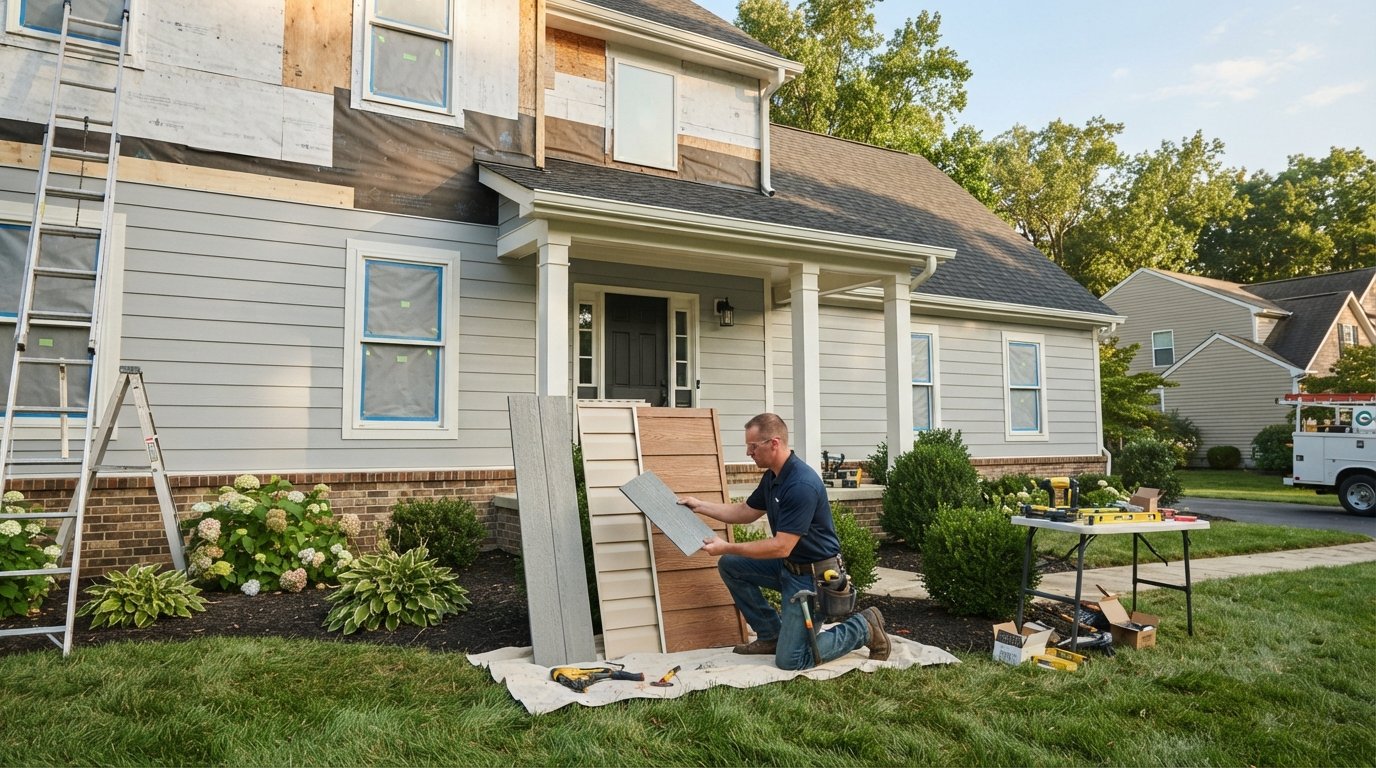
How to Choose the Best Siding Material for Your Home
Learn how to choose the best siding material for your home with our comparison of fiber cement, vinyl, wood, and engineered wood. Call (833)-700-4293 for expert help.

By Elena Carter
Learn more about Siding Installation for guides, costs, and what to expect.
Compare Siding Installation Pros Near You

Enter your ZIP code to compare top-rated local professionals and request free quotes.
Siding is more than a pretty face. It is your home's first line of defense against rain, wind, snow, and sun, and it plays a major role in energy efficiency, resale value, and long-term maintenance costs. With so many options on the market, learning how to choose the best siding material for your home can feel overwhelming. This guide breaks down the most popular choices, compares them on durability, cost, and curb appeal, and helps you match the right material to your climate, budget, and lifestyle.
Why Siding Deserves Careful Consideration
Siding protects your home's structure from moisture damage, insulates against temperature swings, and defines your property's visual character. A poor choice can lead to premature failure, expensive repairs, and even lower resale value. A well-chosen material, on the other hand, can last decades with minimal fuss and boost your home's market appeal.
Before diving into specific materials, think about your priorities. Are you looking for the lowest upfront cost? The longest lifespan? The easiest maintenance? Or the best return on investment when you sell? Answering these questions will narrow your options and make the decision clearer.
Comparing Popular Siding Materials: Fiber Cement, Vinyl, Wood, and Engineered Wood
The four most common siding categories each have distinct strengths and weaknesses. Understanding these differences is the core of how to choose the best siding material for your home.
Fiber Cement Siding
Fiber cement is a composite of cement, sand, and cellulose fibers. It mimics the look of wood or masonry while offering superior durability. It resists rot, insects, and fire, and it holds paint well for 10 to 15 years. Expect to pay $5 to $11 per square foot installed, depending on style and region. Fiber cement requires professional installation to avoid moisture issues, but its 30 to 50-year lifespan and low maintenance make it a favorite for homeowners planning to stay long-term.
Vinyl Siding
Vinyl is the budget-friendly champion, costing $3 to $7 per square foot installed. Modern vinyl comes in a wide range of colors and textures, and it never needs painting. However, it can crack in extreme cold, fade in intense sun, and may not deliver the same curb appeal as natural materials. Lifespan runs 20 to 40 years. Vinyl is a solid choice for cost-conscious homeowners in mild climates or those planning to sell within a decade.
Wood Siding
Wood siding, including cedar and redwood, offers unmatched natural beauty and insulation value. It costs $6 to $12 per square foot installed but demands regular maintenance: staining or painting every 3 to 5 years, plus vigilance against rot and insects. With proper care, wood can last 30 to 50 years. It is best suited to homeowners who love the authentic look and do not mind the upkeep, or who live in dry climates where wood performs well.
Engineered Wood Siding
Engineered wood is made from wood fibers, wax, and resin, pressed into boards that resist moisture better than solid wood. It costs $4 to $9 per square foot installed and can last 20 to 30 years. It looks like real wood and holds paint well, but it still requires periodic repainting and careful installation to prevent water infiltration. It is a middle-ground option for homeowners who want wood's appearance without the highest maintenance burden.
To summarize the key trade-offs, here is a quick comparison of upfront cost, maintenance level, and lifespan for each material:
- Fiber cement: moderate to high cost, low maintenance, 30-50 year lifespan.
- Vinyl: low cost, very low maintenance, 20-40 year lifespan.
- Wood: high cost, high maintenance, 30-50 year lifespan.
- Engineered wood: moderate cost, moderate maintenance, 20-30 year lifespan.
Use this snapshot as a starting point, but remember that local labor rates, climate, and installation complexity can shift the numbers significantly.
Installation Requirements and Climate Considerations by Region
Your local climate should heavily influence your siding choice. In wet, humid regions like the Pacific Northwest or the Gulf Coast, moisture management is critical. Fiber cement and vinyl perform well there, provided they are installed with proper flashing and ventilation. Wood siding struggles in these areas unless meticulously maintained.
In cold climates with heavy snow and freeze-thaw cycles, vinyl can become brittle and crack. Fiber cement and engineered wood handle freezing temperatures better. Wood siding can work if kept painted and sealed, but it requires more attention.
In hot, sunny regions like the Southwest, vinyl may fade or warp under intense UV exposure. Fiber cement holds up well, and wood can perform if protected with UV-resistant finishes. Engineered wood is also a reasonable option.
Installation requirements vary by material. Fiber cement is heavy and requires specialized tools and fasteners; it is not a DIY-friendly project for most homeowners. Vinyl is lighter and more forgiving but still demands careful attention to nailing and expansion gaps. Wood and engineered wood require precise cutting and sealing. In all cases, proper installation is essential to performance and warranty coverage.
If you are unsure about local code requirements or need help finding a qualified installer, resources like Homes.Contractors can connect you with pre-vetted professionals in your area. PlanRemodel's own directory also offers a ratings-by-state feature to help you compare local contractors and request multiple quotes.
How Siding Upgrades Affect Resale Value and Insurance
Siding replacement consistently ranks among the top exterior remodeling projects for return on investment. According to industry data, fiber cement siding recoups roughly 70 to 80 percent of its cost at resale, while vinyl returns about 65 to 75 percent. Wood and engineered wood typically fall in the 60 to 70 percent range. These numbers vary by market, but the trend is clear: siding upgrades add tangible value.
Beyond resale, siding can influence insurance premiums. Some insurers offer discounts for impact-resistant or fire-resistant materials like fiber cement. Conversely, wood siding may raise premiums in areas prone to wildfire or termite damage. Check with your insurance provider before committing to a material, and ask about any credits for durable or energy-efficient siding.
Energy efficiency is another financial factor. Siding with integrated insulation or a reflective coating can reduce heating and cooling costs. Vinyl and fiber cement offer insulated options that improve thermal performance. If your home has older, uninsulated siding, upgrading can pay off through lower utility bills over time.
When planning your budget, factor in not just the material cost but also installation, potential structural repairs (especially if old siding hides damage), and long-term maintenance. Requesting multiple quotes from pre-vetted contractors is the best way to get accurate numbers for your specific home and region.
Maintenance Expectations Over 20 Years
Maintenance is where siding materials diverge sharply. Over a 20-year horizon, the cumulative cost and effort can vary dramatically.
Vinyl requires the least maintenance: occasional cleaning with soap and water, and perhaps replacing a cracked panel. No painting, no sealing. Fiber cement needs repainting every 10 to 15 years, plus periodic caulking around joints and penetrations. Wood siding demands the most attention: repainting or staining every 3 to 5 years, regular inspection for rot and insects, and prompt repairs. Engineered wood falls in between, needing repainting every 5 to 8 years and careful monitoring for moisture intrusion.
If you are handy, some maintenance tasks are DIY-friendly. But for many homeowners, the time and effort add up. When calculating the true cost of a siding material, include not just the purchase price but also the projected maintenance expenses over the years you plan to own the home.
Also consider how maintenance affects your lifestyle. If you travel frequently or prefer low-effort homeownership, vinyl or fiber cement may be worth the higher upfront cost. If you love the look of real wood and enjoy caring for your home, wood siding can be a rewarding choice.
A Step-by-Step Framework for Choosing Your Siding
With the material comparisons in mind, here is a practical framework for how to choose the best siding material for your home.
- Assess your climate and exposure. Identify your region's dominant weather patterns: rain, snow, heat, humidity, or salt air. This will rule out materials that perform poorly in your area.
- Set a realistic budget. Include material, installation, and 20-year maintenance costs. Do not forget potential repairs to underlying structure.
- Define your maintenance tolerance. Decide how much time and money you are willing to spend on upkeep each year.
- Consider resale and insurance. If you plan to sell within 10 years, prioritize materials with strong ROI and broad appeal. Check insurance implications for fire and impact resistance.
- Get quotes from multiple pre-vetted contractors. Installation quality matters as much as material choice. Use PlanRemodel to request free estimates and compare local professionals.
Following these steps will help you avoid common pitfalls, like choosing a material that looks great but fails in your climate, or underestimating long-term costs. If your home has underlying structural issues, such as foundation problems, address those before investing in new siding. In our guide on signs your home needs foundation repair, we explain how to spot trouble early and plan repairs.
Remember that siding is a long-term investment. Taking the time to research and compare now can save you thousands of dollars and countless headaches later.
Final Thoughts
Choosing the right siding material is a balance of art and science. It requires weighing durability, cost, curb appeal, maintenance, and local climate against your personal priorities. By understanding the strengths and weaknesses of fiber cement, vinyl, wood, and engineered wood, you can make an informed decision that protects your home and enhances its value for years to come. And when you are ready to hire a professional, PlanRemodel makes it easy to find qualified, pre-vetted contractors in your area and request multiple quotes, so you can move forward with confidence.