
How to Manage a Home Renovation Timeline and Delays
Plan realistic schedules and handle surprises with confidence. Call (833)-700-4293 to connect with trusted local contractors today.

By Valerie Reed
Learn more about Exterior Painting for guides, costs, and what to expect.
Compare Exterior Painting Pros Near You

Enter your ZIP code to compare top-rated local professionals and request free quotes.
A home renovation can transform how you live, but the path from demolition to final walkthrough rarely follows a straight line. Even well-planned projects hit snags: a contractor discovers water damage behind a wall, a custom cabinet shipment arrives three weeks late, or a permit inspection gets pushed back. According to industry surveys, roughly half of all remodeling projects run behind schedule, and many exceed their original budgets by 10 to 20 percent. The homeowners who come out ahead are not the ones who avoid every problem. They are the ones who plan for problems before they happen. Understanding how to manage a home renovation timeline and delays is the single most valuable skill you can develop before signing a contract. It protects your wallet, your sanity, and your relationship with the people doing the work.
Start With a Realistic Timeline, Not a Wishful One
The most common mistake homeowners make is accepting a timeline built on best-case assumptions. A contractor who says your kitchen will be done in four weeks may be picturing perfect weather, instant material availability, and no hidden damage. In reality, a full kitchen remodel typically takes six to twelve weeks, and a bathroom remodel usually runs four to eight weeks. When you build your expectations around optimistic numbers, every small delay feels like a crisis. When you build them around realistic numbers, you give yourself room to absorb the unexpected.
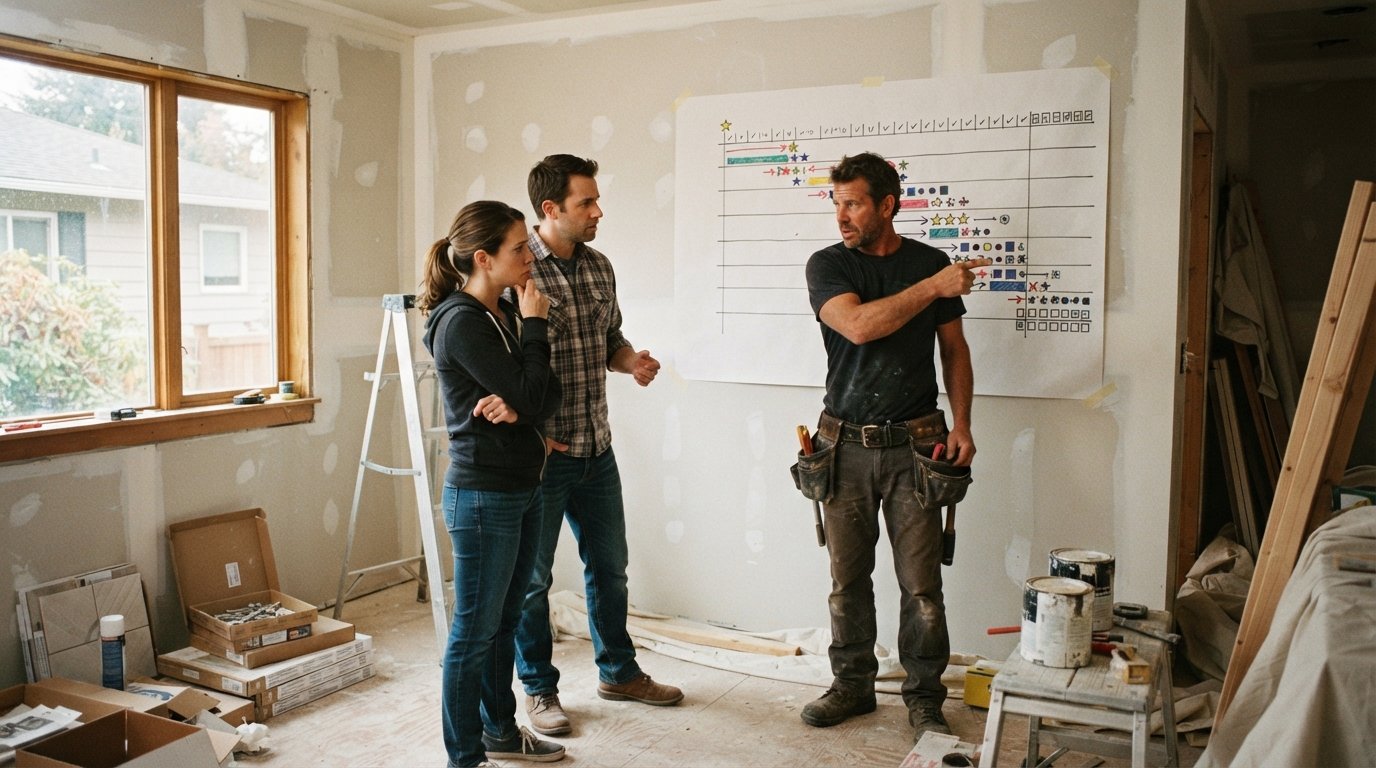
Before work begins, ask your contractor to break the schedule into phases: demolition, rough-in plumbing and electrical, inspections, drywall, cabinetry, countertops, flooring, fixtures, and punch list. Each phase should have a start date, an end date, and a clear list of what must be finished before the next phase can begin. This phase-by-phase breakdown does two things. First, it shows you where delays are most likely to occur. Second, it gives you a shared reference point when something slips, so conversations stay factual instead of emotional.
You should also build in a buffer. Industry professionals often recommend adding 15 to 20 percent more time to whatever schedule you are given. If your contractor says eight weeks, plan for nine or ten. That buffer is not pessimism; it is risk management. If the project finishes on time, you are pleasantly surprised. If it runs long, you are prepared.
Build a Contingency Budget Alongside the Timeline
Time and money are inseparable in renovation work. A delay almost always carries a cost, whether it is additional labor hours, rental housing, or storage fees. That is why your timeline planning must go hand in hand with a contingency budget. Most financial advisors suggest setting aside 10 to 20 percent of your total project cost for unexpected expenses. On a $40,000 kitchen remodel, that means keeping $4,000 to $8,000 in reserve.
This reserve covers the surprises that are almost guaranteed to appear once walls are opened. Common examples include:
- Hidden water damage or mold behind walls or under floors
- Outdated wiring or plumbing that does not meet current code
- Structural issues discovered during demolition
- Material price increases or backorders that require substitutions
- Permit revisions or additional inspection fees
When you have a contingency fund, a delay caused by hidden damage becomes a manageable line item instead of a financial emergency. You can approve the extra work quickly, which actually shortens the delay. Contractors often lose days waiting for homeowners to decide how to handle unexpected costs. Having money set aside lets you say yes immediately and keep the project moving.
Choose the Right Contractor Before You Choose a Start Date
No scheduling system can compensate for a contractor who is unreliable, understaffed, or inexperienced. The quality of your contractor is the strongest predictor of whether your timeline holds. This is where careful vetting pays off. A pre-vetted contractor with a strong local reputation, proper licensing, and verifiable references is far more likely to finish on schedule than someone hired solely on the lowest bid.
Platforms like Homes.Contractors give homeowners a way to compare qualified professionals in their area, review service categories, and request multiple quotes without pressure. Getting three or more estimates does more than help you find a fair price. It exposes you to different scheduling approaches, communication styles, and levels of professionalism. A contractor who provides a detailed written schedule with phases and dependencies is showing you how they think. A contractor who gives you a vague verbal promise is showing you something else entirely.
During the selection process, ask directly about their current workload. A contractor juggling six projects at once may not have the crew capacity to keep yours on track. Ask how they handle material ordering and whether they have backup suppliers. Ask what happens if a subcontractor does not show up. The answers will tell you more about your future timeline than any written estimate.
Understand the Most Common Causes of Renovation Delays
Delays are not random. They cluster around predictable categories, and knowing them in advance helps you prepare. The most frequent culprits include permit and inspection backlogs, material lead times, change orders, weather, and labor shortages. Each one requires a different mitigation strategy.
Permits are often the first bottleneck. Depending on your municipality, obtaining a building permit can take anywhere from a few days to several weeks. Inspections can add further waiting time, especially during busy construction seasons. Your contractor should handle permit applications early, ideally before demolition begins. If you are managing the project yourself, start the permit process as soon as your plans are finalized.
Material lead times have become a major factor in recent years. Custom cabinets, specialty tile, windows, and certain appliances can take eight to sixteen weeks or longer to arrive. Ordering materials before demolition starts is one of the most effective ways to protect your schedule. Some homeowners even store materials in a garage or storage unit until the project reaches the right phase.
Change orders are another common source of delay. Every time you decide to move a wall, upgrade a fixture, or add a feature mid-project, the schedule shifts. This does not mean you can never make changes, but you should understand that each one carries a time cost. If you must make a change, make it early and in writing, and ask your contractor to update the schedule accordingly.
Create a Communication Rhythm That Catches Problems Early
Most delays do not appear out of nowhere. They announce themselves in small ways first: a subcontractor who does not show up two days in a row, a supplier who stops returning calls, a phase that takes longer than expected without explanation. Homeowners who catch these signals early can often prevent a small slip from becoming a major setback.
Establish a regular check-in schedule with your contractor. A brief weekly walkthrough or phone call is usually enough to stay informed. During these check-ins, ask three questions: What was completed this week? What is planned for next week? What risks or obstacles are you seeing? These questions keep the conversation forward-looking and give your contractor a natural opening to raise concerns before they become emergencies.
Keep your own written log of the project. Note the date each phase starts and finishes, when materials arrive, and when inspections occur. If a dispute arises later, this log becomes valuable documentation. It also helps you see patterns. If one subcontractor is consistently late, you can raise the issue with your general contractor before it derails the entire schedule.
If your project involves exterior work, seasonal maintenance matters too. Planning around weather is easier when you already understand the rhythms of your home. Our spring home maintenance checklist covers the seasonal tasks that can affect exterior renovation scheduling, from gutter clearing to roof inspections.
Know How to Respond When a Delay Happens
Even with the best planning, delays happen. What matters is how you respond. The first step is to get the facts. Ask your contractor for a specific explanation: what caused the delay, how long it will last, and what the revised schedule looks like. Vague answers like "supply chain issues" are not enough. You need to know which material, which supplier, and what alternatives exist.
Once you understand the cause, evaluate your options. Sometimes the best response is simply to wait. Other times, you can pivot to a different material or adjust the sequence of work so other phases can proceed. For example, if kitchen cabinets are delayed, your contractor might be able to complete flooring, painting, and lighting installation first. This kind of resequencing can keep the project moving even when one piece is stuck.
Document everything in writing. If your contractor promises a new completion date, ask for it in an email or text message. If costs change because of the delay, request an updated written estimate. Clear documentation protects both parties and reduces the chance of misunderstandings later.
Finally, stay calm and solution-oriented. Renovation delays are frustrating, but they are rarely personal. Contractors who feel attacked tend to become defensive, which slows communication and problem-solving. Homeowners who stay focused on the shared goal, a finished project done right, tend to get better results.
Protect Yourself With the Right Contract Terms
Your contract is your most important tool for managing delays. Before you sign, make sure it includes a clear start date, a substantial completion date, and a payment schedule tied to milestones rather than calendar dates. Never pay the full project cost upfront. A typical structure might be 10 percent at signing, 25 percent at rough-in completion, 25 percent at drywall completion, and the remainder upon final walkthrough.
Your contract should also address what happens if the project runs late. Some contracts include a liquidated damages clause, which specifies a daily credit if the contractor misses the deadline without a valid reason. This is more common on large projects, but it is worth asking about. At minimum, your contract should require written notice of any delay and a revised schedule within a reasonable time frame.
Make sure the contract also spells out who is responsible for permits, who pays for dumpsters and portable toilets, and how change orders will be priced and approved. These details may seem minor, but they are common sources of conflict that can stall a project for days or weeks.
Keep Your Daily Life Functional During the Project
One of the most overlooked aspects of timeline management is protecting your household routine. If your only bathroom is under renovation, you need a plan for showers, toilets, and privacy. If your kitchen is out of commission, you need a temporary cooking setup. These logistical details do not change the construction schedule, but they change how painful a delay feels.
Set up a temporary kitchen with a microwave, mini-fridge, coffee maker, and a few essential dishes. If possible, designate one bathroom as the last to be renovated so you always have a working toilet and shower. Create a clean path through the house for workers to move materials without tracking debris into living areas. These small preparations reduce stress and help the project feel manageable even when it runs long.
You should also plan for noise and dust. Demolition days are loud. Drywall sanding creates fine dust that travels through the house. Seal off doorways with plastic sheeting and tape, and consider scheduling noisy work during hours when you can be away from home. If you work from home, talk with your contractor about the loudest phases and see if they can be clustered into specific days.
When to Bring In Professional Help
Some homeowners act as their own general contractor to save money. This can work well on small projects, but it becomes risky on complex renovations. Managing multiple trades, coordinating inspections, and keeping materials on schedule is a full-time job. If you have a demanding career or limited construction experience, hiring a general contractor is often worth the cost.
If you do decide to self-manage, be honest about your limits. You will need to be available during business hours to answer questions, approve changes, and let inspectors into the house. You will need to track deliveries, resolve disputes between trades, and keep the project moving when someone falls behind. If any of that sounds overwhelming, a general contractor will save you time, money, and stress in the long run.
The same principle applies to finding the right professionals in the first place. Taking time upfront to compare contractors, check references, and verify credentials pays dividends throughout the project. A contractor who communicates well and plans carefully will keep your timeline on track far better than one who simply offers the lowest price.
Turning Timeline Management Into a Habit
Managing a home renovation timeline is not about controlling every variable. It is about preparing for the variables you cannot control and responding quickly when they appear. The homeowners who succeed are the ones who plan realistic schedules, build financial buffers, choose reliable contractors, communicate regularly, and stay flexible when plans change. Delays will still happen. But with the right approach, they become temporary inconveniences instead of project-ending disasters.
Before your next renovation begins, take the time to build your schedule, your budget, and your team with the same care you would give to choosing countertops or paint colors. The result will be a project that finishes closer to plan, costs closer to budget, and leaves you with a home you love rather than a story you dread telling.