
Red Flags of a Bad Home Improvement Contractor
Spot the red flags of a bad home improvement contractor before you pay a deposit. Call (833)-700-4293 to connect with pre-vetted local pros today.

By Andrew Shaw
Learn more about Exterior Painting for guides, costs, and what to expect.
Compare Exterior Painting Pros Near You

Enter your ZIP code to compare top-rated local professionals and request free quotes.
Your home is likely your largest investment, and handing over a deposit to the wrong person can turn a dream renovation into a financial nightmare. Most homeowners do not realize they are dealing with a problematic contractor until the work has stalled, the phone calls go unanswered, or the final bill balloons far beyond the original estimate. The good news is that bad actors almost always telegraph their intentions early, if you know what to look for. This guide breaks down the most common red flags of a bad home improvement contractor so you can protect your money, your timeline, and your peace of mind.
Pressure Tactics and Door-to-Door Storm Chasers
One of the earliest and most reliable warning signs appears before any contract is signed: high-pressure sales tactics. A legitimate contractor understands that homeowners need time to review estimates, compare bids, and check references. A bad contractor, by contrast, wants a commitment within hours, often citing a "one-time discount" that expires today or materials that are "left over from another job" and will be gone tomorrow. This manufactured urgency is designed to short-circuit your better judgment.
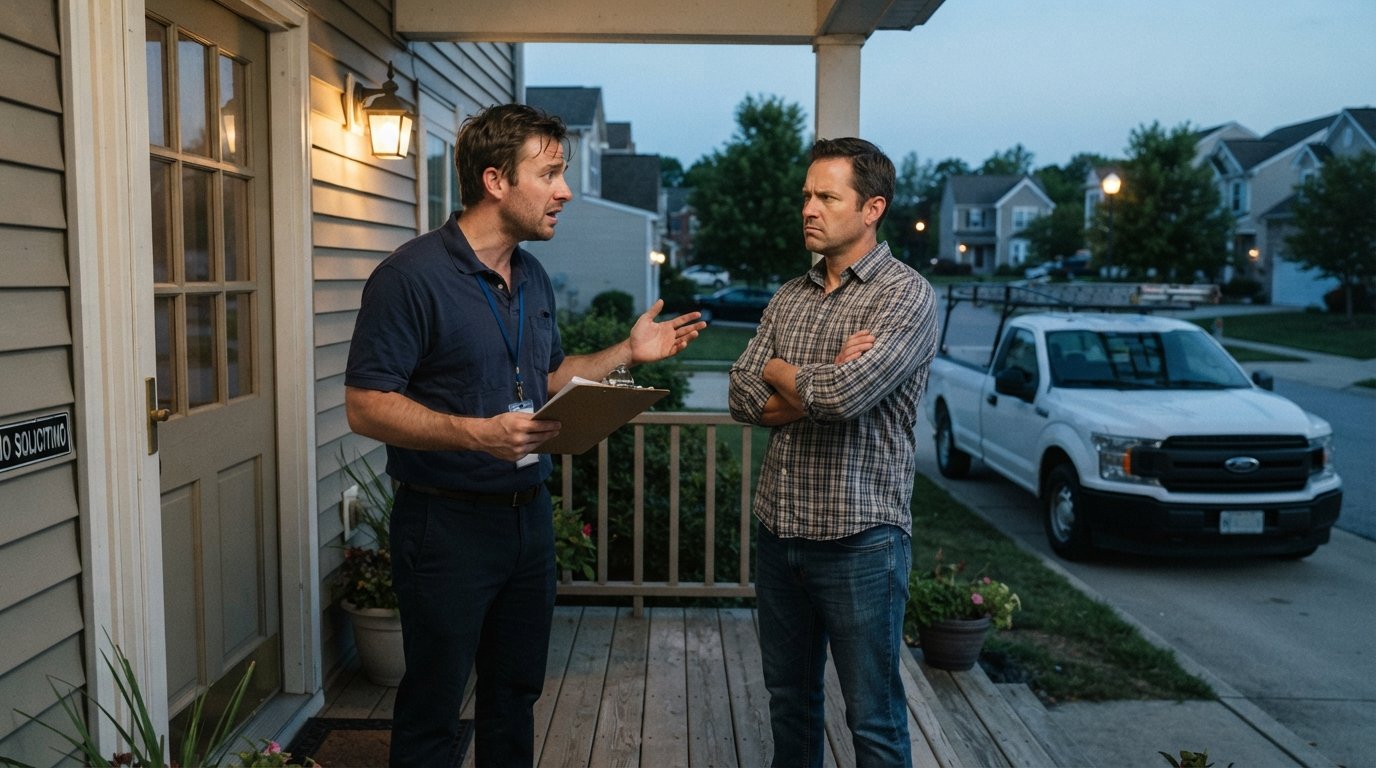
Storm chasers are a specific breed of this problem. After a major hail, wind, or flood event, out-of-town crews descend on neighborhoods offering fast roof repairs, siding replacement, or driveway sealing. They often arrive in unmarked trucks with out-of-state plates and no local business license. Once they collect deposits, they move to the next town and become impossible to reach. If someone knocks on your door unsolicited and claims they were "just in the neighborhood" and noticed damage on your roof, treat that as a serious red flag of a bad home improvement contractor.
Legitimate companies do sometimes canvas neighborhoods, but they will happily provide a physical office address, a verifiable license number, and references from nearby completed jobs. They will also encourage you to get a second opinion. To separate professionals from opportunists, watch for these behaviors:
- Demanding a decision on the spot or offering a discount that disappears within hours
- Claiming to have "extra materials" from a neighbor's job that can be used on your home today
- Refusing to put anything in writing until you pay a "good faith" deposit
- Arriving in unmarked vehicles with out-of-state plates and no local references
If any of these apply, slow down. A trustworthy contractor will never penalize you for doing your homework. In fact, the best ones expect it and will make the verification process easy.
No Written Contract, No Physical Address
A handshake agreement might work for a small favor between neighbors, but it has no place in a home improvement project involving thousands of dollars. A written contract is the single most important document protecting you if the work goes wrong. It should spell out the scope of work, materials to be used, start and completion dates, payment schedule, warranty terms, and the process for handling change orders. If a contractor resists putting the agreement in writing, that alone is a major red flag of a bad home improvement contractor.
Equally concerning is a contractor who cannot or will not provide a physical business address. A post office box alone is not sufficient. You want a street address you can visit if problems arise, along with a phone number that reaches a real person during business hours. Verify that the address matches what is listed on the contractor's license and insurance documents. If the address on the contract is a vacant lot or a residential home that does not match the business name, dig deeper before proceeding.
Out-of-state license plates are not automatically disqualifying, but they should prompt additional scrutiny. Ask why the contractor is working in your area, how long they have been doing so, and whether they carry a local business license. Request references from at least three completed projects within a 30-mile radius of your home. If they cannot provide them, that is a strong signal to walk away.
Upfront Payment Demands That Exceed Normal Deposit Ranges
Money is where bad contractors cause the most damage. A reasonable deposit for a home improvement project typically ranges from 10 to 30 percent of the total contract price, with the remainder tied to milestones or completion. Demanding 50 percent or more upfront, especially in cash, is one of the clearest red flags of a bad home improvement contractor. It often means the contractor has no operating capital and intends to use your money to fund a different job, a pattern that frequently ends in abandoned projects and empty bank accounts.
Cash-only requests should raise immediate suspicion for two reasons. First, cash payments are difficult to trace, which makes recovery nearly impossible if the contractor disappears. Second, a contractor who insists on cash is often trying to avoid paying taxes, insurance premiums, or workers' compensation, all of which protect you if a worker is injured on your property. Always pay by check or credit card so you have a paper trail, and never pay for materials upfront unless you have a written agreement specifying exactly what is being purchased and who owns the materials until installation is complete.
Be equally wary of contractors who ask you to sign over an insurance claim check or who offer to "handle everything" with your insurer. While it is normal for a contractor to communicate with your insurance adjuster, you should always be the one signing the claim documents and receiving the funds. If a contractor pressures you to endorse a check directly to them before work begins, that is a serious red flag.
How to Verify a Business Identity and Complaint History
Before you hire anyone, take thirty minutes to verify their business identity and complaint history. This step is free, fast, and it eliminates most of the risk. Start with your state's licensing board or consumer protection agency. Most states maintain an online database where you can look up a contractor's license number, check its status, and see whether any disciplinary actions have been taken. If the contractor claims to be licensed but you cannot find a record, ask for the license number in writing and verify it yourself.
Next, check complaint history through multiple sources. The Better Business Bureau, your state attorney general's office, and local consumer affairs agencies all maintain complaint databases. A single unresolved complaint from five years ago may not be disqualifying, but a pattern of complaints about unfinished work, unreturned deposits, or poor communication should end the conversation immediately. Also search the contractor's name and business name online, and check review platforms for red flags such as repeated mentions of "disappeared," "never finished," or "would not refund."
Finally, verify insurance. Ask for a certificate of insurance showing both general liability coverage and workers' compensation coverage. Call the insurance company directly to confirm the policy is active and that the contractor is listed as the insured. If a contractor cannot provide this documentation, you could be held liable for injuries that occur on your property. This is not a step to skip, no matter how friendly or professional the contractor seems.
For homeowners who want a faster, safer path, using a pre-vetted contractor directory removes much of the guesswork. In our guide on spring home maintenance tasks, we explain how seasonal checkups help you spot small issues before they become expensive emergencies, and the same proactive mindset applies to hiring. Platforms like Homes.Contractors offer detailed service directories covering roofing, HVAC, plumbing, flooring, and bathroom remodeling, along with educational articles and an FAQ hub that can help you compare local pros before you commit. PlanRemodel works similarly, connecting you with experienced, pre-vetted local contractors and allowing you to request multiple free estimates so you can compare pricing, timelines, and credentials side by side.
Starting Over Safely With Pre-Vetted Local Pros
If you have already encountered one or more of these red flags, do not panic. The best move is to stop all payments, document everything in writing, and start fresh with a verified professional. Send a written notice requesting a refund of any unearned deposit, and keep copies of all contracts, texts, emails, and payment records. If the contractor refuses to refund your money or has abandoned the job, file complaints with your state licensing board, the attorney general's office, and the Better Business Bureau. In some cases, small claims court or a consumer protection attorney may be necessary to recover funds.
When you are ready to try again, change your vetting process. Start by requesting at least three written estimates from contractors who are licensed, insured, and locally established. Ask each one for references from projects completed in the past year, and actually call those references. Visit a job site if possible. Confirm the contractor's license and insurance before signing anything, and never pay more than a 10 to 30 percent deposit. Insist on a written contract that includes a detailed payment schedule tied to milestones, a completion date, and warranty terms.
Working with a referral platform like PlanRemodel streamlines this entire process. Instead of cold-calling contractors and hoping for the best, you can submit your project details once and receive multiple quotes from pre-vetted local professionals. You can compare credentials, read reviews, and check ratings by state before making a decision. This approach saves time, reduces risk, and gives you leverage to negotiate better pricing and terms.
The red flags of a bad home improvement contractor are rarely subtle once you know what to look for. Pressure tactics, missing contracts, excessive upfront payment demands, and unverifiable business identities are all warning signs that should stop you in your tracks. Trust your instincts, verify everything in writing, and never let urgency override caution. With the right preparation and the right partners, you can protect your home and your wallet while still getting the quality renovation you deserve.