
Whole House Repiping Cost and When It Is Necessary
Understand whole house repiping cost and when it is necessary, from warning signs to real pricing. Call (833)-700-4293 for trusted local plumbers.

By Elena Carter
Learn more about Plumbing Pipe Installation or Replacement for guides, costs, and what to expect.
Compare Plumbing Pipe Installation or Replacement Pros Near You

Enter your ZIP code to compare top-rated local professionals and request free quotes.
Few home repairs feel as overwhelming as the prospect of replacing every water pipe in your house. Yet for millions of Americans living in older homes, a whole house repipe is not a luxury, it is a ticking clock. Between 2020 and 2024, water damage from failed plumbing ranked among the top five causes of homeowner insurance claims in the United States, and aging galvanized steel or polybutylene lines are frequent culprits. Understanding what a whole house repipe costs, and more importantly, recognizing the warning signs that make it necessary, can save you thousands in emergency repairs, mold remediation, and ruined belongings. This guide breaks down real pricing, the situations that justify a full repipe, and how to find a qualified plumber through resources like Homes.Contractors without overpaying.
What a Whole House Repipe Actually Involves
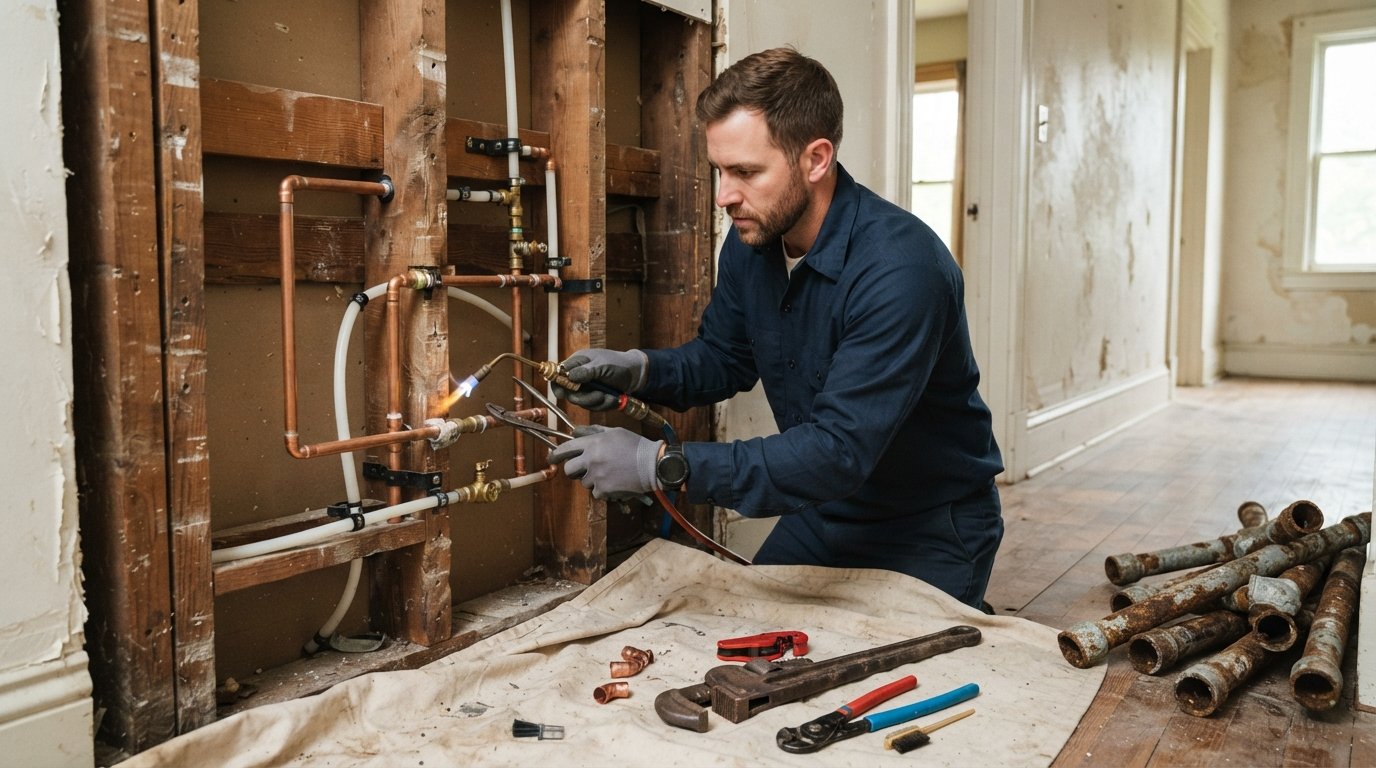
A whole house repipe means removing the existing water supply lines (and sometimes drain lines) throughout your home and installing new piping, typically copper or PEX. It is different from a spot repair, which fixes one leak or one section of corroded pipe. During a repipe, a licensed plumber maps every fixture: sinks, toilets, showers, bathtubs, water heater, washing machine, and outdoor spigots. The old lines are cut out or abandoned in place, and new lines are run through walls, ceilings, attics, and crawlspaces. In many cases, small access holes are cut into drywall, which later need patching and painting.
The scope can vary dramatically. A basic repipe covers only the hot and cold water supply lines. A more comprehensive job includes replacing the main water line from the meter to the house, upgrading shutoff valves, and installing a new pressure regulator. Some homeowners also choose to replace drain lines at the same time, especially in older homes with cast iron or clay drains that are root-invaded or cracked. Knowing which scope you need directly affects the final cost, so getting multiple quotes with clearly itemized scopes is essential.
Whole House Repiping Cost Breakdown for 2026
Nationally, the average whole house repiping cost in 2026 ranges from $4,500 to $15,000, with most homeowners paying between $7,000 and $10,000. That figure depends heavily on square footage, number of bathrooms, pipe material, local labor rates, and whether wall repair is included. On a per-fixture basis, plumbers often charge $400 to $1,200 per fixture, so a three-bathroom home with a kitchen, laundry, and two hose bibs might have 12 to 15 fixtures. The table below gives a general range, but your exact quote will reflect your home's layout and the contractor's overhead.
Here are the primary cost drivers you should expect to see on any estimate:
- Pipe material: PEX is generally the most affordable, copper costs 30 to 50 percent more, and CPVC falls in between. Copper lasts longer but requires soldering and more labor.
- Home size and layout: More square footage and more stories mean more pipe and more labor. A one-story ranch is cheaper than a two-story colonial with a finished basement.
- Accessibility: Crawlspaces, unfinished basements, and attics make the job easier. Slab foundations and homes with no attic access require more cutting and patching.
- Wall and ceiling repair: Some plumbers include drywall patching, others do not. Always confirm whether the quote covers patching, texture matching, and painting.
- Permits and inspections: Most municipalities require a plumbing permit for a repipe. Permit fees typically run $100 to $500, and the inspection must pass before walls are closed.
- Emergency or occupied-home work: If you need the job done quickly while living in the home, labor costs can rise by 15 to 25 percent.
It is also wise to budget for the hidden costs that frequently surprise homeowners during any major renovation. In our guide on hidden costs that blow up a home remodel budget, we explain how temporary housing, code upgrades, and unexpected structural repairs can add thousands to a project. A repipe is no exception: if the plumber discovers asbestos insulation, lead paint, or a failing water heater, those fixes are often necessary to complete the job legally and safely.
When a Whole House Repipe Is Actually Necessary
Not every leak means you need to repipe the entire house. A single pinhole leak in a copper line can be repaired. But when you start seeing a pattern of failures, or when your pipes are made of materials with a known lifespan, a whole house repipe becomes the more economical long-term choice. The following scenarios are the most common triggers for a full repipe.
1. You Have Galvanized Steel Pipes
Galvanized steel was standard in homes built before 1960. These pipes corrode from the inside out, and after 40 to 50 years they narrow so much that water pressure drops noticeably. Rust-colored water, especially after a vacation, is a classic sign. Once galvanized lines start leaking, repairs are temporary because the entire pipe wall is thin. A repipe is the only permanent fix.
2. Your Home Has Polybutylene Piping
Polybutylene (often gray or blue-gray) was used from the late 1970s to the mid-1990s. It reacts with chlorine in municipal water and becomes brittle over time. Many insurance companies now refuse to cover homes with polybutylene, or they charge significantly higher premiums. If you have this material, a repipe is not just recommended, it may be required to keep your coverage.
3. You Are Facing Frequent Leaks or Low Pressure
If you have called a plumber three or more times in the past two years for different leaks, or if water pressure at multiple fixtures has dropped noticeably, the problem is systemic. Patching one leak often just shifts the stress to the next weak point. A whole house repipe resolves the root cause and typically restores pressure to like-new levels.
4. You Are Planning a Major Remodel
If you are already opening walls for a kitchen remodel, bathroom addition, or basement finish, bundling a repipe into that project can save 20 to 40 percent compared to doing it separately. The walls are already open, the contractor is already on site, and the mess is contained. It is one of the smartest times to upgrade old plumbing.
5. You Have High Water Bills or Discolored Water
Unexplained spikes in your water bill can indicate a slab leak or a hidden leak inside a wall. Discolored water that persists after running the tap for several minutes points to corroding pipes. Both issues are red flags that a partial repair may not solve. A licensed plumber can perform a camera inspection and pressure test to confirm whether a repipe is warranted.
If you recognize two or more of these situations, it is time to get professional estimates. PlanRemodel makes it easy to request multiple quotes from pre-vetted plumbers in your area, so you can compare pricing and scope before committing.
How to Get Accurate Repiping Quotes and Avoid Overpaying
Because repiping is a major expense, the quality of your quotes matters as much as the quality of the work. A vague estimate that says "repipe house" is a recipe for change orders and disputes. A professional quote should specify pipe material and brand, the number of fixtures, whether the main line is included, how drywall will be handled, permit responsibility, and the warranty terms. Always get at least three written estimates, and do not automatically choose the lowest bid. A suspiciously low price often means the contractor plans to cut corners, skip permits, or charge extra for wall repair.
Before hiring anyone, verify their state plumbing license, liability insurance, and workers compensation coverage. Ask for references from recent repipe jobs and, if possible, ask to see photos of the finished work. A trustworthy contractor will welcome these questions. You can also use a directory like Homes.Contractors to find pre-vetted plumbing professionals who have already passed background and license checks, which saves you hours of research and reduces the risk of hiring an unqualified crew.
Here is a simple framework for comparing repipe estimates:
- Check the scope: Does the quote include all fixtures, the main water line, and shutoff valves?
- Confirm the material: Is it PEX-A, PEX-B, copper, or CPVC? Each has different durability and cost.
- Ask about wall repair: Is drywall patching and painting included, or is it a separate line item?
- Review the warranty: Look for a minimum 5-year workmanship warranty, plus the manufacturer's warranty on the pipe.
- Verify permits: The contractor should pull the permit and schedule the inspection, not leave it to you.
Once you have comparable quotes, you can negotiate from a position of knowledge. Do not be afraid to ask a contractor to match a competitor's scope, but be wary of anyone who slashes the price without reducing the scope. Quality plumbing is not a commodity, and the cheapest bid often becomes the most expensive mistake.
Repiping vs. Spot Repairs: A Financial Comparison
Homeowners often ask whether they can get by with a few repairs instead of a full repipe. The answer depends on the pipe material, the age of the system, and how many failures you have had. If you have copper pipes from the 1980s and one pinhole leak, a $300 repair makes sense. If you have galvanized steel from 1955 and the third leak in two years, spending $500 here and $800 there adds up quickly, and you still have failing pipes throughout the house. In that case, a $8,000 repipe is actually the more financially sound decision because it stops the cycle of emergency repairs and protects your home's value.
Consider also the resale impact. A documented whole house repipe with a transferable warranty is a strong selling point. Buyers and home inspectors look for polybutylene and galvanized steel, and their presence can kill a deal or force a price reduction. A repipe is one of those home improvements that returns value both in daily peace of mind and at the closing table. It also reduces the risk of catastrophic water damage, which can cost $20,000 or more if a pipe bursts while you are away.
Finally, think about insurance. Some carriers offer discounts for updated plumbing, and others will non-renew a policy if you refuse to address known polybutylene or galvanized pipes after a claim. Upgrading your plumbing is not just a repair, it is a risk management move that protects your coverage and your equity.
Planning Your Repipe: Timeline, Permits, and Living Arrangements
A typical whole house repipe takes two to five days for the plumbing work, plus additional days for drywall repair and painting. The water will be shut off for several hours each day, and you may need to stay elsewhere for at least one night if the job requires extensive access. Talk to your contractor about the daily schedule, which fixtures will be usable, and how they will protect floors and furniture. A good plumber will use drop cloths, shoe covers, and plastic sheeting to minimize dust.
Permits are usually required for a repipe because it is a major alteration to the plumbing system. The permit process involves an initial application, one or more rough-in inspections before walls are closed, and a final inspection after fixtures are installed. Your contractor should handle this, but you should verify that the permit is posted and that inspections are completed. Skipping permits can void your homeowner's insurance and create problems when you sell.
If you are planning a repipe as part of a larger renovation, coordinate the schedule carefully. Plumbing rough-in must happen before insulation and drywall, but after framing and electrical work. A general contractor can sequence these trades, but if you are managing the project yourself, create a written timeline and share it with every subcontractor. For more guidance on budgeting and planning, explore the educational articles and FAQ hub at PlanRemodel.com, where you can also request free estimates from local professionals.
Whole house repiping is a significant investment, but it is also one of the most effective ways to protect your home from water damage, restore water pressure, and maintain insurability. By understanding the real costs, recognizing the signs that make a repipe necessary, and comparing multiple quotes from licensed contractors, you can move forward with confidence. Whether you choose PEX or copper, the goal is the same: a reliable plumbing system that will serve your home for decades.