
Whole House Surge Protection Worth It for Older Homes?
Is whole house surge protection worth it for older homes? Protect your electronics and avoid costly repairs. Call (833)-700-4293 for expert guidance.

By Victor Lawson
Learn more about Electrical and Wiring Repair for guides, costs, and what to expect.
Compare Electrical and Wiring Repair Pros Near You

Enter your ZIP code to compare top-rated local professionals and request free quotes.
Your older home has survived decades of storms, but the electrical system inside it was never designed for the sensitive electronics we rely on today. If you have ever lost a refrigerator, a television, or a laptop after a nearby lightning strike, you already know that a few power strips are not enough. The question is whether a whole house surge protector is a smart investment for a home with aging wiring, or if it is just another upsell. The answer depends on a few key factors, including the condition of your panel, your grounding system, and how much valuable equipment you are trying to protect. This guide breaks down what whole house surge protection actually does, why older homes face unique risks, and how to decide if it is worth the cost.
How Whole House Surge Protection Differs from Power Strips
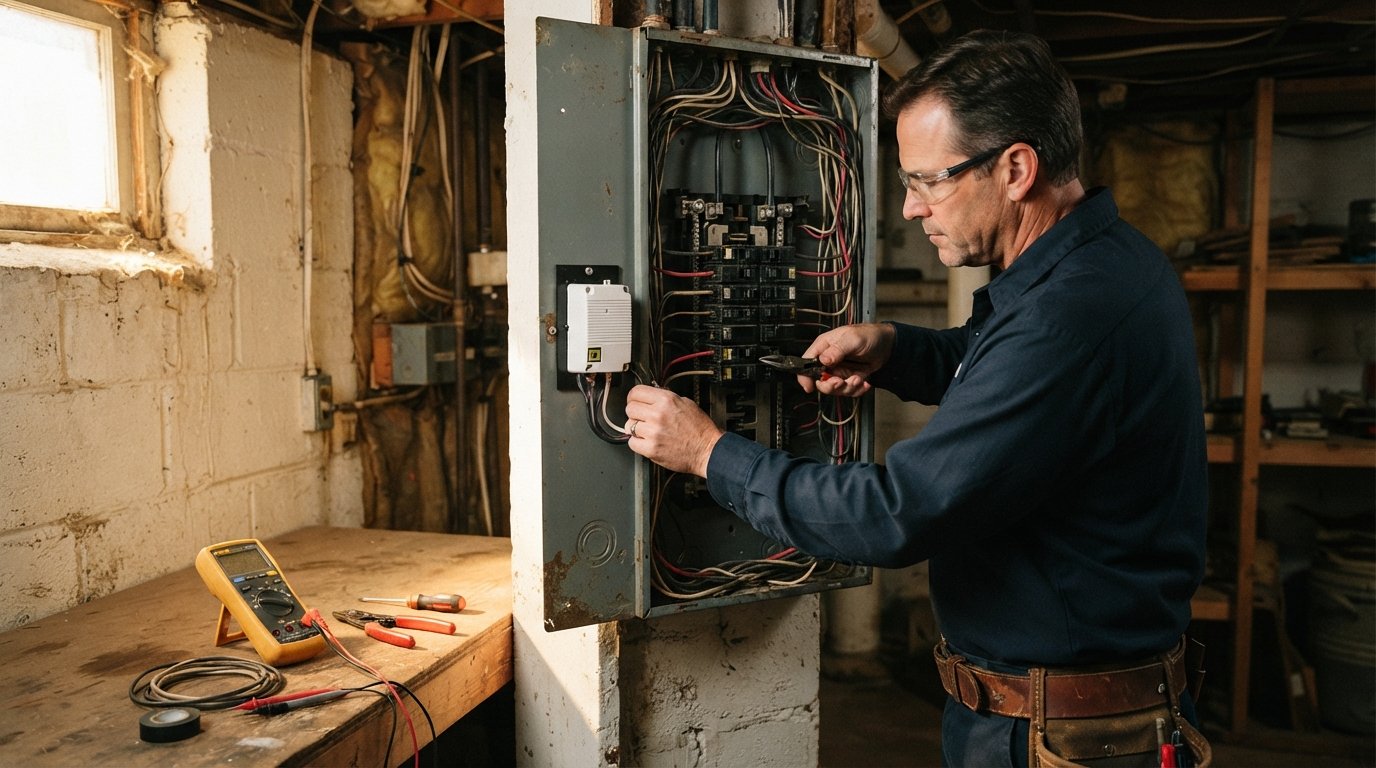
Point-of-use surge strips are the devices most homeowners are familiar with. You plug them into a wall outlet and then plug your computer or TV into the strip. They are inexpensive and easy to replace, but they only protect the devices plugged directly into them. They do nothing for your furnace, your central air conditioner, your refrigerator, or the wiring running through your walls. A whole house surge protector works at the electrical service panel, the main distribution point for all power entering your home. It clamps voltage spikes at the source, diverting excess energy to ground before it can travel through your branch circuits and damage connected equipment.
This distinction matters for older homes because the wiring itself can act as an antenna for surges. Knob-and-tube wiring, aluminum branch circuits, and undersized grounding conductors are common in homes built before the 1980s. These systems may not provide a low-impedance path to ground, which means a surge can linger on the wiring and damage multiple devices at once. A whole house unit installed at the panel gives you a first line of defense that a power strip simply cannot replicate.
Another difference is capacity. A quality whole house surge protector is rated to handle thousands of amps of surge current, while a power strip might handle a few hundred. That capacity is important in areas with frequent thunderstorms or where the utility grid is prone to switching surges. For a homeowner with a finished basement full of electronics or a home office with expensive computers, the protection level is a meaningful upgrade.
Risks to Older Wiring and Modern Electronics During Storms
Older homes often have grounding systems that were adequate for the appliances of their era but fall short for today's sensitive electronics. A single lightning strike miles away can induce a surge on power lines that enters your home and seeks the path of least resistance to ground. If your grounding electrode system is compromised by corrosion, loose connections, or a missing ground rod, that surge may travel through your electronics instead of safely dissipating into the earth.
Modern electronics are more vulnerable than ever. Microprocessors run on low voltages and can be destroyed by spikes that would not have bothered a 1970s refrigerator. Consider how many devices in your home contain sensitive circuitry: LED lighting, smart thermostats, garage door openers, washing machines, and even your oven. A single surge event can take out several of these at once, leading to repair bills that quickly exceed the cost of a whole house protector.
Older homes also tend to have more daisy-chained outlets and longer wire runs. These long runs can pick up inductive surges from nearby lightning strikes and carry them deep into the home. Without a surge protector at the panel, each outlet becomes a potential entry point for damaging voltage. The cumulative risk over years of storms is real, and it is one reason why electricians increasingly recommend whole house protection for any home with modern electronics, regardless of age.
Cost to Install at the Service Panel and Expected Protection
The cost to install a whole house surge protector varies by region and by the complexity of your electrical panel. In most U.S. markets, homeowners can expect to pay between $300 and $800 for a professionally installed unit, including the device and labor. If your panel is old, crowded, or lacks available breaker spaces, the cost may be higher because the electrician may need to reconfigure the panel or install a subpanel. Some units are designed to mount directly to the panel enclosure, while others require a dedicated breaker. A licensed electrician can tell you which option fits your setup.
What does that investment protect? A properly sized whole house surge protector will clamp voltage spikes from external sources, such as lightning and utility switching, as well as internal surges caused by large appliances cycling on and off. It will not protect against a direct lightning strike, which is beyond the capacity of any consumer device, but it will handle the vast majority of transient surges that damage electronics. Many units come with a warranty that covers connected equipment up to a certain amount, which provides an extra layer of confidence.
When you compare the cost of the protector to the cost of replacing a furnace control board, a refrigerator, or a home theater system, the math often favors installation. For older homes with expensive upgrades like heat pumps or tankless water heaters, the protector is a relatively small addition to the overall electrical budget. It is also a one-time cost that requires minimal maintenance, though some units have indicator lights that tell you when the protection module needs replacing.
Pairing with Panel Upgrades and Grounding Improvements
If your older home still has a fuse box or a panel with known issues, a surge protector is not a substitute for a panel upgrade. In fact, installing a surge protector on a failing panel can be a waste of money because the underlying system cannot safely handle the surge current. A licensed electrician will evaluate your panel's capacity, age, and condition before recommending a protector. If the panel is outdated or has signs of overheating, the priority should be a panel replacement, and the surge protector can be added at the same time. This combined approach is often the most cost-effective way to modernize an older electrical system.
Grounding is the other critical piece. A surge protector diverts excess energy to ground, so the grounding system must be in good condition. Older homes may have a single ground rod that has corroded over time, or they may rely on a water pipe ground that is no longer reliable due to plastic plumbing repairs. An electrician can test the grounding system and upgrade it if necessary. This might involve adding a second ground rod, bonding to metallic water pipes, or installing a grounding electrode conductor that meets current code. Without proper grounding, even the best surge protector will underperform.
If you are planning other electrical work, such as adding circuits for a home office or upgrading to a 200-amp service, bundling the surge protector with that project can save on labor costs. It is also a good time to ask your electrician about whole-house surge protection as part of a broader safety inspection. Many contractors offer package deals that include panel upgrades, grounding improvements, and surge protection, which can simplify the process and ensure all components work together.
What a Licensed Electrician Evaluates Before Installation
Before installing a whole house surge protector, a licensed electrician will perform a thorough evaluation of your electrical system. This is not a one-size-fits-all upgrade, and the assessment helps ensure the device will provide the protection you expect. The evaluation typically covers several key areas.
- Panel capacity and condition: The electrician checks for available breaker spaces, signs of wear, and whether the panel is rated to handle the additional load of the surge protector. Older panels may need replacement first.
- Grounding and bonding: The grounding electrode system is tested to confirm it provides a low-impedance path to earth. If it is inadequate, the electrician may recommend upgrades before or alongside the surge protector installation.
- Wiring type and condition: The electrician looks for aluminum branch wiring, knob-and-tube remnants, or other issues that could affect performance or safety. These may require remediation.
- Service size and utility configuration: The electrician verifies the service amperage and how power enters the home, which determines the correct type and size of surge protector.
- Location for mounting: The device must be mounted close to the panel with short, straight wire runs to minimize resistance. The electrician identifies the best location and routing.
After the evaluation, the electrician can recommend a specific surge protector model and explain the expected level of protection. This step is especially important for older homes, where hidden issues can affect performance. A reputable contractor will also provide a written estimate and explain any additional work that may be needed. If you are unsure how to find a qualified electrician, resources like Homes.Contractors can help you locate pre-vetted professionals in your area who specialize in electrical upgrades for older homes.
It is also wise to ask about the warranty and the unit's surge rating. A higher surge current rating generally means better protection, but the electrician can match the device to your home's specific needs. For example, homes with frequent lightning activity may benefit from a higher-capacity unit, while homes in urban areas with stable power may need a more modest model. The goal is to choose a protector that is appropriate for your risk level and your budget.
Is Whole House Surge Protection Worth It for Older Homes?
For most owners of older homes, whole house surge protection is worth the investment, provided the electrical system is in good enough condition to support it. The combination of aging wiring, modern electronics, and increasing storm intensity makes older homes particularly vulnerable to surge damage. A professionally installed protector at the service panel offers a level of defense that power strips cannot match, and it can be paired with panel and grounding upgrades for a comprehensive solution. The cost is modest compared to the potential expense of replacing damaged appliances and electronics, and the peace of mind is significant.
That said, the decision should be based on a professional evaluation. If your panel is outdated or your grounding is poor, those issues should be addressed first. A licensed electrician can help you prioritize the work and choose a surge protector that fits your home's specific configuration. For homeowners planning other electrical upgrades, such as a panel replacement or a service upgrade, adding surge protection is a logical and cost-effective step. And if you are also considering major plumbing work, perhaps as part of a renovation, you might find our guide on whole house repiping cost and necessity helpful for planning your overall budget.
Ultimately, the answer to whether whole house surge protection is worth it for older homes comes down to risk tolerance and the value of the equipment you want to protect. If you have invested in modern appliances, home entertainment systems, or a home office, the protection is a smart safeguard. If you are planning to sell your home, a whole house surge protector can also be a selling point that demonstrates proactive maintenance. For most homeowners, the benefits outweigh the costs, especially when the installation is handled by a qualified professional who understands the nuances of older electrical systems.
To find a licensed electrician who can evaluate your home and recommend the right surge protection solution, start by requesting quotes from multiple contractors. PlanRemodel.com can connect you with pre-vetted professionals in your area, making it easier to compare options and choose the best fit for your project. With the right approach, you can protect your older home's electrical system and the devices that make it function smoothly for years to come.