
Winter Home Maintenance Checklist to Prevent Costly Repairs
Use this winter home maintenance checklist to prevent costly repairs before the first freeze. Call (833)-700-4293 to connect with vetted local pros.

By Benjamin Adler
Learn more about Home Inspection for guides, costs, and what to expect.
Compare Home Inspection Pros Near You

Enter your ZIP code to compare top-rated local professionals and request free quotes.
Frozen pipes, ice dams, and furnace failures rarely announce themselves before they strike. They wait for the first hard freeze, then turn a quiet weekend into an emergency plumbing bill or a ceiling full of water. The good news is that most of these disasters are preventable with a focused round of seasonal upkeep. A practical winter home maintenance checklist to prevent costly repairs is not about busywork. It is about targeting the handful of systems and surfaces that fail most often when temperatures drop, and addressing them while the weather still cooperates.
This guide walks through the highest-risk areas of a home in cold weather: plumbing, heating, the roof and gutters, and the building envelope. It also separates the tasks most homeowners can handle safely from the ones that should go to a licensed professional. Work through it over a weekend or two, and you will head into winter with fewer surprises and a much lower chance of paying for emergency repairs.
Start With Plumbing: The Cheapest Fixes Prevent the Biggest Bills
Water damage from a burst pipe is one of the most expensive common winter failures. A single split supply line can release hundreds of gallons before anyone notices, ruining drywall, flooring, and insulation. The prevention work, by contrast, costs almost nothing. The key is to find the pipes most exposed to cold air and make sure they stay warm enough to keep water flowing.
Begin with a walk-through of the vulnerable spots: exterior walls, unheated basements and crawlspaces, garages, attics, and any cabinet on an outside wall. Look for gaps where cold air enters and for pipes that run along exterior framing. Then work through the core tasks below.
- Disconnect garden hoses and shut off outdoor hose bibs from inside if your home has separate valves. If you have frost-proof sillcocks, remove hoses so they can drain fully.
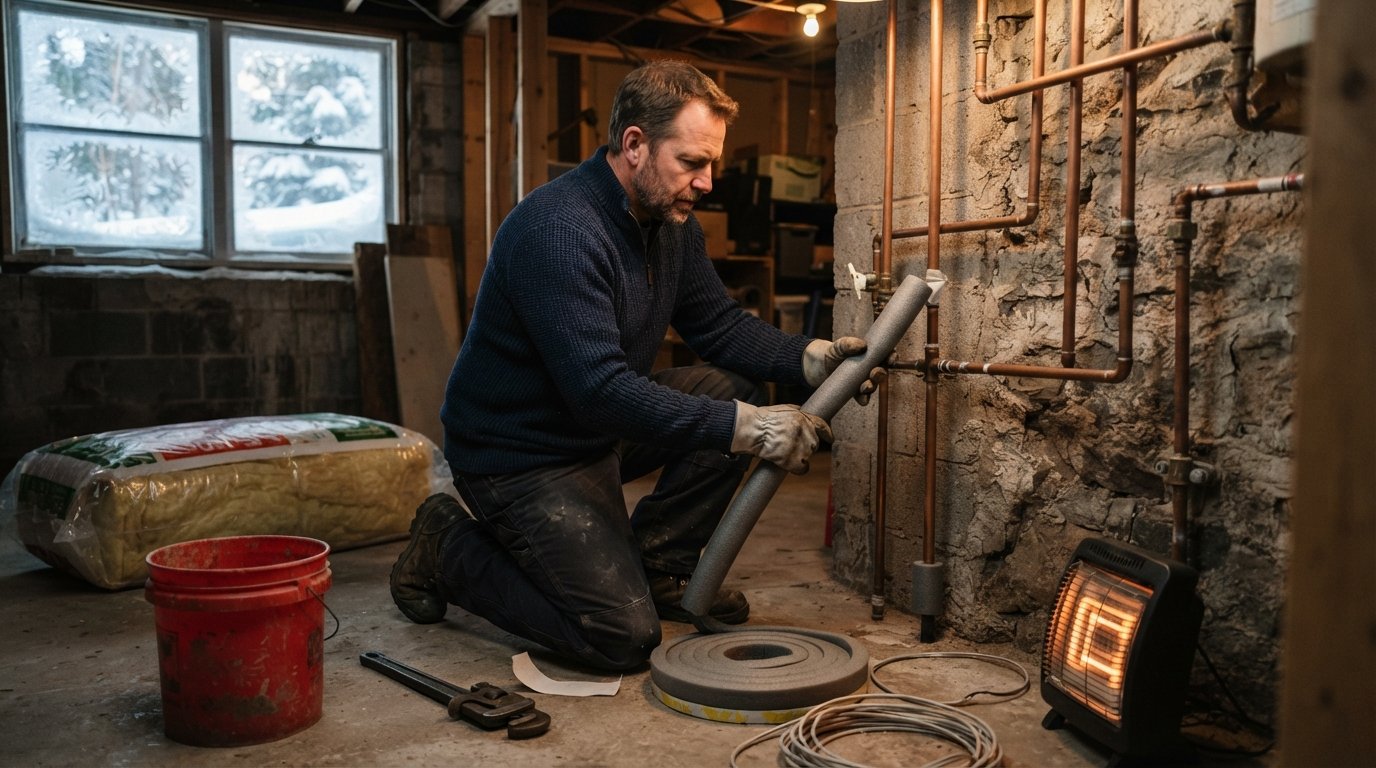
- Insulate exposed pipes in unheated areas with foam sleeves, especially in crawlspaces, garages, and along rim joists.
- Seal air leaks around pipes where they pass through exterior walls using caulk or expanding foam.
- Keep cabinet doors open on exterior walls during hard freezes so warm indoor air reaches the plumbing.
- Know where your main water shutoff is and test that it turns freely before you need it in a hurry.
If you leave town during cold weather, do not simply turn the heat down and hope. Set the thermostat no lower than 55 degrees Fahrenheit, or shut off the water supply and drain the lines according to your system type. A programmable thermostat with a low-temperature alert adds another layer of protection. For homes with a history of freezing pipes, a licensed plumber can install heat tape or re-route vulnerable lines, which is often cheaper than one insurance claim.
Service the Heating System Before the First Cold Snap
Heating equipment tends to fail on the coldest night of the year, when demand peaks and every technician in town is booked. Annual servicing moves that risk earlier, when a worn part or dirty burner can be caught and corrected on a normal schedule. It also protects efficiency: a dirty furnace or boiler burns more fuel to deliver the same heat, and that penalty runs all season.
Schedule a professional tune-up for furnaces, boilers, and heat pumps before heating season begins. The technician should clean the burners, check the heat exchanger for cracks, test safety controls, and measure combustion efficiency. For homeowners, the do-it-yourself portion is simple but important.
- Replace the furnace filter every one to three months, depending on the type and household pets.
- Clear the area around the furnace and water heater of stored boxes, paint, and flammable clutter.
- Test carbon monoxide and smoke detectors, and replace batteries.
- Check that supply and return vents are open and not blocked by furniture or rugs.
- For hot water radiators, bleed trapped air so each unit heats evenly.
If your heating system is older or has needed repeated repairs, get quotes for replacement now rather than during an outage. Comparing multiple estimates in the fall gives you leverage and time to choose a qualified contractor. You can request free estimates from pre-vetted local HVAC professionals through the seasonal maintenance checklist for homeowners, which pairs well with this winter plan for year-round upkeep.
Roof, Gutters, and Ice Dams: Stop Water Before It Gets In
Ice dams form when heat escapes through the roof, melts snow on the upper slopes, and the runoff refreezes at the cold eaves. Water then backs up under shingles and into ceilings and walls. The visible icicles are a symptom; the real problem is a warm roof deck and inadequate drainage. Prevention combines attic air sealing, insulation, and ventilation, plus clean gutters that carry meltwater away from the foundation.
Before the snow flies, clear gutters and downspouts of leaves and debris, and confirm that downspouts discharge several feet from the foundation. Check the roof from the ground with binoculars for missing or lifted shingles, worn flashing around chimneys and vents, and cracked sealant. Inside the attic, look for daylight, frost, or damp insulation, all signs of air leaks or poor ventilation that feed ice dams.
- Seal attic air leaks around light fixtures, bathroom fans, and the hatch with caulk and weatherstripping.
- Verify that insulation covers the ceiling joists evenly and does not block soffit vents.
- Trim tree branches that could drop limbs onto the roof under snow or ice load.
- Have a roofer inspect flashing and shingles if the roof is more than 15 years old or has leaked before.
Roof work is the clearest example of a task where the line between DIY and professional matters. Clearing gutters from a ladder is reasonable for many homeowners, but climbing onto a snowy or icy roof is not. Ice dam removal with a roof rake can be done safely from the ground, but installing heat cable, repairing flashing, or correcting attic ventilation should go to a qualified roofer. A small inspection fee is trivial compared with structural repairs from a chronic leak.
Seal the Envelope: Windows, Doors, and the Small Gaps That Add Up
Air leaks waste energy and make rooms uncomfortable, but they also let cold air reach plumbing and create condensation problems. A winter weatherization pass is inexpensive and effective. Walk each room and feel for drafts around windows, doors, outlets, and the sill plate in basements. Then address the obvious gaps with weatherstripping and caulk.
Apply shrink film or install storm windows on older single-pane windows, and add door sweeps and draft blockers at exterior doors. Seal gaps around electrical outlets on exterior walls with foam gaskets. In basements, insulate rim joists, a common source of cold drafts and pipe freeze risk. These fixes pay back through lower heating bills and fewer cold spots, and they reduce the load on your heating system during the coldest weeks.
If you are unsure whether your home needs a larger insulation upgrade, a professional energy audit can pinpoint the weak points for a modest cost. Pair that assessment with a contractor search when you are ready to act. Directories such as Homes.Contractors help homeowners find pre-vetted specialists for insulation, roofing, and HVAC work, which is useful when a checklist item turns into a real project.
Outdoor and Emergency Prep: The Tasks Homeowners Forget
The exterior and the emergency kit are where small oversights cause outsized headaches. Outdoor water lines, sprinkler systems, and pool equipment all hold water that expands when it freezes. Drain and blow out irrigation lines, store hoses indoors, and shut off and drain exterior faucets. Service snow removal equipment before the first storm, and stock de-icing materials that are safe for your walkways and pets.
Inside, confirm you have a working flashlight, batteries, bottled water, and a plan for power outages. If you rely on a sump pump, test it and consider a battery backup, since winter power outages and frozen discharge lines are common. Check that your generator starts and that fuel is fresh. These steps do not prevent every problem, but they keep a bad night from becoming a costly one.
Finally, review your homeowners insurance for winter-related coverage, including burst pipes and ice dams, and document any completed maintenance with photos and receipts. Insurers increasingly ask for proof of upkeep when claims arise, and a simple maintenance log can support your case.
Which Winter Fixes Are DIY and Which Need a Pro
Knowing where to stop is part of a smart checklist. Many tasks are safe and sensible for a careful homeowner: replacing filters, sealing drafts, insulating exposed pipes, cleaning gutters from stable ground, and testing detectors. These are low-risk, high-return items that require basic tools and a few hours.
Other tasks carry real risk of injury or expensive mistakes. Roof work at height, gas furnace repairs, electrical changes, and any plumbing inside walls should go to licensed professionals. When in doubt, get quotes from several contractors, verify licenses and insurance, and ask for references. The cost of a professional tune-up or inspection is small compared with emergency repairs, and it keeps your home safe through the coldest months. A disciplined winter home maintenance checklist to prevent costly repairs is ultimately about sequencing: handle the simple prevention now, and bring in qualified help for the high-stakes items.