
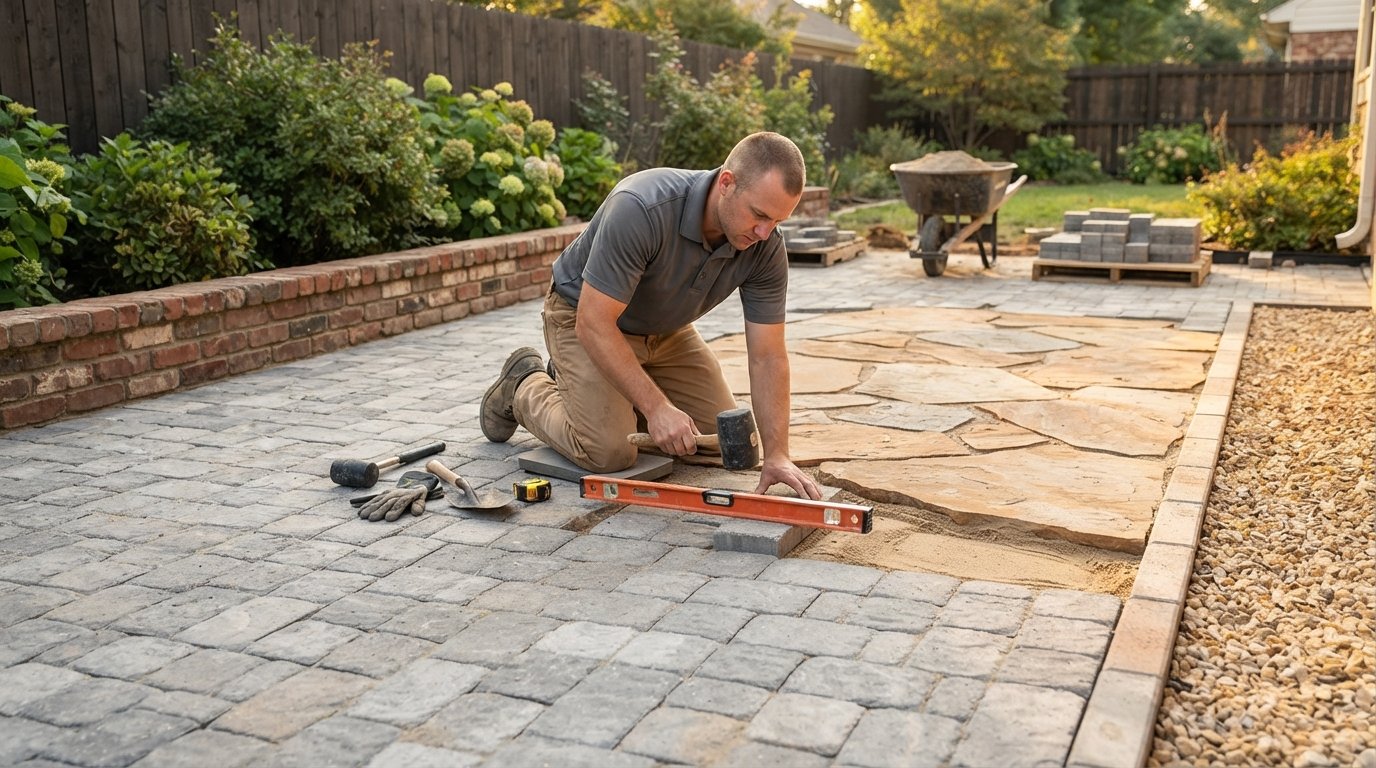
Best Hardscaping Materials for a Backyard Renovation
Compare the best hardscaping materials for a backyard renovation, from pavers to natural stone. Get expert help at (833)-700-4293.

By Andrew Shaw
Learn more about General Contracting for guides, costs, and what to expect.
Compare General Contracting Pros Near You

Enter your ZIP code to compare top-rated local professionals and request free quotes.
A backyard renovation can transform your outdoor space into a functional, beautiful extension of your home, but the hardscaping you choose determines how that space performs for decades. Patios, walkways, retaining walls, and edging are not just visual elements; they are structural investments that must withstand weather, foot traffic, and time. With dozens of materials on the market, each with distinct costs, durability profiles, and maintenance demands, selecting the best hardscaping materials for a backyard renovation requires a clear understanding of what matters most for your climate, budget, and long-term goals. This guide breaks down the leading options, compares them honestly, and explains the installation and upkeep details that separate a lasting hardscape from a costly redo.
Concrete Pavers, Natural Stone, Brick, and Gravel Compared
Concrete pavers are the workhorse of residential hardscaping. Manufactured in controlled conditions, they offer consistent thickness, uniform color, and compressive strength that often exceeds poured concrete. Their modular format makes repairs straightforward: if one paver cracks or settles, you can lift and replace it without demolishing the entire patio. Modern pavers come in a wide range of styles, from tumbled finishes that mimic aged stone to sleek, large-format slabs for contemporary designs. Expect to pay roughly $3 to $8 per square foot for materials, with installation bringing the installed cost to $8 to $20 per square foot depending on complexity and region.
Natural stone, including flagstone, bluestone, travertine, and granite, delivers unmatched character and longevity. Each piece is unique, and the material ages gracefully, developing a patina that many homeowners find more attractive than the pristine look of new pavers. However, natural stone demands more skill to install, especially when using irregular flagstone that requires custom cutting and a thick mortar bed or compacted sand setting. Material costs range from $5 to $30 per square foot, and installed costs can reach $25 to $50 per square foot for premium varieties. Stone is heavy, so base preparation must be robust, and some porous stones require sealing to resist staining and freeze-thaw damage.
Brick brings warmth and a classic aesthetic that suits traditional and cottage-style homes. Clay brick pavers are fired at high temperatures, making them extremely durable and colorfast. They perform well in freeze-thaw climates when installed over a proper base with adequate drainage. The main drawbacks are cost and availability: brick typically runs $6 to $12 per square foot for materials, and installation is labor-intensive because of the smaller unit size. Brick also requires a skilled mason to achieve tight joints and proper patterns, and chipping can occur if heavy objects are dropped on the surface.
Gravel and crushed stone are the budget-friendly option, often used for pathways, utility areas, and low-traffic zones. They drain exceptionally well and require minimal base preparation compared to rigid pavers. However, gravel shifts underfoot, weeds can invade, and maintenance involves periodic raking and replenishment. For a backyard renovation, gravel works best as a secondary material, such as a border around a patio or a permeable driveway strip, rather than the primary surface for entertaining areas. Cost is typically $1 to $3 per square foot for materials, but the low upfront price must be weighed against ongoing upkeep.
To summarize the core trade-offs, here is a quick comparison of the four main categories:
- Concrete pavers: Best all-around value; moderate cost, excellent durability, easy repairs, wide style range.
- Natural stone: Highest aesthetic ceiling; premium cost, superior longevity, requires skilled installation and occasional sealing.
- Brick: Classic look and strong freeze-thaw performance; higher cost, labor-intensive, limited color consistency.
- Gravel: Lowest upfront cost and best drainage; higher maintenance, less stable underfoot, best for secondary areas.
Beyond the surface material, the unseen layers of a hardscape determine its long-term performance. A patio that looks perfect on day one can develop sunken corners, loose joints, and pooling water within a year if the base and drainage are compromised. This is why the next section deserves as much attention as the material selection itself.
Paver Base Prep and Drainage Details That Prevent Settling
Every successful hardscape rests on a properly excavated and compacted base. The general rule is to remove at least 6 to 8 inches of soil for a pedestrian patio, and 10 to 12 inches for areas that will support vehicles or heavy loads. The subgrade should be graded away from the house at a slope of roughly 1 to 2 percent, which translates to about 1/8 to 1/4 inch of drop per foot. This slope directs water away from foundations and prevents pooling that can undermine the base over time.
Next comes the base material, typically a crushed aggregate such as 3/4-inch clean stone or a graded base mix. This layer is compacted in lifts of 2 to 3 inches using a plate compactor or vibratory roller. Proper compaction is non-negotiable: loose base material will settle unevenly under the pavers, causing the surface to dip and joints to open. A geotextile fabric is often placed between the subgrade and the base to prevent fine soil particles from migrating upward and contaminating the stone. Some installers also use a geogrid within the base for additional stability in areas with poor soils.
Drainage is the second critical factor. Surface water must have a path away from the hardscape, either through sheet flow to a landscaped area, a French drain, or a dry well. In regions with heavy rainfall, permeable pavers or open-graded base systems allow water to infiltrate directly through the surface, reducing runoff and relieving pressure on stormwater systems. However, permeable systems require careful design to ensure the underlying soils drain adequately; otherwise, water can accumulate and cause heaving in freeze-thaw climates. A qualified hardscaping contractor will perform a percolation test or at least assess soil conditions before recommending a permeable solution.
Edge restraint is another detail that separates professional installations from amateur ones. Without a rigid edge, pavers will migrate outward over time, especially on walkways and driveways. Concrete curbs, plastic edge restraints, or deeply set soldier courses keep the field tight and prevent raveling. Joint sand, whether regular or polymeric, fills the gaps between pavers and locks them together. Polymeric sand hardens when wet, resisting erosion and weed growth, but it must be installed correctly and topped off as needed.
Finally, consider the role of professional expertise. Base preparation and drainage design are not areas for guesswork, and mistakes are expensive to correct after the fact. Homeowners planning a hardscape project can use resources like Homes.Contractors to find pre-vetted professionals who understand local soil conditions and building codes. The same principle applies when using a referral platform like PlanRemodel, which connects homeowners with qualified contractors who can assess site-specific needs and provide multiple quotes for comparison.
Region-Specific Freeze-Thaw and Heat Considerations
Climate is a primary driver of hardscape performance, and materials that excel in one region may fail in another. In cold climates with frequent freeze-thaw cycles, water absorbed into porous materials expands when it freezes, causing spalling, cracking, and heaving. Concrete pavers with a low water absorption rate (typically below 5 percent) perform well, as do dense natural stones like granite and bluestone. Avoid porous stones like sandstone or travertine in areas with harsh winters unless they are properly sealed and installed over a well-draining base. Brick is generally frost-resistant, but only if it is rated for severe weathering (SW grade in the U.S.).
Freeze-thaw also demands a thicker, well-compacted base and reliable drainage. If water can accumulate under the pavers, it will freeze and lift the surface. In these regions, experts often recommend a base depth of 8 to 12 inches even for patios, along with a slope that moves water away quickly. Permeable systems can work in cold climates, but they require a reservoir base that can hold water during thaw periods and drain before the next freeze.
In hot climates, the concerns shift to thermal expansion, color fading, and surface temperature. Dark-colored pavers and natural stone absorb heat and can become uncomfortable underfoot, especially around pools. Light-colored materials reflect more sunlight and stay cooler. In desert or tropical regions, UV stability is essential; lower-quality concrete pavers may fade over time, while natural stone and high-quality clay brick hold their color. Thermal expansion and contraction can cause joints to open, so flexible joint sand and proper spacing are important. In areas with expansive clay soils, additional base preparation and sometimes piering may be needed to prevent movement.
Regional considerations also extend to local availability and cost. Natural stone that is quarried nearby will be more affordable than stone shipped across the country. Similarly, some regions have strong manufacturing bases for concrete pavers, keeping prices competitive. Homeowners should ask contractors about locally sourced options and how specific materials have performed in nearby installations. PlanRemodel's localized content and ratings-by-state feature can help homeowners connect with contractors who have direct experience with regional conditions.
Sealing, Cleaning, and Long-Term Maintenance Costs
Maintenance is the often-overlooked budget line in a hardscaping project. Concrete pavers require periodic cleaning with a stiff brush or pressure washer (using care not to dislodge joint sand), and re-sanding of joints every few years. Sealing is optional but recommended in some climates to enhance color, resist stains, and reduce water absorption. A penetrating sealer typically lasts 3 to 5 years and costs $1 to $3 per square foot professionally applied. Film-forming sealers can peel and require more frequent reapplication, so many professionals prefer penetrating products.
Natural stone maintenance varies by type. Dense stones like granite and bluestone need little more than occasional cleaning, while porous stones like limestone and sandstone benefit from sealing every 2 to 3 years. Acidic cleaners should be avoided on calcareous stones, and snow removal tools should be used carefully to prevent scratches. Brick requires similar care to concrete pavers, with the added caution that efflorescence (a white mineral deposit) can appear and may need specialized cleaning. Gravel surfaces need periodic raking and topping off, typically once a year, and may require weed control.
Over a 20-year horizon, the total cost of ownership can differ significantly. Concrete pavers and brick tend to have moderate upfront costs and low to moderate maintenance. Natural stone has a higher upfront cost but very low maintenance if the right stone is chosen for the climate. Gravel has the lowest upfront cost but the highest ongoing labor. Homeowners should factor these costs into their renovation budget and discuss maintenance expectations with their contractor. A reputable contractor will provide a care guide and may offer maintenance packages. For homeowners seeking to compare maintenance contracts and long-term costs, requesting multiple quotes through a platform like PlanRemodel can provide clarity and leverage.
What to Look for in Hardscaping Contractor Experience and Portfolio
Hardscaping is a specialized trade, and not all landscapers or general contractors have the skills to execute a proper base, drainage plan, and finish. When evaluating a contractor, start with licensure and insurance. Most states require a contractor license for hardscaping work above a certain dollar threshold, and general liability insurance plus workers compensation are essential. Ask for proof and verify with the issuing authority. Bonding is also a good sign, though requirements vary by state.
Experience matters, but it must be relevant experience. A contractor who has built dozens of paver driveways may not be the best choice for a complex flagstone patio with retaining walls. Ask for a portfolio of projects similar in scope, material, and site conditions to yours. Look for photos that show the base preparation, not just the finished surface; a professional will be proud to show the unseen work. Client references are valuable, and you should ask specific questions: Did the project stay on budget? How has the hardscape held up after a few winters? Was the site left clean? Reading online reviews and checking ratings by state on platforms like PlanRemodel can provide additional context.
Communication and process are also telling. A good contractor will provide a detailed written estimate that specifies materials, base depth, drainage provisions, and a timeline. They will explain how they handle change orders and what the warranty covers. Be wary of bids that are significantly lower than others; they often signal shortcuts in base preparation or material quality. Multiple quotes are your best defense against overpaying or underbuilding. PlanRemodel makes it easy to request free estimates from pre-vetted contractors in your area, so you can compare scope and pricing side by side.
Finally, ask about permits and codes. Many hardscaping projects, especially retaining walls over a certain height or structures near property lines, require permits. A professional contractor will know local requirements and handle the paperwork or guide you through it. They should also be familiar with utility locating before excavation. Skipping these steps can lead to fines, rework, or safety hazards. For more guidance on contractor selection and project planning, the PlanRemodel blog and FAQ hub offer practical articles and answers to common questions.
Choosing the best hardscaping materials for a backyard renovation is ultimately a balance of upfront cost, long-term durability, maintenance commitment, and aesthetic preference. Concrete pavers offer the broadest appeal and value, natural stone delivers timeless beauty for those who can invest, brick provides classic charm, and gravel serves specific low-traffic roles. No matter the material, success hinges on proper base preparation, drainage, and climate-appropriate selection. By vetting contractors carefully and requesting multiple quotes, homeowners can ensure their hardscape investment enhances their property for years to come.
Learn more about General Contracting for guides, costs, and what to expect.
Compare General Contracting Pros Near You
Enter your ZIP code to compare top-rated local professionals and request free quotes.