
Foundation Repair Types and How to Choose a Contractor
Compare foundation repair types and learn how to choose a contractor. Call (833)-700-4293 for expert guidance and avoid costly mistakes.

Learn more about Foundation Repair for guides, costs, and what to expect.
Compare Foundation Repair Pros Near You

Enter your ZIP code to compare top-rated local professionals and request free quotes.
Your home's foundation is its literal support system, and when it starts to fail, the warning signs are hard to ignore: cracks that seem to grow overnight, doors that stick in their frames, or floors that feel uneven underfoot. For homeowners, the uncertainty of what comes next can be overwhelming. You may be asking yourself: What kind of repair does my foundation actually need, and who can I trust to fix it without emptying my savings? This guide breaks down the most common types of foundation repair, explains how to diagnose the underlying cause, and walks you through selecting a qualified contractor with confidence.
Types of Foundation Repair: Matching the Method to the Problem
Not all foundation problems are created equal, and neither are the solutions. The right repair method depends on your foundation type (slab, pier and beam, or basement), the soil conditions, and the specific cause of the movement. Below are the primary techniques used today, each with distinct advantages and limitations.
Pier and Beam Foundation Repair
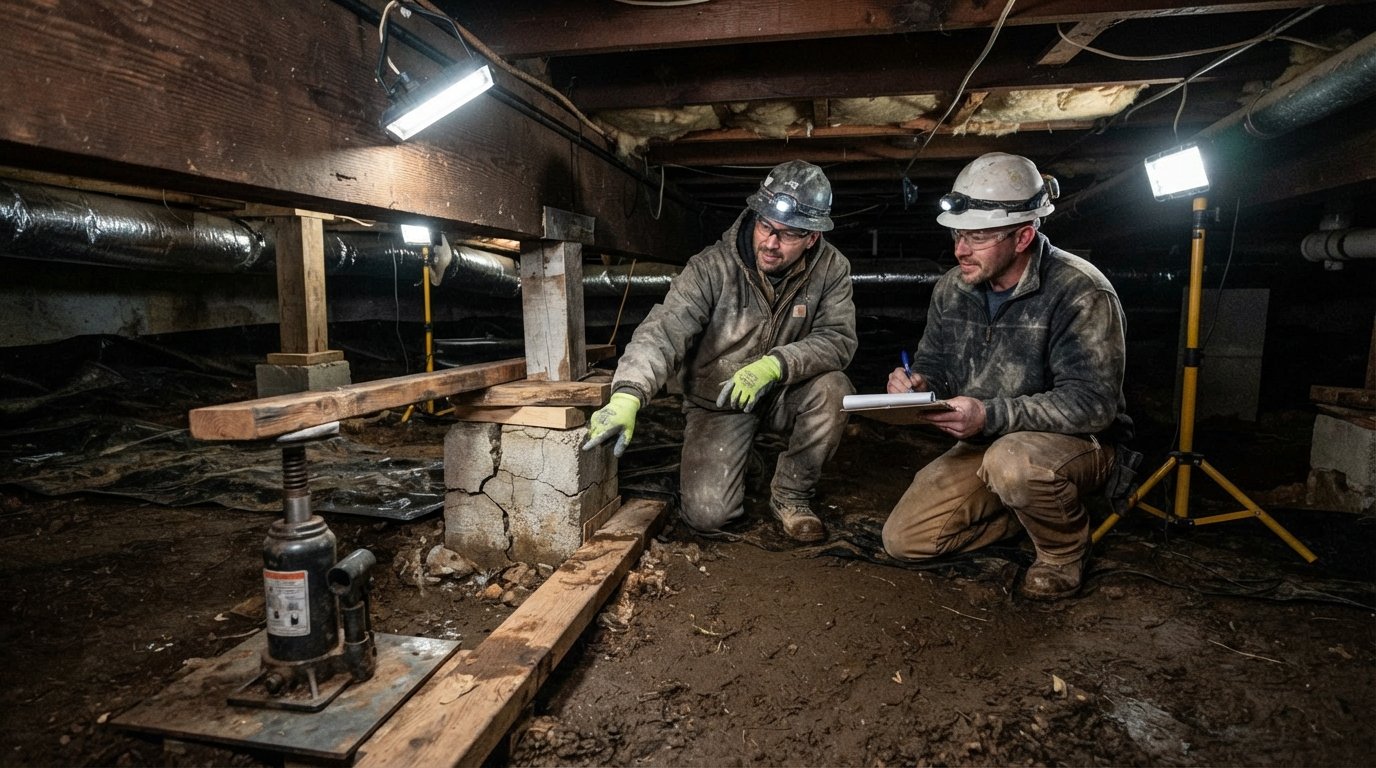
Pier and beam foundations (also called crawl space foundations) elevate the home above the ground on a series of concrete or wooden piers. When these supports settle or rot, the result is sloping floors and uneven door frames. Repair typically involves leveling the home by installing new piers or shimming existing ones. In severe cases, damaged wooden beams may need replacement. This method is common in older homes and regions with expansive clay soils. Because the crawl space provides access, repairs are often less invasive and less expensive than slab repairs, but they still require a structural engineer's assessment to ensure the load is properly redistributed.
Slab Pier Foundation Repair
Slab foundations are poured directly on the ground and are prevalent in warmer climates. When the soil beneath a slab shifts, the slab can crack and become uneven. Slab pier repair involves driving steel or concrete piers deep into stable soil layers and then lifting the slab back to a level position using hydraulic jacks. This is a permanent solution that addresses the root cause (soil movement) rather than just the symptoms. However, it is also one of the more expensive methods, and not every slab foundation is a candidate. A professional evaluation is essential to determine pier spacing and depth.
Helical Piles
Helical piles are a relatively modern solution that can be used for both slab and pier and beam foundations. These are steel shafts with helical (spiral) blades that are screwed into the ground until they reach load-bearing strata. They are ideal for stabilizing foundations on unstable soil, and they can be installed with minimal disturbance to the surrounding landscape. Helical piles are often used for new construction or retrofitting, and they offer the advantage of immediate load-bearing capacity. Cost varies widely based on soil conditions and the number of piles needed.
Mudjacking (Slab Jacking)
Mudjacking, also known as slab jacking or pressure grouting, is a less invasive and more affordable option for lifting settled concrete slabs, including driveways, sidewalks, and interior floors. A mixture of cement, sand, and water (or a polyurethane foam) is injected through small holes drilled in the slab. The material fills voids and lifts the slab back into place. While mudjacking is effective for minor settling and void filling, it does not address deep soil issues and may not be a permanent fix for structural foundation problems. It is often used as a cosmetic repair or a precursor to more substantial work.
Each of these methods has a specific use case. A reputable contractor will not push a one-size-fits-all solution; instead, they will conduct a thorough inspection and recommend the approach that best suits your home's structure and soil conditions. To understand the early warning signs that precede the need for these repairs, see our guide on signs your home needs foundation repair.
Diagnosing the Cause, Not Just the Crack
Cracks in drywall or brick are symptoms, not the disease. The real problem is almost always related to soil movement, water management, or poor original construction. Before any repair method is chosen, a qualified professional must diagnose the underlying cause. For example, a crack above a doorway might be caused by a settling pier, but it could also result from a leaking gutter that has saturated the soil around the foundation. Treating the crack without addressing the water source is a waste of money and will likely lead to recurring problems.
Common causes of foundation movement include:
- Expansive clay soils that swell when wet and shrink when dry, creating cyclical movement.
- Poor drainage that allows water to pool near the foundation, softening the soil.
- Tree roots that extract moisture from the soil, causing it to compact and settle.
- Plumbing leaks under the slab that erode or soften the supporting soil.
- Improper compaction during original construction, leading to gradual settlement.
A thorough diagnosis often involves a structural engineer's report, which may include soil testing, elevation surveys, and a visual inspection of the foundation and framing. This step is critical because it determines whether you need a simple cosmetic repair, a full-scale pier installation, or a combination of drainage improvements and structural stabilization. Skipping diagnosis is like taking painkillers for a broken bone: you might feel better temporarily, but the underlying injury remains.
Warning Signs You Should Not Ignore
Foundation problems rarely appear overnight, but they do accelerate if left unaddressed. Homeowners should be vigilant for a cluster of symptoms that, when they appear together, strongly suggest structural movement. One sticking door might be humidity; three sticking doors plus a sloping floor is a pattern worth investigating.
Key warning signs include:
- Stair-step cracks in exterior brick or masonry, especially at corners.
- Interior cracks that are wider than 1/8 inch or that grow over time.
- Sloping or uneven floors that make furniture wobble.
- Doors and windows that stick, rack, or no longer latch properly.
- Gaps between walls and ceilings or between the foundation and siding.
- Musty odors or visible moisture in the crawl space.
If you notice any of these signs, it is wise to schedule an inspection with a licensed foundation contractor or structural engineer. Early intervention often means less invasive and less expensive repairs. Ignoring the signs can lead to more extensive damage, including plumbing breaks, electrical hazards, and even structural failure.
Cost Ranges and Warranty Terms for Each Method
Foundation repair is a significant investment, and costs vary widely based on region, severity, and the method chosen. Below are typical price ranges for the most common repairs, though these are general estimates and should be verified with local contractors.
- Pier and beam leveling: $3,000 to $15,000, depending on the number of piers and accessibility.
- Slab pier installation: $5,000 to $25,000, with larger homes or deeper piers at the higher end.
- Helical piles: $8,000 to $30,000, influenced by soil conditions and pile count.
- Mudjacking: $500 to $3,000 for typical residential slabs, but not a structural fix.
Warranty terms are equally important. Most reputable foundation repair companies offer a transferable warranty on pier installations, often ranging from 10 years to a lifetime. However, the devil is in the details: read the fine print to understand what is covered (e.g., pier failure, settlement, or just workmanship) and whether the warranty is transferable to a new owner. Mudjacking warranties are typically shorter, often one to five years, because the material can degrade or the soil can shift again. Always get warranty terms in writing before signing a contract.
How to Choose a Foundation Repair Contractor
Selecting the right contractor is just as important as selecting the right repair method. The foundation repair industry has its share of fly-by-night operators, so it pays to be diligent. Start by seeking referrals from trusted sources, such as neighbors, real estate agents, or a local home improvement directory like Homes.Contractors, which lists pre-vetted professionals in your area. Verify that the contractor is licensed, bonded, and insured, and ask for proof of general liability and workers' compensation coverage.
Next, request multiple written estimates. A reputable contractor will not pressure you into a quick decision and will provide a detailed proposal that outlines the scope of work, materials, and warranty. Be wary of any contractor who suggests a repair without first conducting a thorough inspection or who offers a price that seems too good to be true. It is also wise to ask whether they employ in-house crews or subcontract, and to check their standing with the Better Business Bureau.
Finally, do not overlook the importance of a structural engineer's involvement. For any significant foundation repair, especially those involving piers or piles, an independent engineer's report provides an objective assessment and can help you compare contractor recommendations. Some contractors have engineers on staff, but hiring your own engineer ensures unbiased advice. PlanRemodel.com can connect you with multiple pre-vetted foundation specialists in your area, allowing you to compare quotes and make an informed decision without pressure.
Foundation repair is not a project to postpone or approach casually. By understanding the types of repairs available, insisting on a proper diagnosis, and vetting contractors thoroughly, you can protect your home's value and your peace of mind. Take the first step today by requesting free estimates from qualified professionals and getting the job done right.
Learn more about Foundation Repair for guides, costs, and what to expect.
Compare Foundation Repair Pros Near You
Enter your ZIP code to compare top-rated local professionals and request free quotes.