
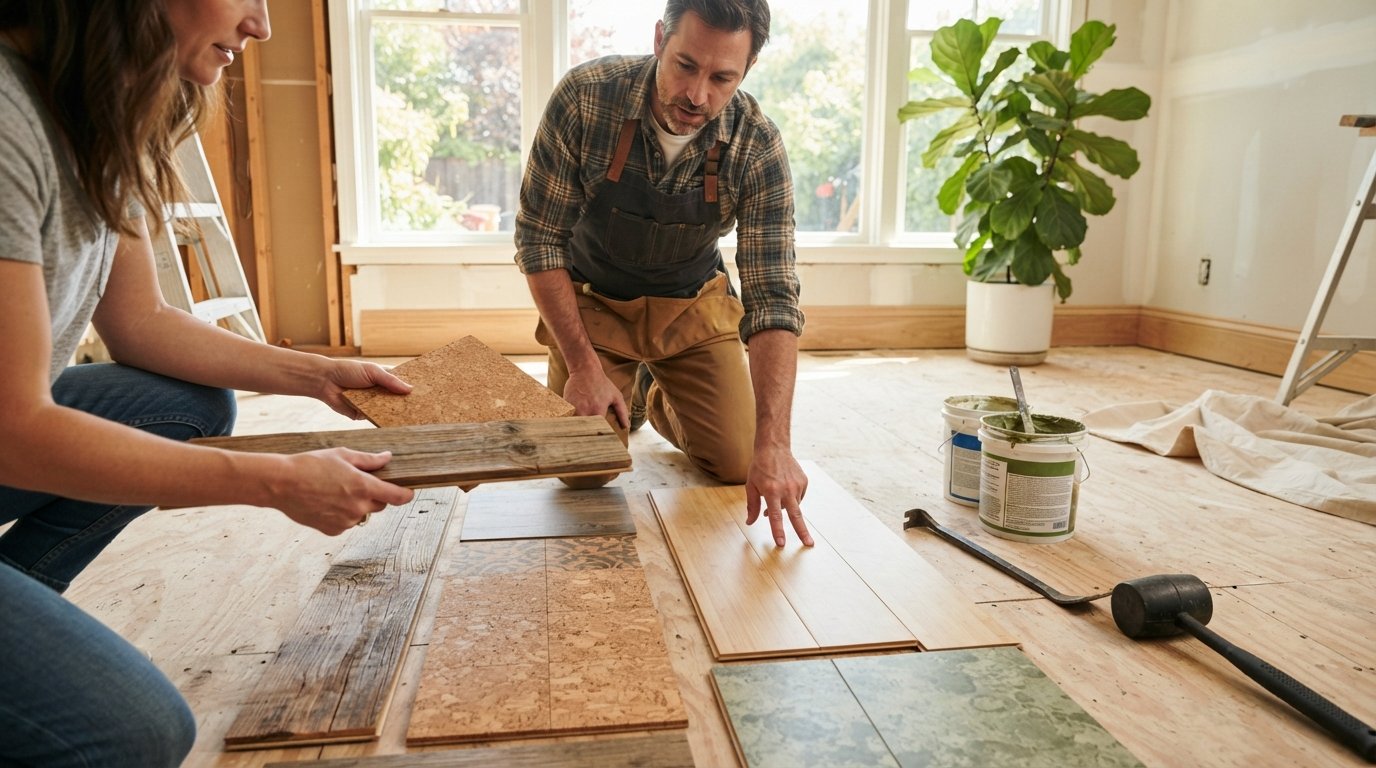
Eco Friendly Flooring Options for Sustainable Homes
Compare bamboo, cork, reclaimed wood, and recycled flooring for a greener home. Call (833)-700-4293 to connect with pre-vetted local flooring pros.

By Elena Carter
Learn more about Floor Installation or Replacement for guides, costs, and what to expect.
Compare Floor Installation or Replacement Pros Near You

Enter your ZIP code to compare top-rated local professionals and request free quotes.
Your floors take a beating every day, but they also shape the air you breathe and the environmental footprint of your home. If you are planning a renovation and want materials that align with your values, the range of eco friendly flooring options for sustainable homes has never been broader, or more confusing. Bamboo, cork, reclaimed wood, recycled-content tiles, and low-VOC finishes all promise green benefits, yet each comes with trade-offs in durability, cost, and maintenance. This guide cuts through the marketing claims so you can choose a floor that looks good, lasts long, and supports a healthier home.
Why Flooring Is a Key Sustainability Decision
Flooring covers more surface area than almost any other material in your home, and it is replaced far less often than paint or furniture. That means the environmental impact of your choice is magnified: the resources extracted, the energy used in manufacturing, the adhesives and finishes that off-gas for months, and the waste generated at the end of the floor's life. A sustainable floor minimizes these impacts while delivering the performance you need.
Indoor air quality is the other half of the equation. Many conventional floors, especially those made with urea-formaldehyde binders or solvent-based finishes, release volatile organic compounds (VOCs) that can irritate eyes, nose, and throat and contribute to long-term health concerns. Eco friendly flooring options for sustainable homes prioritize low-VOC or zero-VOC adhesives and finishes, and they often carry third-party certifications that verify those claims.
Durability matters too, because the greenest floor is the one you do not have to replace in five years. A material that lasts 30 years amortizes its environmental cost over decades, even if its initial footprint is higher than a competitor's. As you compare options, weigh embodied energy, indoor emissions, and lifespan together rather than focusing on a single green label.
Top Eco Friendly Flooring Materials Compared
Each sustainable flooring category has a distinct profile. The right choice depends on the room, your budget, your tolerance for maintenance, and how you weigh factors like renewability versus recycled content.
Bamboo: Rapidly Renewable and Increasingly Refined
Bamboo is a grass, not a tree, and it regrows in three to five years, making it one of the fastest-renewing flooring materials available. Strand-woven bamboo, which fuses strips under high pressure, rivals hardwood in hardness and can be more dimensionally stable. Classic horizontal and vertical bamboo planks offer a warmer, more traditional look but dent more easily under heavy furniture.
Look for bamboo that is FSC-certified and bonded with low-VOC or formaldehyde-free adhesives. Some inexpensive bamboo floors use urea-formaldehyde binders that undermine the material's green credentials. Ask for the manufacturer's indoor air quality documentation, and favor brands that publish third-party test results.
Cork: Comfortable, Quiet, and Renewable
Cork comes from the bark of the cork oak, which regenerates every nine years without harming the tree. It is naturally resilient, warm underfoot, and excellent at absorbing sound, making it a strong choice for bedrooms, home offices, and upper floors. Cork flooring is typically finished with water-based polyurethane or natural oils, both of which keep VOC levels low.
The trade-offs: cork can fade in strong sunlight, and it is more vulnerable to moisture and heavy point loads than hardwood or tile. In basements or bathrooms, cork requires careful sealing and a reliable moisture barrier. For dry, comfortable rooms, it is one of the most comfortable eco friendly flooring options for sustainable homes.
Reclaimed Wood: Character With a Story
Reclaimed wood, salvaged from old barns, factories, and warehouses, diverts material from landfills and avoids the harvesting of new timber. It brings unmatched character and often uses tighter-grained, old-growth lumber that is denser than today's farmed wood. Reclaimed flooring is usually refinished with low-VOC oils or water-based finishes, and many suppliers can document the wood's origin.
Cost and availability vary widely. Expect to pay a premium for wide planks and rare species, and budget for professional installation, since reclaimed boards often need acclimation, straightening, and careful nailing. For homeowners who want a one-of-a-kind floor with a strong sustainability story, reclaimed wood is hard to beat.
Recycled-Content Carpet, Tile, and Rubber
Recycled-content flooring turns post-consumer waste into durable surfaces. Carpet tiles made from recycled PET bottles, ceramic tile with recycled glass content, and rubber flooring from reclaimed tires all reduce landfill waste and often carry Cradle to Cradle or GREENGUARD certifications. These products work well in basements, mudrooms, and playrooms where moisture resistance and easy cleaning matter.
Check the backing and adhesive systems: recycled content in the face fiber means little if the backing off-gasses. Specify low-VOC adhesives or choose floating or tackless installations. Also confirm that the product can be recycled again at the end of its life, closing the loop.
Low-VOC Finishes and Adhesives: The Hidden Half of Green Flooring
You can choose the most sustainable plank on the market and still end up with poor indoor air quality if it is finished or installed with high-VOC products. Finishes, sealants, and adhesives are where many flooring projects lose their green credentials, so specify them as carefully as the floor itself.
Water-based polyurethane and natural oils (linseed, tung, and hardwax oils) are the standard low-VOC choices for wood and bamboo. Solvent-based finishes cure faster and can be more durable in high-traffic commercial settings, but they release significantly more VOCs during application and curing. For a residential project, water-based finishes have improved dramatically and now offer comparable durability with far lower emissions.
Adhesives deserve equal attention. Many carpet and resilient floor installations rely on mastics that contain solvents or formaldehyde. Ask your installer for low-VOC or zero-VOC adhesives, or choose installation methods that avoid adhesive altogether, such as floating click-lock systems, nail-down hardwood, or tackless carpet stretch. If adhesive is unavoidable, allow extra curing and ventilation time before moving furniture back in.
Green Certifications Worth Looking For
Certifications are shorthand for verified performance, but they are not all equal. Focus on the ones that directly address the concerns of eco friendly flooring options for sustainable homes: responsible sourcing, recycled content, and indoor air quality.
- FSC (Forest Stewardship Council): Verifies that wood and bamboo come from responsibly managed forests. Look for FSC 100% or FSC Mix labels.
- GREENGUARD Gold: Confirms low chemical emissions, including VOCs, for use in sensitive environments like schools and nurseries.
- Cradle to Cradle Certified: Evaluates material health, recyclability, renewable energy use, and water stewardship across the product's life cycle.
- FloorScore: An indoor air quality certification specifically for hard surface flooring and adhesives, verifying compliance with strict VOC limits.
Certification logos are a starting point, not a finish line. Ask suppliers for current certificates, check that the specific product you are buying is covered (not just the brand), and confirm the certification body is independent. A floor that carries two or three relevant certifications is usually a safer bet than one with a single self-declared green claim.
Durability and Maintenance Trade-Offs
Sustainable floors are not automatically low-maintenance, and some require more care than their conventional counterparts. Understanding these trade-offs before you buy prevents disappointment and keeps your floor out of the landfill prematurely.
Bamboo and cork need protection from standing water and should be re-sealed every few years depending on traffic. Reclaimed wood requires periodic oiling or re-coating and benefits from felt pads and humidity control. Recycled-content carpet and rubber are easy to clean but can off-gas if the backing is poor, and carpet traps dust, which matters for allergy sufferers. Tile is the most forgiving of moisture but has the highest embodied energy of the group.
Across all materials, a few habits extend lifespan significantly: use entry mats, maintain indoor humidity between 35 and 55 percent, clean with pH-neutral products, and address spills promptly. A well-maintained eco floor can last decades, which is the most sustainable outcome of all.
Cost Per Square Foot: Where Eco Options Make Sense
Budget is often the deciding factor, and green flooring spans a wide price range. The table below gives rough installed cost ranges for common eco friendly flooring options for sustainable homes, though local labor rates and product grades will shift the numbers.
- Bamboo: $4 to $9 per square foot installed, depending on strand-woven versus plank construction.
- Cork: $5 to $11 per square foot installed, with glue-down and floating systems at different price points.
- Reclaimed wood: $8 to $20+ per square foot installed, driven by species, width, and sourcing.
- Recycled-content carpet tile: $3 to $7 per square foot installed, often the most budget-friendly green option.
- Recycled-content tile and rubber: $5 to $12 per square foot installed, with rubber at the lower end and specialty tile at the higher end.
Eco options make the most financial sense in rooms where their specific benefits shine: cork in bedrooms and home offices, bamboo in living areas, recycled rubber in basements and gyms, and reclaimed wood as a statement floor in main living spaces. In high-moisture areas like bathrooms, a conventional porcelain tile with recycled content and low-VOC grout may be the most practical green choice.
Vetting Flooring Contractors for Sustainable Installations
Even the best green flooring can underperform if it is installed incorrectly. Moisture testing, acclimation, and subfloor preparation are especially critical for bamboo, cork, and reclaimed wood, all of which are sensitive to humidity and uneven substrates. A contractor who skips these steps can void your warranty and shorten the floor's life.
When you interview flooring contractors, ask specifically about their experience with the material you have chosen, their moisture-testing protocol, and which adhesives and finishes they plan to use. Request references from projects with similar materials, and confirm that the installer will follow the manufacturer's acclimation and installation guidelines. For a broader directory of pre-vetted flooring professionals and educational resources, homeowners can consult Homes.Contractors to compare qualified local pros before committing.
A simple vetting checklist keeps the process on track:
- Verify licensing, insurance, and manufacturer certifications for the specific flooring system.
- Ask for a written moisture-testing plan and confirm results will be documented before installation.
- Require the adhesive and finish specifications in writing, including VOC ratings.
- Request at least three references from projects using the same material.
- Confirm the warranty covers both materials and labor, and that installation methods meet manufacturer requirements.
Getting multiple quotes is standard practice for any flooring project, and it is especially important for sustainable materials where installer expertise varies widely. Comparing at least three bids helps you spot outliers, clarify scope, and confirm that low-VOC specifications are priced consistently. PlanRemodel's referral platform connects homeowners with pre-vetted local contractors and lets you request free estimates, so you can compare qualified pros without cold-calling random listings.
Putting It Together: A Practical Selection Framework
Choosing among eco friendly flooring options for sustainable homes comes down to matching material properties to the room, the household, and the budget. Start with the room's moisture exposure and traffic level, then narrow by maintenance tolerance and cost. From there, verify certifications, specify low-VOC finishes and adhesives, and vet your installer as carefully as you vetted the floor itself.
Homeowners who take that structured approach end up with floors that look beautiful, last for decades, and support healthier indoor air, a combination that justifies the often modest premium over conventional materials. With the right material and a qualified installer, your flooring project becomes a lasting investment in a more sustainable home.
Learn more about Floor Installation or Replacement for guides, costs, and what to expect.
Compare Floor Installation or Replacement Pros Near You
Enter your ZIP code to compare top-rated local professionals and request free quotes.