
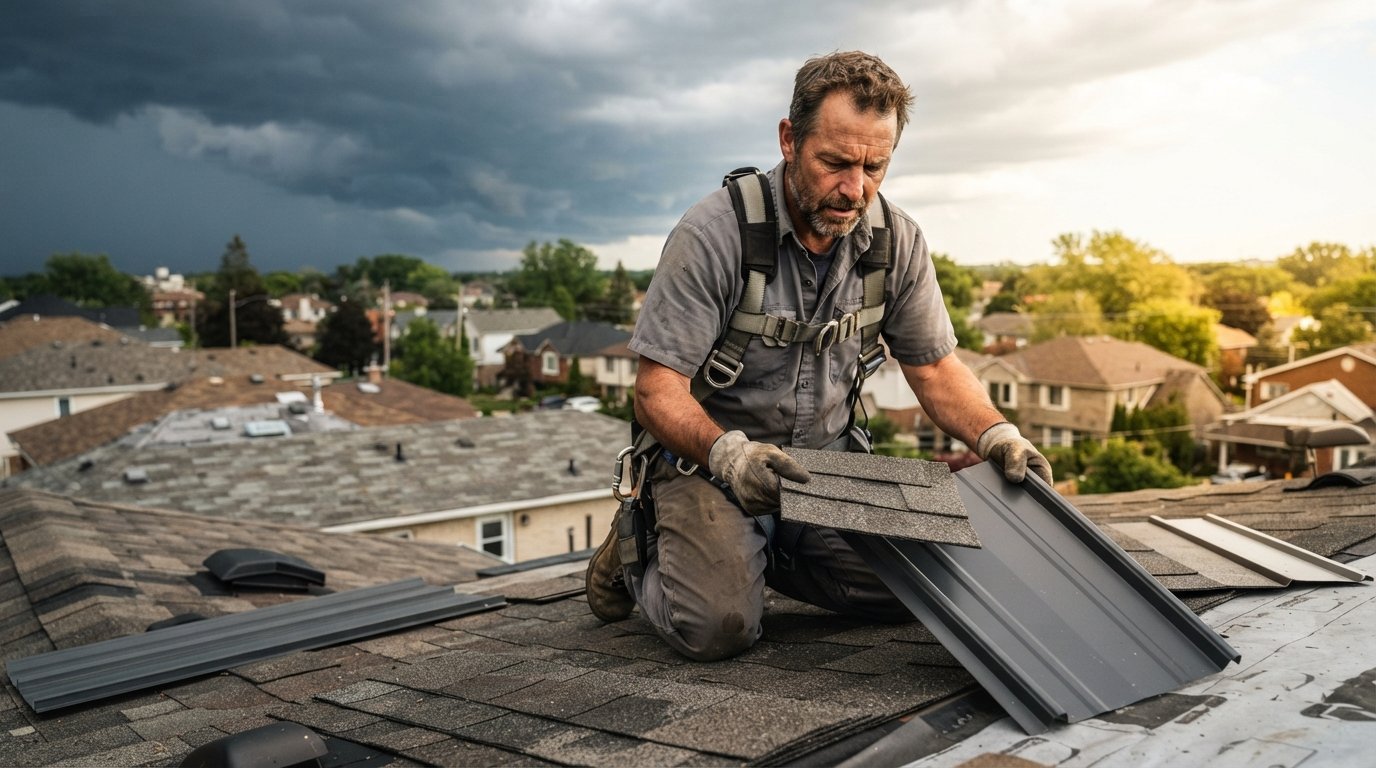
How to Choose a Roofing Material for Your Climate
Match your roof to local weather and avoid costly failures. Call (833)-700-4293 to compare vetted roofing pros and get climate-smart quotes.

By Julia Hayes
Learn more about General Contracting for guides, costs, and what to expect.
Compare General Contracting Pros Near You

Enter your ZIP code to compare top-rated local professionals and request free quotes.
Your roof is the first line of defense between your home and everything the sky throws at it, from pounding hail in the Midwest to salt-laden coastal winds and heavy snow loads in mountain towns. Yet many homeowners pick a roofing material based on curb appeal or a neighbor's recommendation without considering whether it can actually survive decades of local weather. The wrong choice can mean premature failure, voided warranties, higher insurance premiums, and repair bills that dwarf the original savings. The right choice, on the other hand, can protect your home for 50 years or more while lowering energy costs and even earning you insurance discounts. This guide walks you through how to choose a roofing material for your climate by examining how heat, cold, moisture, wind, and hail interact with each major roofing type, so you can make a decision that holds up where you actually live.
Start With Your Local Weather Profile, Not the Showroom
Before you compare asphalt shingles to standing seam metal, you need a clear picture of what your roof will face. Climate is not just about average temperature. It is a combination of extreme weather events, seasonal moisture patterns, sun exposure, and freeze-thaw cycles that together determine which materials thrive and which fail early. A roofing material that performs beautifully in Phoenix may crack within a decade in Buffalo, and a product engineered for heavy snow can corrode quickly in a humid coastal environment.
Start by identifying the dominant stressors in your region. The Insurance Institute for Business and Home Safety and local building departments publish regional risk maps that are more useful than general climate zones. Consider these five factors as your baseline checklist:
- Hail frequency and size: Hail belts in Texas, Colorado, and the Great Plains demand impact-rated products.
- Snow load and freeze-thaw cycles: Northern climates require materials that shed snow and resist ice damming.
- Heat and UV intensity: Sun-drenched regions accelerate degradation of asphalt and some plastics.
- Humidity and salt air: Coastal and humid climates corrode fasteners and promote algae growth.
- Wind exposure: Hurricane zones and open plains require high wind uplift ratings.
Once you know which of these factors dominate your area, you can evaluate materials against the specific threats they will face rather than relying on generic longevity claims. A local roofing contractor who works in your climate daily can confirm which products actually hold up in your neighborhood, which is why it pays to get multiple quotes from pre-vetted professionals who know your region.
How Hail, Heat, Snow, and Humidity Reshape Material Performance
Each climate stressor attacks roofing materials in a different way, and understanding the failure mechanisms helps you ask the right questions. Hail is the most destructive for asphalt shingles, particularly in hail belts where stones larger than one inch can bruise the shingle mat, loosen granules, and create invisible fractures that lead to leaks years later. Impact-rated shingles (Class 3 or Class 4) are engineered with modified asphalt or rubberized polymers that absorb strike energy, and many insurers offer premium discounts of 10 to 30 percent for installing them.
Heat is subtler but equally damaging. In hot climates, asphalt shingles lose volatile oils and become brittle, while dark-colored roofs absorb enormous solar heat and drive attic temperatures skyward. Reflective or cool-rated roofing products, including certain metal finishes and coated tiles, can lower roof surface temperatures by 50 degrees or more, reducing cooling loads. In snowy regions, the concern flips to snow retention and ice damming: metal roofs shed snow readily, which is good for load reduction but requires snow guards above doorways and walkways, while asphalt shingles hold snow longer and can allow meltwater to refreeze at the eaves.
Humidity and salt air present a separate challenge. Coastal environments accelerate corrosion of steel fasteners, gutters, and even some metal panels unless they carry appropriate coatings. Clay and concrete tiles resist salt and moisture well, while wood shakes can rot in persistently damp climates. In humid regions, algae-resistant shingles with copper-infused granules help prevent the black streaking that plagues ordinary asphalt roofs.
Metal Roofing Grades and Coatings for Coastal and Hot Regions
Metal roofing has surged in popularity because it can last 40 to 70 years, reflects solar heat, and sheds snow and rain efficiently. But metal is not a single product. The two dominant residential options are standing seam panels and exposed-fastener metal shingles, and their performance varies dramatically by substrate and coating. For coastal and hot climates, the grade of steel and the coating system matter more than the profile.
Galvanized steel is the baseline, but in salt-air environments you want a higher-grade substrate such as Galvalume (aluminum-zinc coated steel) or, better yet, aluminum or copper panels that resist corrosion inherently. Fasteners should be stainless steel or heavily coated, because a failed screw is often the first point of corrosion. For coatings, factory-applied Kynar 500 (PVDF) finishes hold color and resist chalking far better than polyester paint, which matters in high-UV regions where cheap finishes fade within a decade.
In hot climates, choose light colors and finishes with high solar reflectance and thermal emittance ratings. A white or light gray standing seam roof with a cool-rated coating can cut air conditioning costs meaningfully and qualify for utility rebates in some states. Avoid dark oil-canning-prone panels in full sun, and insist on a panel with a striated profile if aesthetics matter. Finally, verify the wind uplift rating: coastal installations typically require panels tested to higher pressure ratings and specific attachment schedules that a local contractor should be able to document.
Impact-Rated Shingles and the Insurance Discounts They Unlock
For most homeowners, asphalt shingles remain the default choice because of cost and familiarity. The key climate decision within this category is whether to upgrade to impact-rated products. Standard three-tab and architectural shingles carry a Class 1 or 2 impact rating, which offers minimal hail protection. Class 3 and Class 4 shingles use reinforced mats, modified asphalt, or polymer additives to survive larger hail strikes without functional damage. Class 4 is the highest rating and is typically tested with two-inch steel balls dropped from heights simulating severe hail.
The financial case for upgrading is strong in hail-prone states. Many insurers provide annual premium discounts for Class 4 roofs, and some states mandate that insurers offer them. Over a 20-year roof life, a 15 percent discount on a $2,500 annual premium saves $7,500, which often exceeds the upfront cost difference. Beyond insurance, impact-rated shingles tend to carry longer material warranties and reduce the likelihood of claim disputes after a storm.
It is worth noting that impact ratings apply to the shingle only, not the entire roof assembly. Underlayment, flashing, and ventilation also influence hail performance. Ask your contractor whether they install synthetic underlayment and upgraded drip edge, because a Class 4 shingle over cheap felt still leaves weak points. If you are also planning exterior updates, our guide on how to choose the best siding material for your home explains how roof and wall cladding decisions should be coordinated for both aesthetics and moisture management.
Weight Considerations and Structural Implications by Material
Roofing materials vary enormously in weight, and your home's structure may not support every option without reinforcement. Asphalt shingles weigh roughly 250 to 400 pounds per square (100 square feet). Clay and concrete tiles are the heaviest common options at 600 to 1,200 pounds per square, while metal panels are among the lightest at 50 to 150 pounds per square. Wood shakes fall in the middle at 300 to 600 pounds per square.
Weight matters for two reasons. First, structural capacity: older homes, especially those with 2x4 or 2x6 rafters at wide spacing, may need engineering review before a tile roof is installed. Second, tear-off decisions: if you are replacing a heavy roof with a light one, you may be able to leave the old roof in place in some jurisdictions (though this is rarely recommended), while the reverse is almost never allowed. A licensed contractor should evaluate your framing, sheathing, and foundation before recommending a heavy material, and a structural engineer may be needed for tile in older homes.
Lightweight materials offer hidden benefits beyond structure. Metal and synthetic roofing reduce dead load on the house, which can matter in seismic zones and in homes with marginal framing. They also ship and install more easily, sometimes lowering labor costs. However, light roofs can be noisier without proper underlayment and attic insulation, so budget for acoustic upgrades if that is a concern.
Matching Roof Color and Material to Local Architectural Styles
Climate performance and curb appeal do not have to conflict, but regional architectural traditions evolved partly in response to weather. In the Southwest, clay and concrete tile in terracotta and sand tones reflect heat and match Spanish Colonial and Pueblo Revival styles. In New England, dark slate and charcoal architectural shingles suit Colonial and Cape Cod homes while handling freeze-thaw cycles. In the Pacific Northwest, cedar shakes and moss-resistant metal panels complement Craftsman bungalows and shed heavy rain.
Color also has a climate function. Light colors reflect solar radiation and lower attic temperatures in hot regions, while darker colors absorb heat and can accelerate snow melt in cold regions (though they also increase cooling costs in summer). In hail-prone areas, textured or dimensional shingles hide dents better than flat profiles, and in coastal zones, lighter metal finishes hide salt deposits.
Homeowners associations and historic districts may further constrain your choices, so check local regulations before falling in love with a product. A roofing contractor familiar with your neighborhood can tell you which materials are common, which are restricted, and which have a track record of performance on similar homes. If you want a shortcut to finding that kind of local expertise, resources like Homes.Contractors maintain directories of vetted professionals by service area, which helps you compare specialists who actually work in your climate zone.
Weighing Cost, Longevity, and Maintenance Together
Material choice is ultimately a tradeoff between upfront cost, service life, maintenance, and insurance impact. Asphalt shingles cost the least upfront and last 15 to 30 years depending on grade and climate. Metal costs two to three times more but can last 40 to 70 years with minimal maintenance. Tile and slate last longest but require structural review and specialized installers. Wood shakes offer a natural look but demand the most maintenance in wet climates.
A useful way to compare is cost per year of service life. A $15,000 asphalt roof lasting 20 years costs $750 annually, while a $35,000 metal roof lasting 50 years costs $700 annually, before accounting for insurance discounts and energy savings that tip the math further toward metal. Add maintenance: wood shakes may need cleaning and treatment every few years, while metal and tile typically need only occasional inspection.
Do not overlook installation quality. The best material installed poorly will fail early, while a mid-grade product installed by a skilled crew can outperform expectations. Ask contractors about manufacturer certification, warranty terms that cover labor, and whether they use upgraded underlayment and flashing. Getting multiple quotes from pre-vetted contractors through a referral service helps you compare not just price but scope, since low bids often omit critical components like ice and water shield or ridge ventilation.
Practical Steps to Make the Decision
With the climate factors and material tradeoffs in mind, you can move through a structured decision process. Start by documenting your local risks, then narrow the field to two or three materials that address your dominant stressors. Next, verify structural capacity and code requirements, since local building codes may mandate specific wind or impact ratings. Finally, collect itemized quotes that include underlayment, flashing, ventilation, disposal, and warranty details.
- Identify your top two climate threats (hail, snow, heat, humidity, wind) using local risk maps and contractor input.
- Shortlist materials that carry ratings for those threats, such as Class 4 shingles or corrosion-resistant metal.
- Confirm structural capacity and any permit or HOA restrictions before pricing.
- Request at least three itemized quotes from licensed, insured contractors who work in your area.
- Ask each contractor for local references and examples of the same material installed nearby.
This process keeps the conversation grounded in performance rather than sales pitch. It also gives you leverage when negotiating, because you can compare bids line by line and spot missing components. Homeowners who follow these steps consistently report fewer surprises, better warranty coverage, and roofs that outlast the national average.
Choosing a roofing material for your climate is not about finding the single best product. It is about matching proven performance to the specific weather your home will endure for the next several decades. Take the time to understand your regional stressors, verify structural and code requirements, and work with contractors who have installed your shortlisted materials in your area. When climate, structure, and budget align, your roof becomes a quiet asset that protects your home and your wallet for years to come.
Learn more about General Contracting for guides, costs, and what to expect.
Compare General Contracting Pros Near You
Enter your ZIP code to compare top-rated local professionals and request free quotes.