
Common Plumbing Emergencies and When to Call a Pro
Know which plumbing emergencies need an immediate pro and which can wait. Call (833)-700-4293 to compare licensed local plumbers and avoid surprise bills.

By Valerie Reed
Learn more about Emergency Plumbing for guides, costs, and what to expect.
Compare Emergency Plumbing Pros Near You

Enter your ZIP code to compare top-rated local professionals and request free quotes.
Water where it should not be is one of the most stressful sights a homeowner can face. A pipe bursts behind a wall at 2 a.m., the toilet overflows during a dinner party, or a faint smell of gas drifts from the water heater closet. In those moments, panic is natural, but the difference between a manageable inconvenience and a five-figure repair often comes down to the first five minutes. Understanding common plumbing emergencies and when to call a professional gives you a clear plan instead of guesswork, and it protects both your home and your wallet.
The good news is that most plumbing crises follow predictable patterns. You can learn the warning signs, memorize a few shutoff locations, and build a short list of trusted contacts before anything goes wrong. Below, we walk through the most frequent emergencies, the immediate steps you can safely take, and the point at which DIY effort should stop and a licensed plumber should take over.
Know Your Shutoff Valves Before Trouble Starts
Every first-response plan begins with water shutoff. The main shutoff valve for most homes sits near the water meter, often in a basement, utility closet, or crawlspace, or at the exterior wall where the service line enters. Individual fixtures have their own stops: toilets and sinks usually have oval-shaped valves underneath, and washing machines have hot and cold valves behind the unit. Find them all now, tag them, and make sure they actually turn. A valve that has not moved in a decade can seize, which turns a small leak into a flood while you wrestle with it.
In an apartment or condo, know whether your unit has its own shutoff or whether the building must be isolated. Ask the property manager and write the answer down. For older homes, consider replacing gate valves with quarter-turn ball valves during your next service call, because they open and close with a simple ninety-degree turn, even under pressure. This one preparation step covers a surprising share of common plumbing emergencies, since almost every water-related crisis is resolved or contained by shutting the supply off quickly.
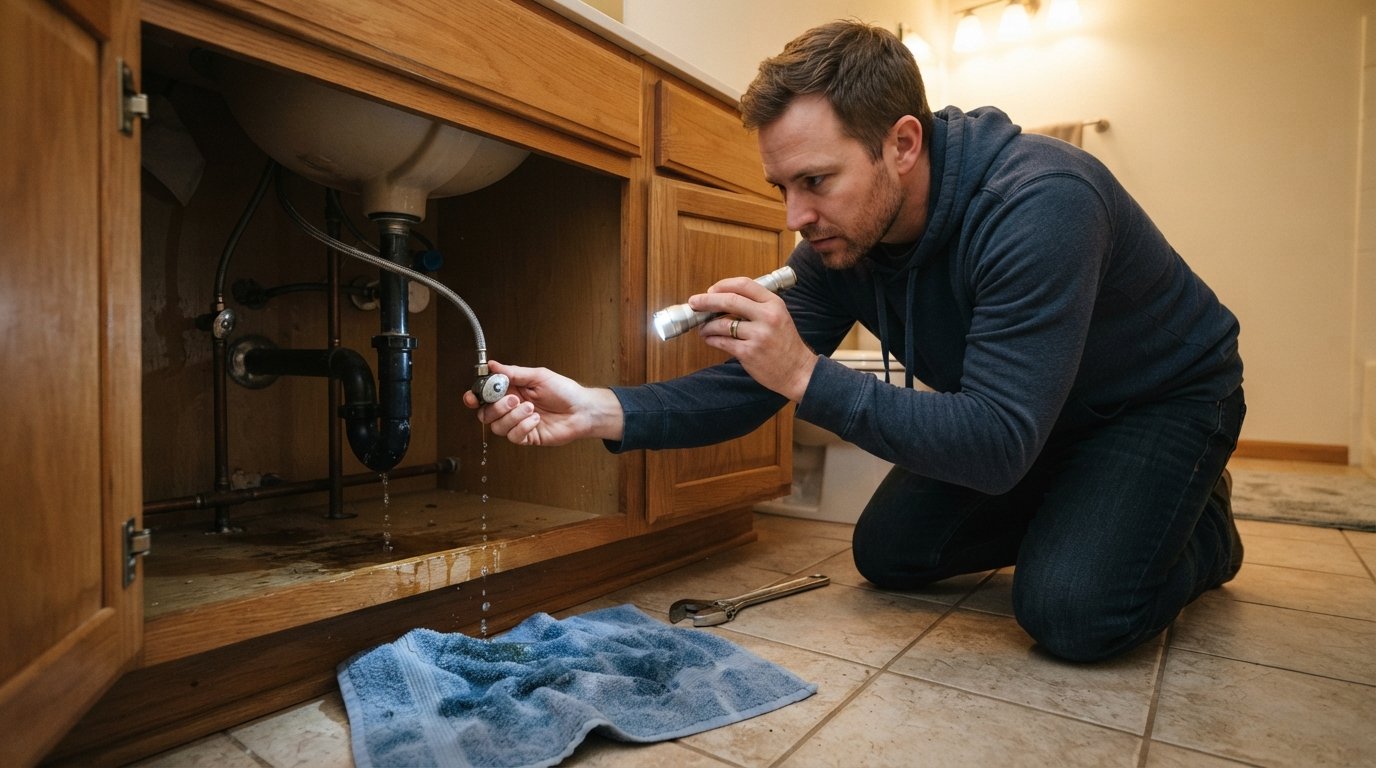
Keep a small emergency kit near the main valve: a wrench sized for your valves, towels, a bucket, and a flashlight. If a pipe is actively spraying, close the main valve first and worry about cleanup later. Once the water stops, open a low faucet to drain remaining pressure from the lines, then call for help if the damage is beyond a simple fixture fix.
Burst Pipes and Sudden Major Leaks
A burst pipe is the classic plumbing emergency. It usually announces itself with a bang, a hiss, or the sudden sound of running water inside a wall. Freezing temperatures are the most common cause, but aging pipes, high pressure, and shifting foundations also play a role. The immediate response is mechanical, not technical: shut off the main valve, kill power to any flooded area at the breaker panel if it is safe to reach, and move furniture and electronics away from the water. Do not wade into standing water near outlets or appliances.
Small pinhole leaks or dripping joints can sometimes be contained with plumber's tape or a pipe clamp as a temporary measure, but a split pipe or a leak inside a wall or slab needs a licensed plumber. Water travels along framing and can soak insulation and drywall far from the visible leak, which is why hidden moisture and mold often appear weeks later. If the leak is behind drywall, turn off the supply and call a professional rather than cutting into the wall yourself; a plumber can locate and repair the line and advise on drying the cavity.
After any significant leak, document everything with photos before cleanup for insurance purposes, and keep receipts for emergency repairs and water extraction. Many policies cover sudden and accidental discharge, but they expect prompt mitigation. If you need help finding qualified help fast, a directory of pre-vetted local contractors can shorten the search; services like Homes.Contractors connect homeowners with licensed plumbing and restoration pros in their area.
Sewage Backups and Overflowing Toilets
Sewage backing up into a tub, floor drain, or toilet is a health hazard, not just a mess. Raw sewage carries bacteria and viruses, so treat the area as contaminated: keep children and pets away, wear gloves and boots if you must be near it, and wash thoroughly afterward. Stop using all water in the house immediately, because every flush or load of laundry adds to the backup. If the clog is in a single toilet, a plunger or auger may clear it. If multiple fixtures drain slowly or sewage rises in places it should not, the blockage is in the main line and a professional is needed.
Overflowing toilets are the most common of all plumbing emergencies, and most are caused by a clogged trap or a failing fill valve. The first move is to lift the tank lid and close the flapper or turn the supply valve behind the bowl. Once the water stops, let the bowl drain before plunging. Never pour chemical drain cleaners into a toilet that is already backed up; they rarely reach the clog and can damage seals and pipes. If the bowl overflows repeatedly after plunging, or if water gurgles in other drains when you flush, call a plumber to inspect the line with a camera.
Recurring backups often point to tree roots in the sewer lateral, a collapsed pipe, or heavy grease and paper buildup. A licensed plumber can snake or hydro-jet the line and, if needed, scope it to show you the problem on video. That footage is also useful documentation if the issue turns out to be a shared line or a municipal responsibility.
Slab Leaks and Hidden Water Damage
A slab leak is a leak in a water line running beneath a concrete foundation. The signs are subtle at first: a hot spot on the floor, the sound of running water when nothing is on, a sudden jump in the water bill, or unexplained dampness at the baseboards. Because the leak is hidden, homeowners often ignore early warnings until the foundation or flooring is affected. If you suspect a slab leak, shut off the main valve and watch the water meter; if the dial still moves with all fixtures off, water is escaping somewhere in the system.
Repair options range from spot repairs and rerouting pipes through the attic or walls to full repiping, and the right choice depends on the pipe material, the leak location, and the home's layout. This is not a DIY decision. A licensed plumber will use acoustic listening, pressure testing, or thermal imaging to pinpoint the leak with minimal demolition, then explain the tradeoffs of each repair path. Get the diagnosis in writing and compare at least two estimates before authorizing major work, since slab repairs vary widely in cost and scope.
Water Heater Leaks and Gas Safety Warnings
A leaking water heater is common, but a leaking gas water heater deserves special caution. If you smell gas or hear a hissing sound near the unit, do not flip switches, light matches, or use your phone in the area. Leave the house, then call your gas utility's emergency line from a safe distance. Carbon monoxide is odorless, so install a CO alarm near sleeping areas and the utility room; headache, dizziness, and nausea in the home are warning signs that should never be ignored.
For a tank water heater, a small leak from the drain valve or a fitting can sometimes be tightened, but water pooling under the tank usually means the tank itself has failed and replacement is the only real fix. Turn off the power or gas supply and the cold water inlet, then call a plumber. Tankless units have their own failure points, including scale buildup and leaking heat exchangers, and they require a qualified technician for service. If your heater is more than ten years old and leaking, plan for replacement rather than repeated repairs, and ask the plumber to check the expansion tank, relief valve, and venting while on site.
What After-Hours Emergency Calls Typically Cost
Emergency plumbing is priced for urgency. Expect after-hours call-out fees to run higher than standard rates, often with a premium for nights, weekends, and holidays on top of the hourly labor rate. A simple after-hours fix such as a running toilet or a shutoff replacement might land in the low hundreds, while a burst pipe repair or sewage backup clearing can climb well into the high hundreds or more depending on access, parts, and water damage. Many plumbers quote a diagnostic fee that is credited toward the repair if you approve the work.
To avoid surprise bills, ask three questions when you call: What is the after-hours call-out fee, is the diagnostic fee credited toward repairs, and will I get a written estimate before work begins? Reputable companies answer plainly. Keep in mind that the cheapest quote is not always the best value if it excludes cleanup, permits, or follow-up visits. For non-urgent issues, scheduling during business hours can save a meaningful amount, which is why knowing the difference between a true emergency and a next-morning problem matters.
How to Find a Licensed Emergency Plumber Quickly
When water is rising, you do not want to start researching from scratch. Build a short list of licensed plumbers before you need one, and store the numbers where every adult in the household can find them. Verify licensing through your state or local licensing board, confirm insurance, and read recent reviews with attention to emergency response times rather than star averages alone. A reputable company will confirm its license number on request without hesitation.
If you are searching mid-crisis, use a vetted local directory and request quotes from more than one licensed pro when the situation allows. PlanRemodel's contractor directory lets you compare pre-vetted plumbing professionals in your area and request free estimates, which is far safer than choosing the first number in a search ad. In a true emergency, prioritize response time and licensing over price, and ask the dispatcher for an arrival window and an estimate range before you agree.
For related electrical hazards that often accompany water damage, such as tripped breakers or outlets near flooded areas, our guide on common electrical problems and when to call an electrician explains the warning signs that warrant professional help.
When to Call a Professional Instead of DIY
Some plumbing fixes are genuinely DIY-friendly: a running toilet flapper, a clogged sink trap, a dripping faucet cartridge, or a loose supply line. Others are not, and the line between them is clearer than most homeowners expect. Call a licensed plumber when water is escaping in volume, when sewage is involved, when gas or carbon monoxide is a concern, when the problem is inside a wall, slab, or main line, or when a repair you attempted has not solved the issue after one honest try.
Use this quick checklist to decide:
- Shut off the water and call now: burst pipe, sewage backup, gas smell, or water near electrical panels.
- Call within the day: slab leak symptoms, water heater tank leak, or a main line clog affecting multiple fixtures.
- Schedule a normal visit: slow drains, dripping faucets, running toilets, or a water heater that is aging but not leaking.
- Never DIY: gas line work, main sewer line repairs, and anything requiring permits or opening finished walls and floors.
One honest attempt at a plunger or a tightened fitting is reasonable. Repeated attempts with chemical cleaners, makeshift patches, or force on seized valves usually make the damage worse and the final bill higher. A licensed plumber also provides documentation, warranties, and code-compliant work, which matters at resale and with insurers.
The best defense against plumbing emergencies is preparation: know your shutoff valves, keep an emergency kit, install a CO alarm, and save the number of a licensed local plumber before you need one. When something goes wrong, act fast to stop the water, document the damage, and call a professional for anything beyond a simple fixture fix. With a clear plan in place, even a midnight burst pipe becomes a contained problem rather than a household disaster.
Learn more about Emergency Plumbing for guides, costs, and what to expect.
Compare Emergency Plumbing Pros Near You
Enter your ZIP code to compare top-rated local professionals and request free quotes.